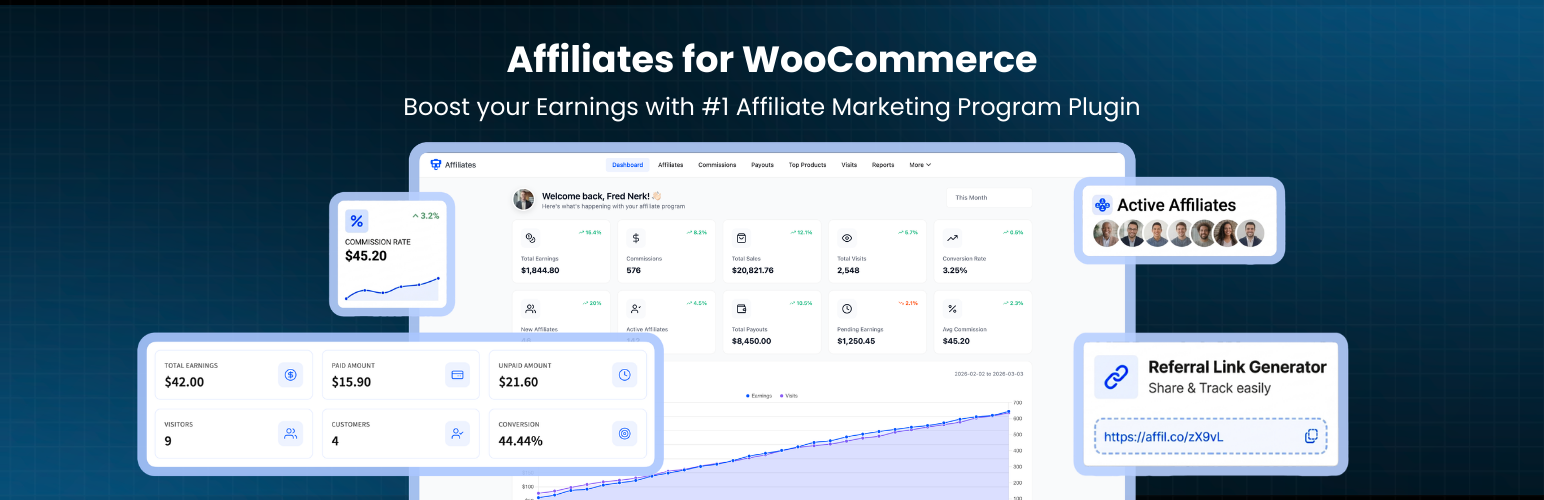
Affiliates for WooCommerce - Affiliate Program, Referral Tracking & Commission Payouts
| 开发者 |
devdiggers
DevDiggers |
|---|---|
| 更新时间 | 2026年10月24日 05:09 |
| PHP版本: | 7.4 及以上 |
| WordPress版本: | 7.1 |
| 版权: | GNU General Public License v3.0 |
| 版权网址: | 版权信息 |
详情介绍:
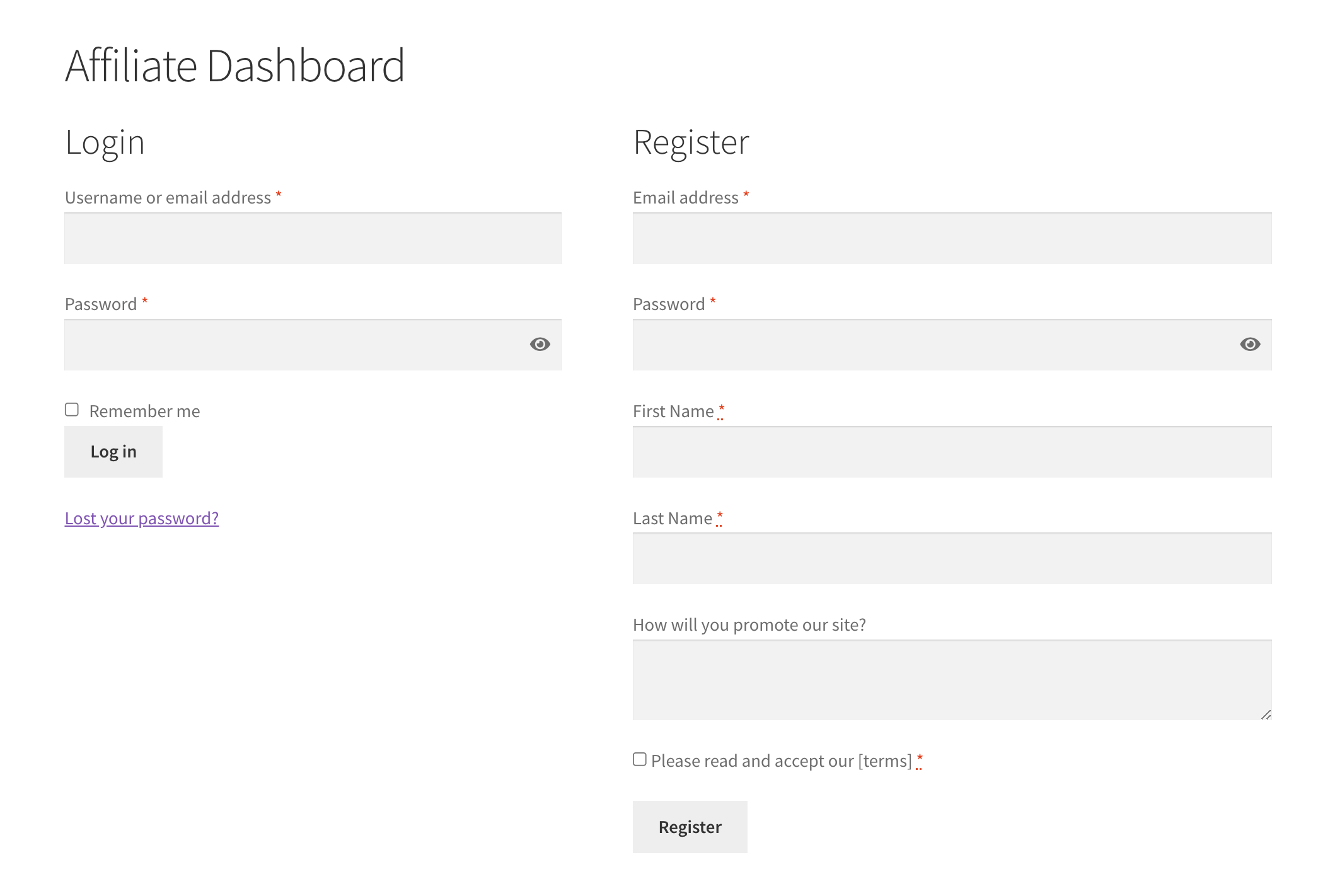
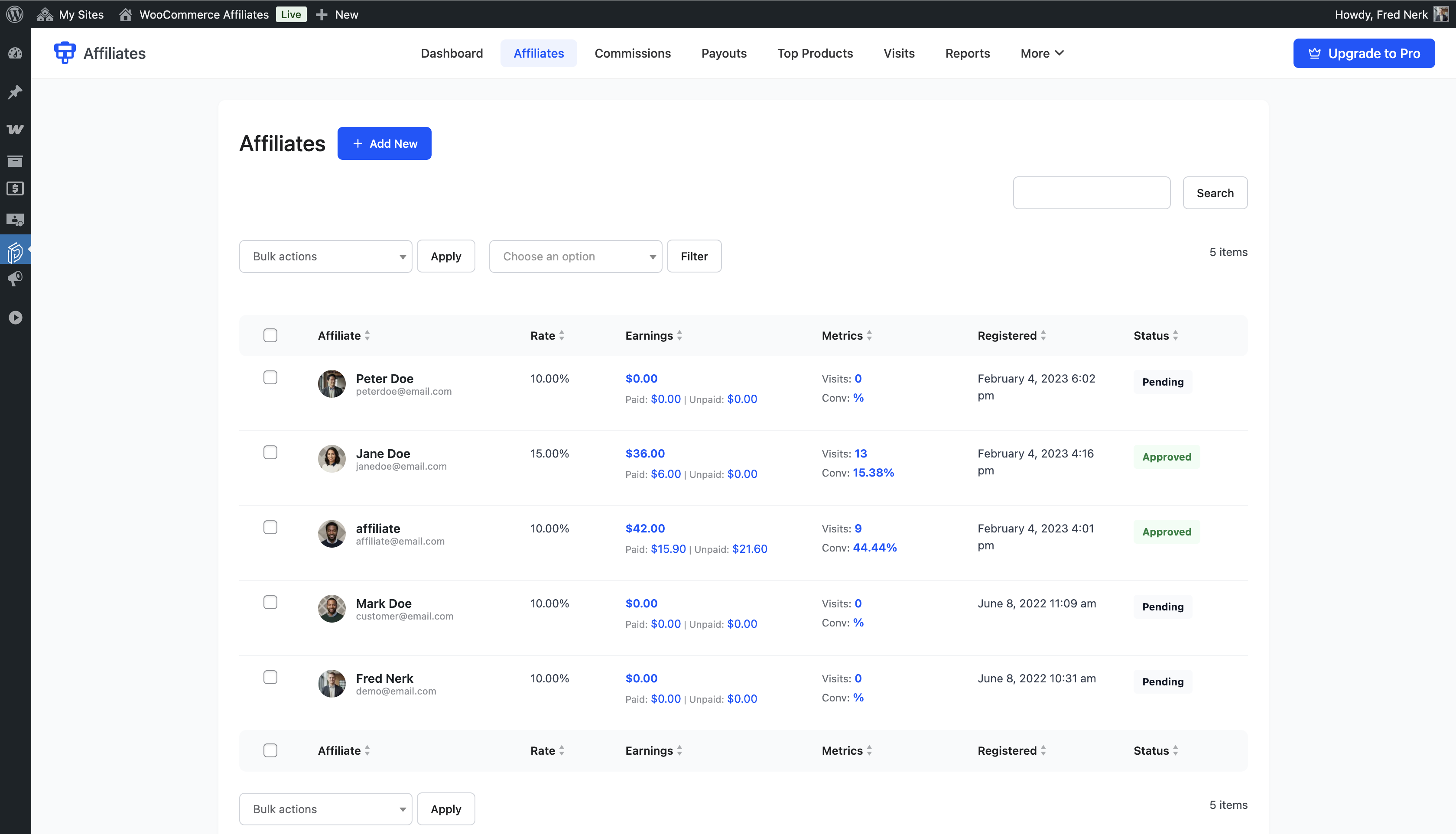
- An affiliate registers through your signup form and you approve them.
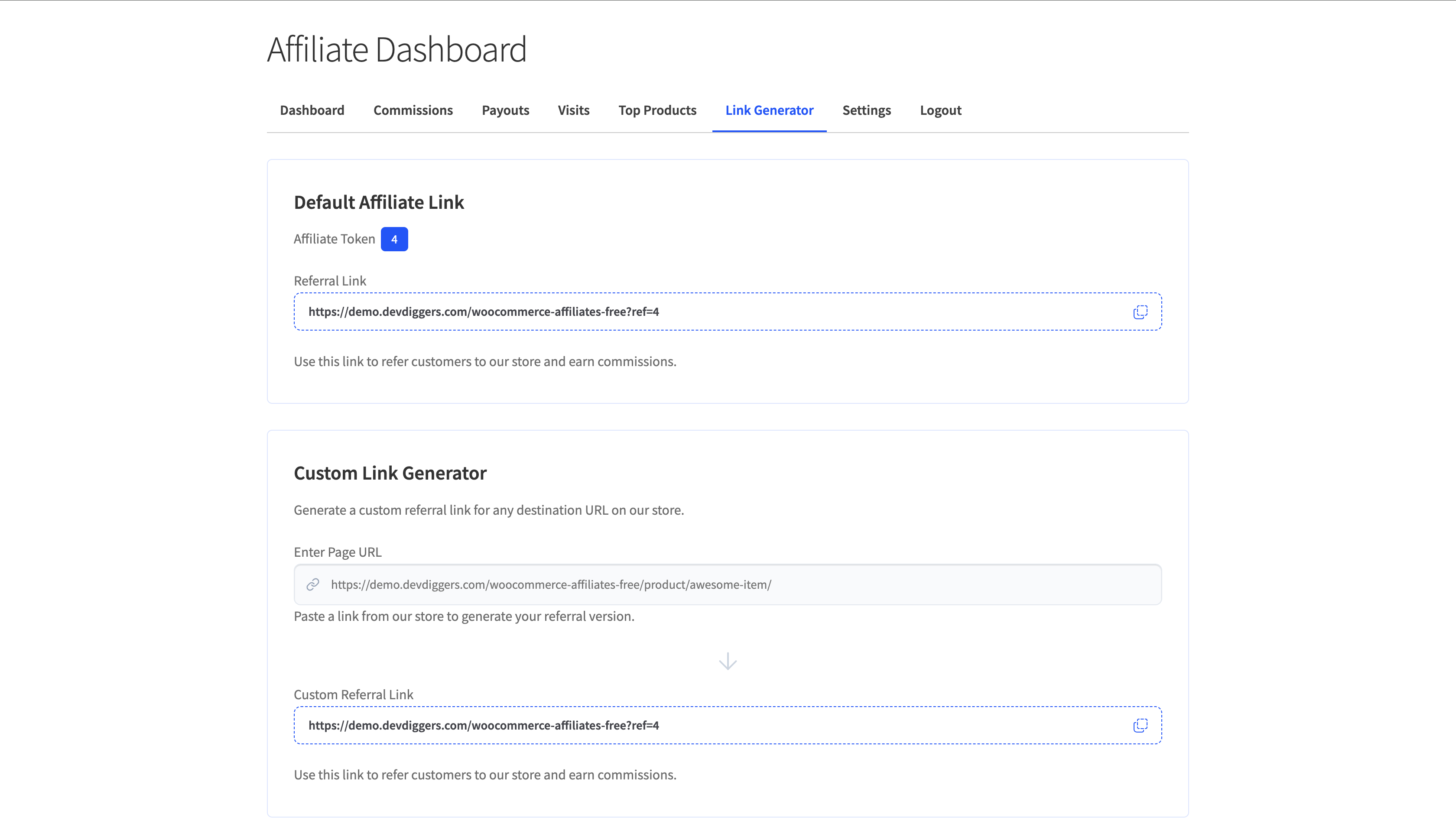
- They generate a referral link for any page or product on your store.
- A visitor clicks the link and a referral cookie is stored in their browser.
- If that visitor orders before the cookie expires, the commission is recorded against the affiliate.
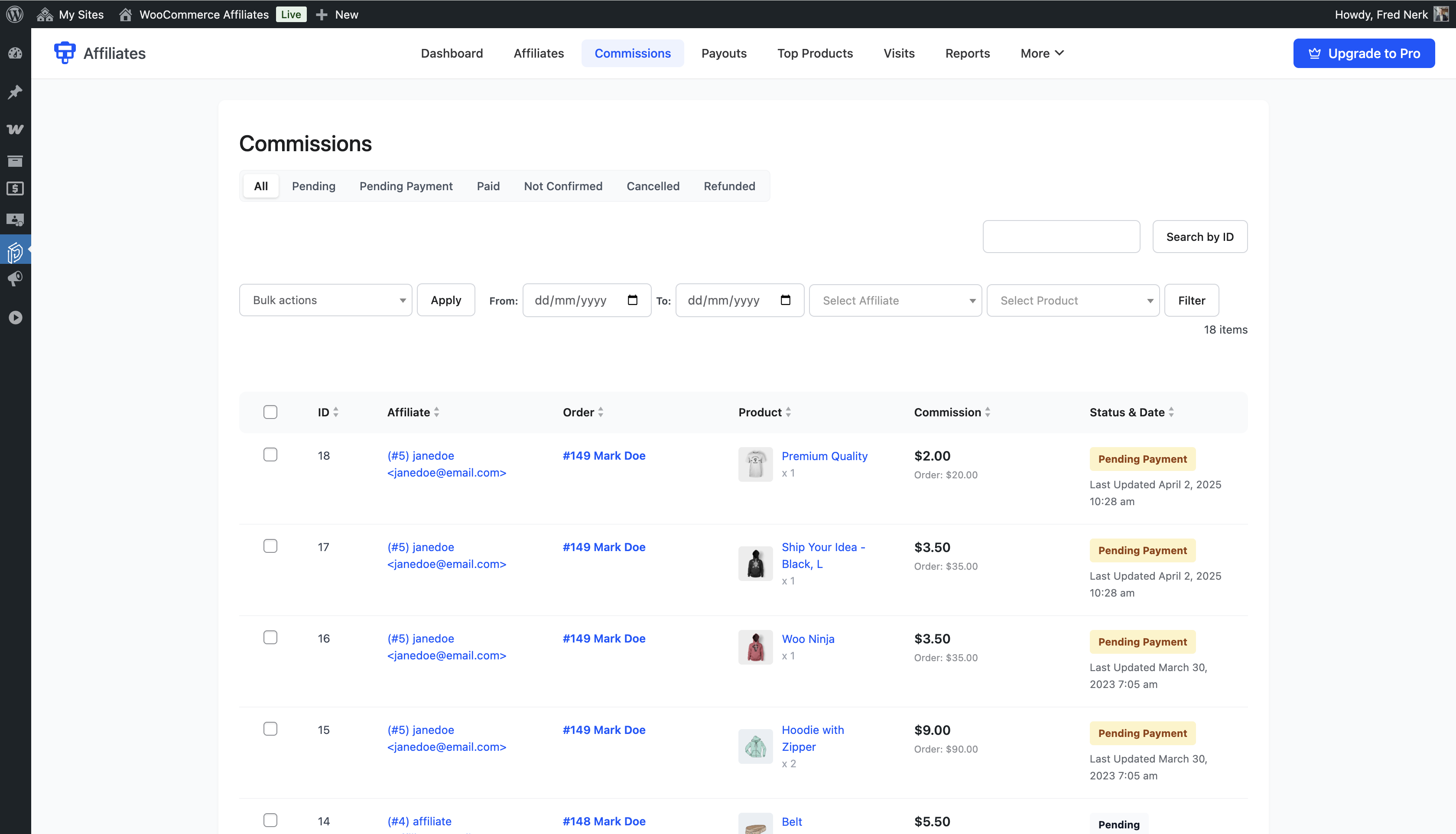
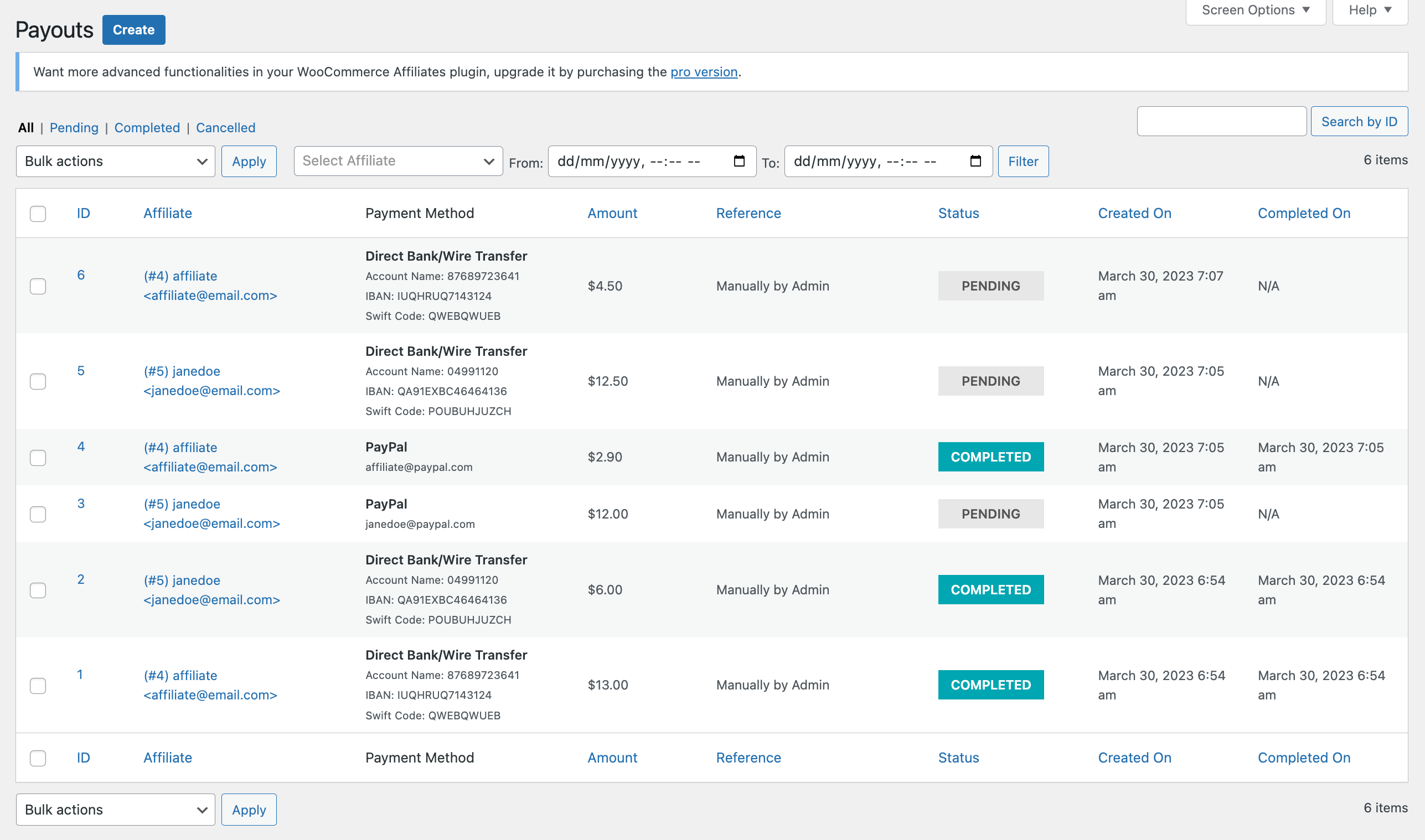
- You review the commission list and record the payout.
安装:
- Go to Plugins > Add New.
- Search for Affiliates for WooCommerce by DevDiggers.
- Click Install Now, then Activate.
- Download the zip from WordPress.org.
- Go to Plugins > Add New > Upload Plugin.
- Upload the zip, click Install Now, then Activate.
/wp-content/plugins/ over FTP, then activate it from the Plugins screen.
First run
- Open DevDiggers Plugins > Affiliates > Configuration > General and turn on the affiliate system.
- Set your commission percentage under Configuration > Commissions.
- Set the referral cookie lifetime under Configuration > Referrals.
- Share the affiliate dashboard page URL and start approving signups.
屏幕截图:
常见问题:
How does affiliate referral tracking work?
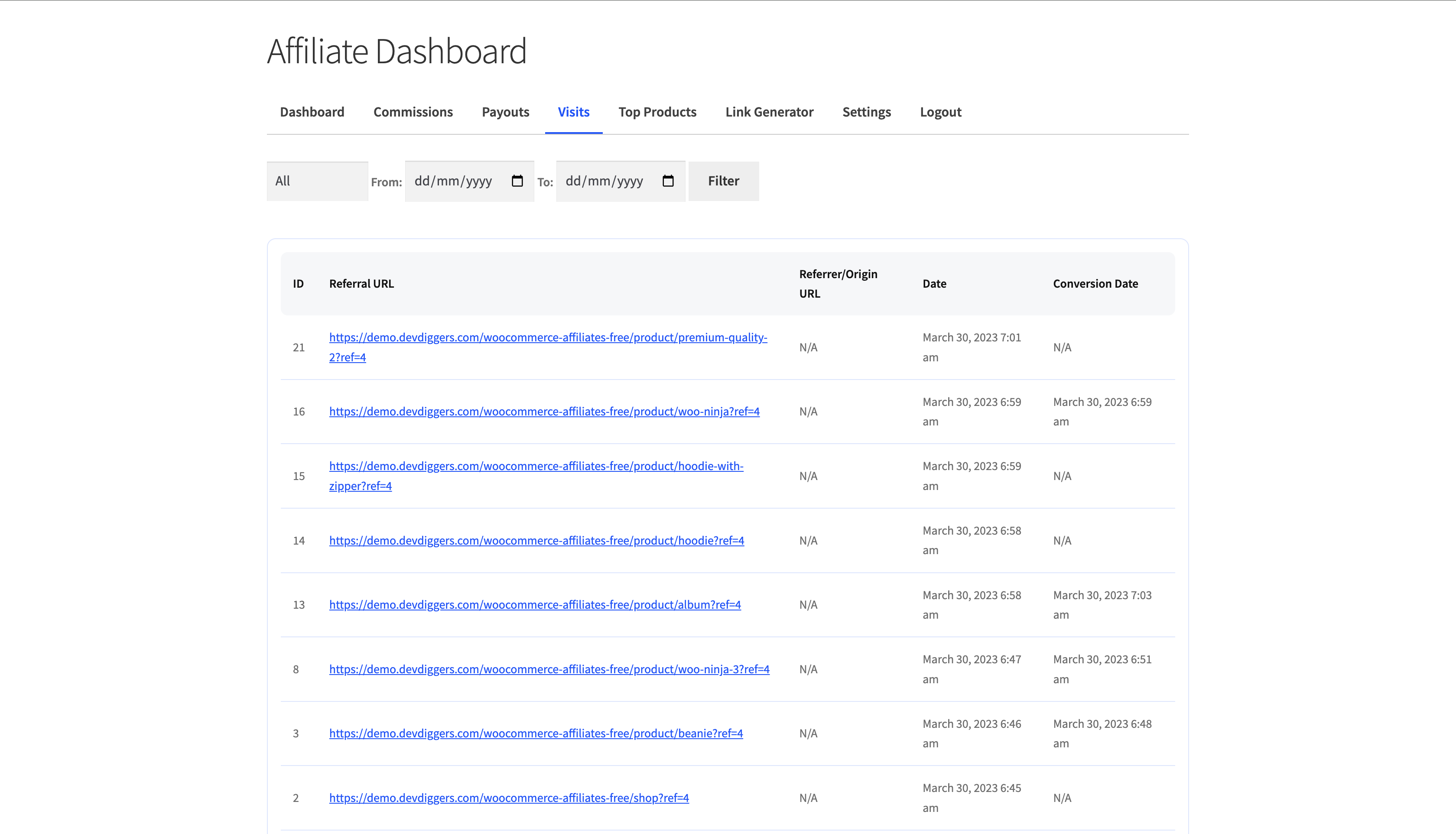
A referral link carries the affiliate's ID in a URL parameter. When a visitor opens it, the plugin stores a cookie in their browser. If that visitor places an order before the cookie expires, the commission is recorded against that affiliate. You set the cookie lifetime in days under Configuration > Referrals.
How many affiliates can I have?
There is no limit in the free version. The admin lists are filterable, so you can still find a specific affiliate once the program grows.
How do I pay my affiliates?
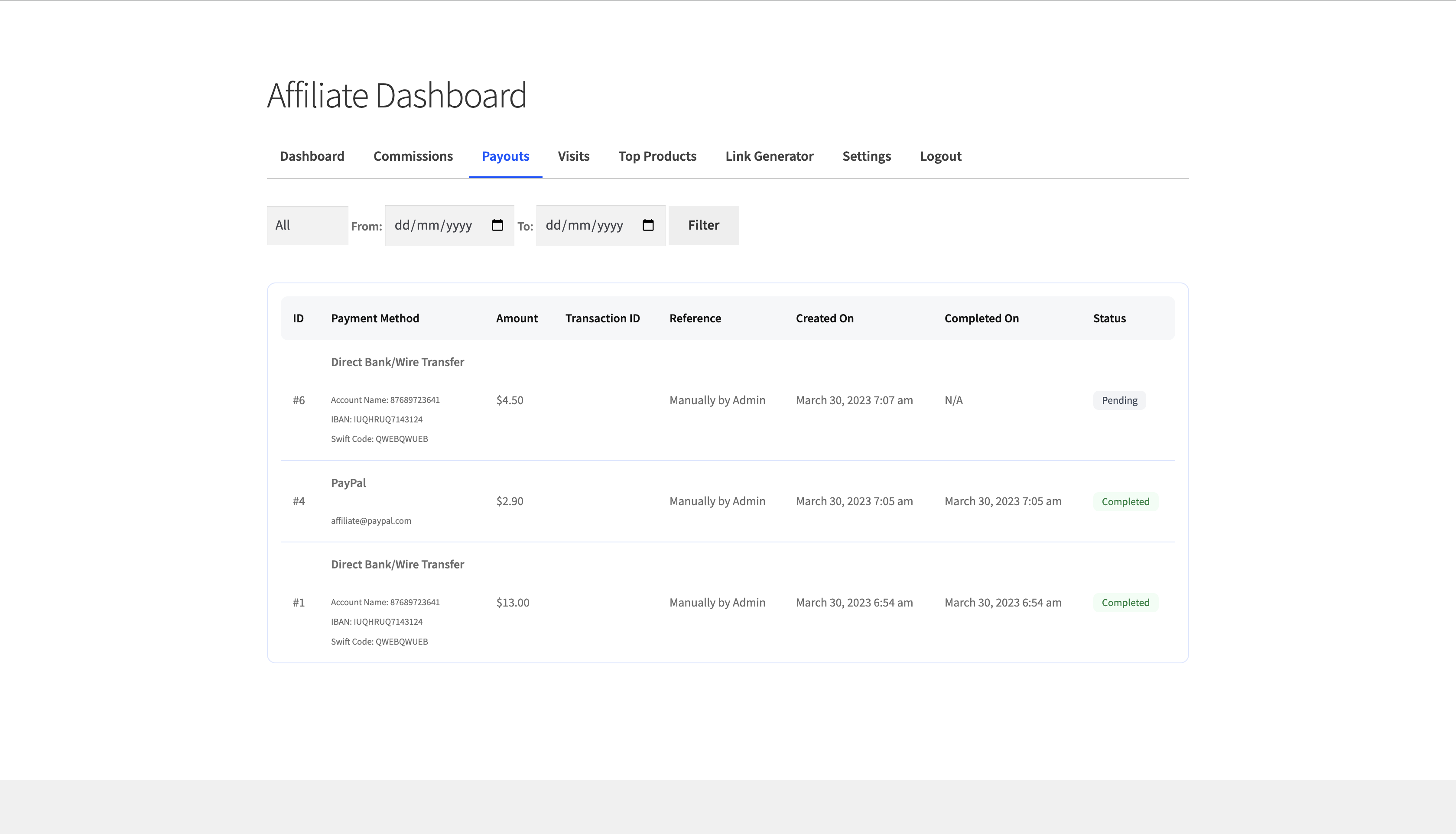
The free version uses manual payouts. Affiliates save their bank transfer or PayPal details in their dashboard, you create a payout record from the admin, send the money through your own bank or PayPal account, and mark the record as paid. The plugin does not move money on its own. Pro adds affiliate requested payouts, scheduled monthly payouts, minimum payout thresholds, WooCommerce Wallet, and automatic sending through the PayPal Payouts API or Stripe Connect.
Can I set a different commission rate per product or per affiliate?
Not in the free version, which uses one global percentage for everyone. Per product, per category, per user role, per affiliate, and tiered rates are Pro features.
Can affiliates earn commission from coupon codes instead of links?
Coupon based referral tracking is a Pro feature. In the free version, commission is tracked through referral links and the referral cookie.
Can I stop affiliates from earning commission on their own orders?
Self referral blocking is a Pro feature. The free version records the commission whenever the referral cookie is present at checkout.
Can an affiliate keep earning on a customer's future orders?
Lifetime commissions are a Pro feature. Pro links a referred customer to the affiliate who first won them, so orders placed after the referral cookie has expired still earn, for an unlimited period or a window of days you set. Pro can also pay commission on WooCommerce Subscriptions renewals. The free version pays on orders placed while the referral cookie is still alive.
Can I show a public leaderboard of my top affiliates?
The affiliate leaderboard shortcode is a Pro feature. It ranks your top affiliates on any page in a card, list, or podium layout, and you decide whether earnings, order counts, and avatars are visible, or whether names are anonymised.
Does this work with WooCommerce HPOS?
Yes. The plugin declares compatibility with WooCommerce High Performance Order Storage and has been tested with HPOS turned on.
Do affiliates need access to my WordPress admin?
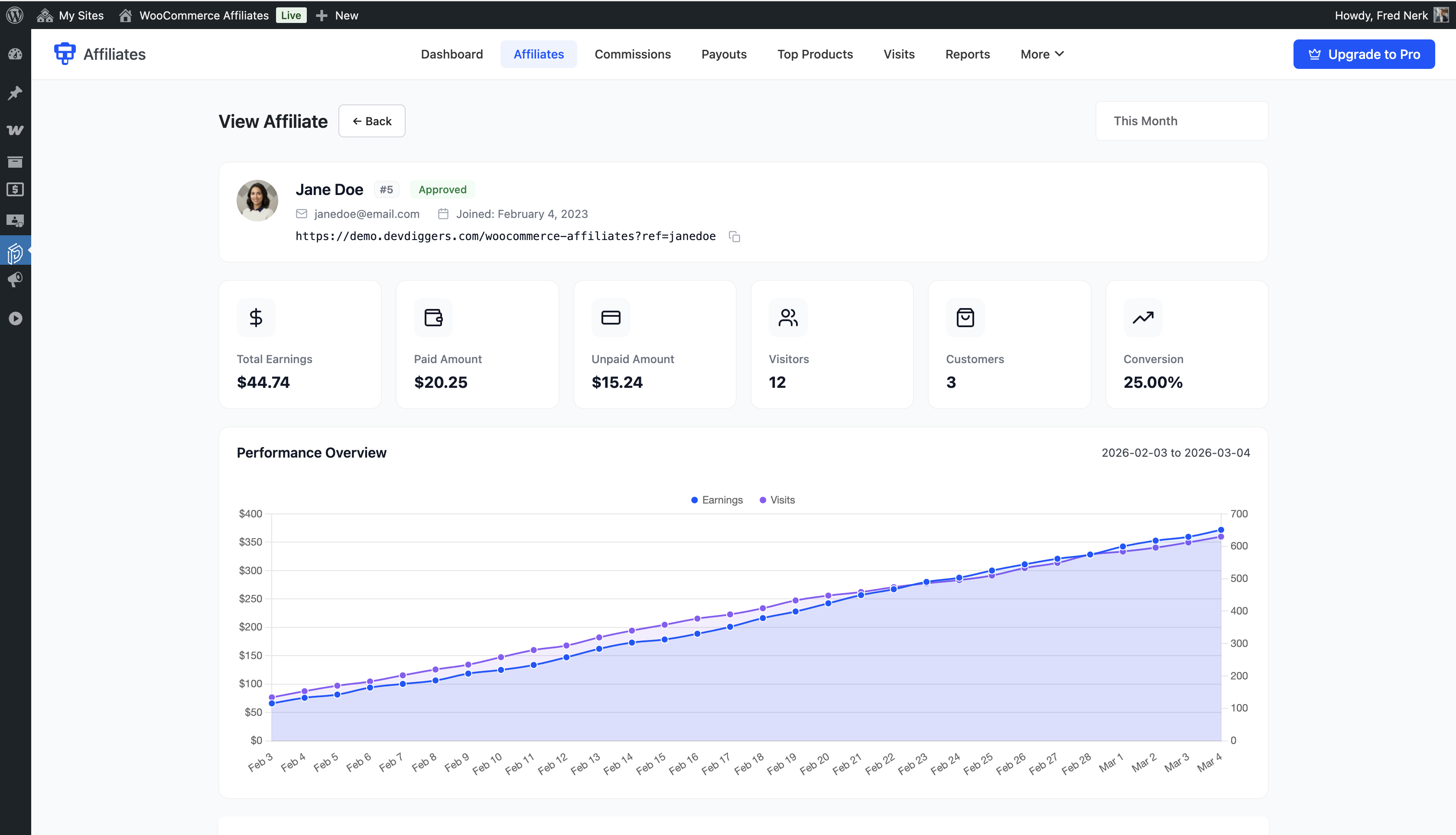
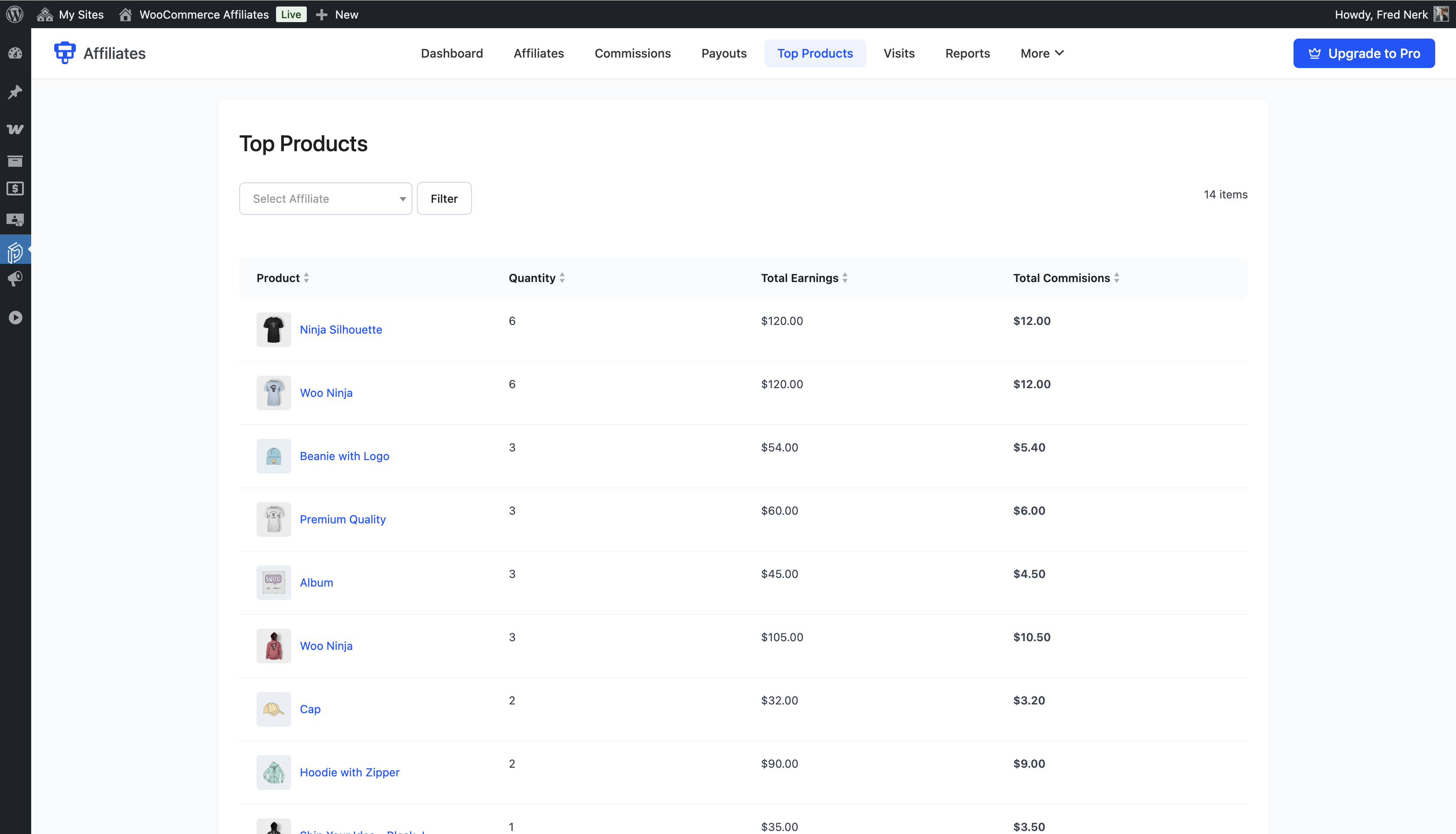
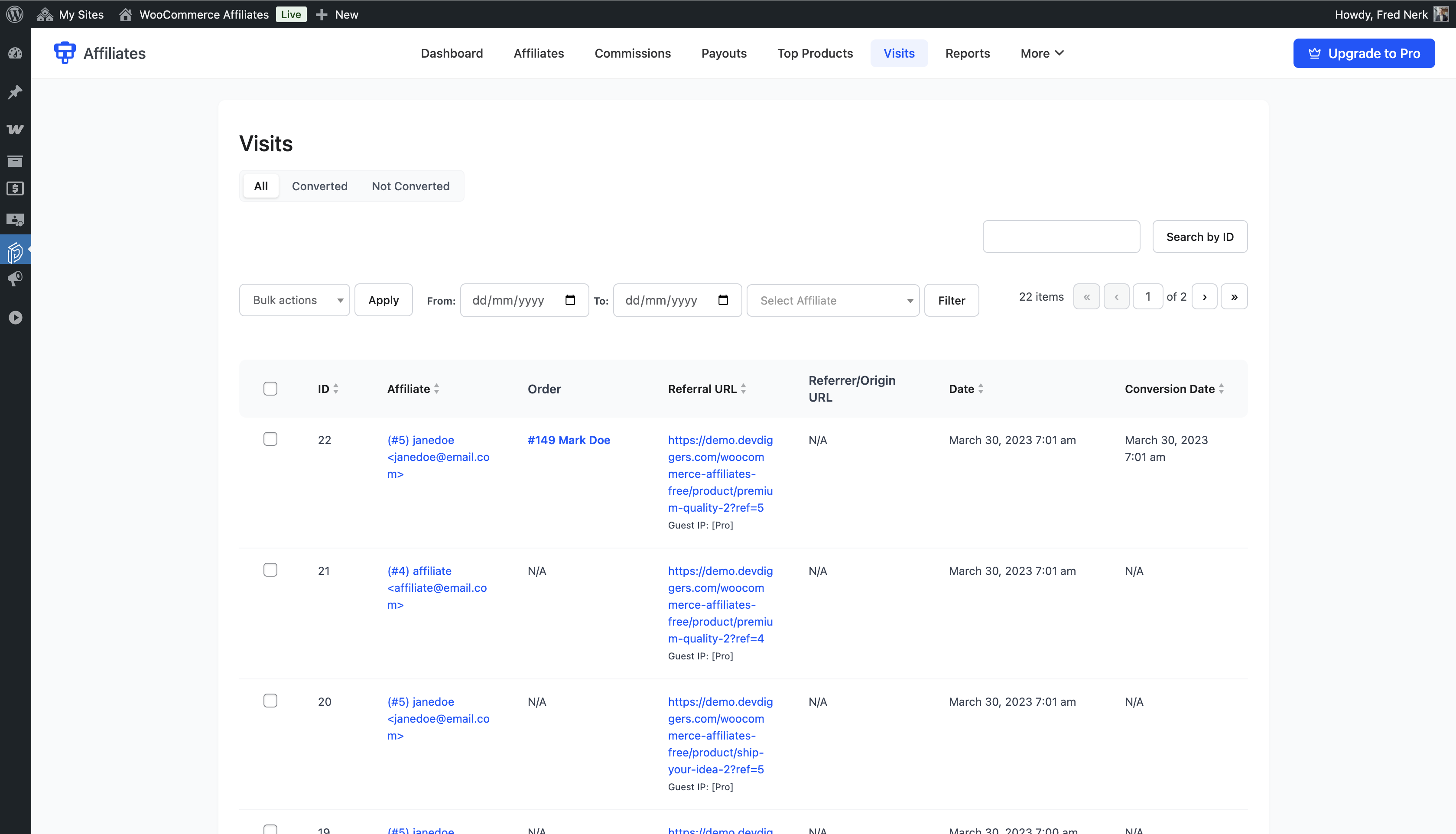
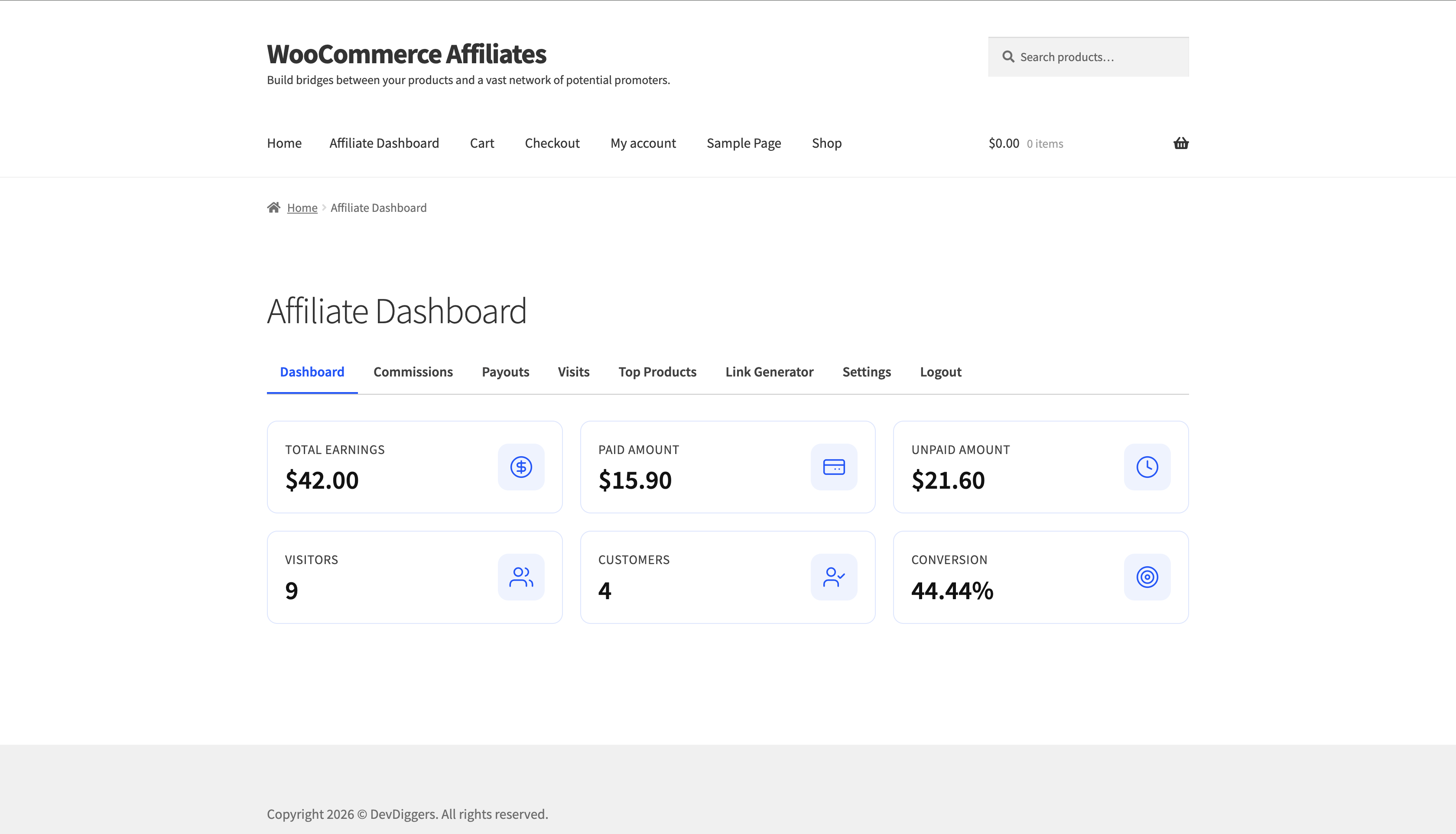
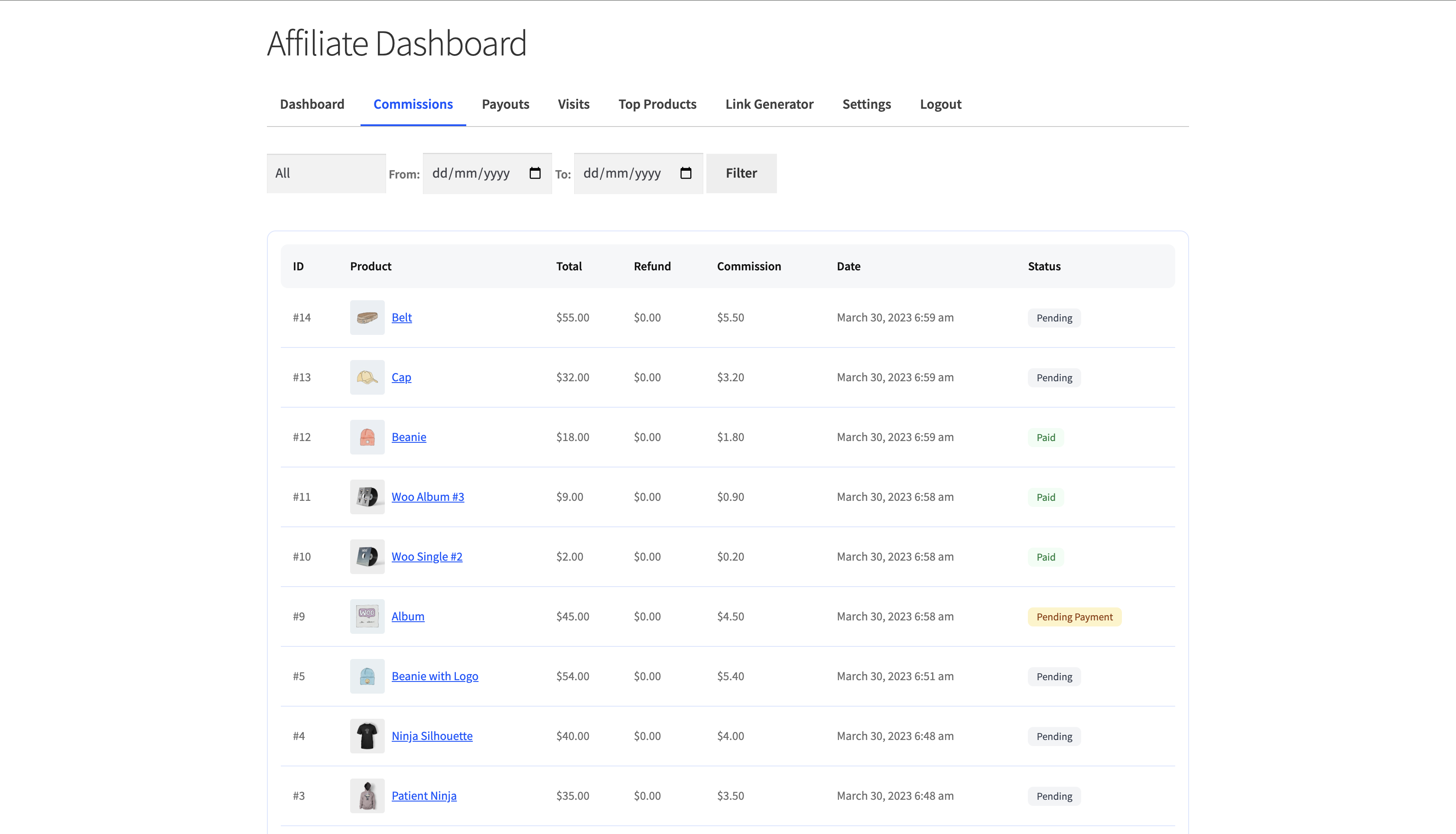
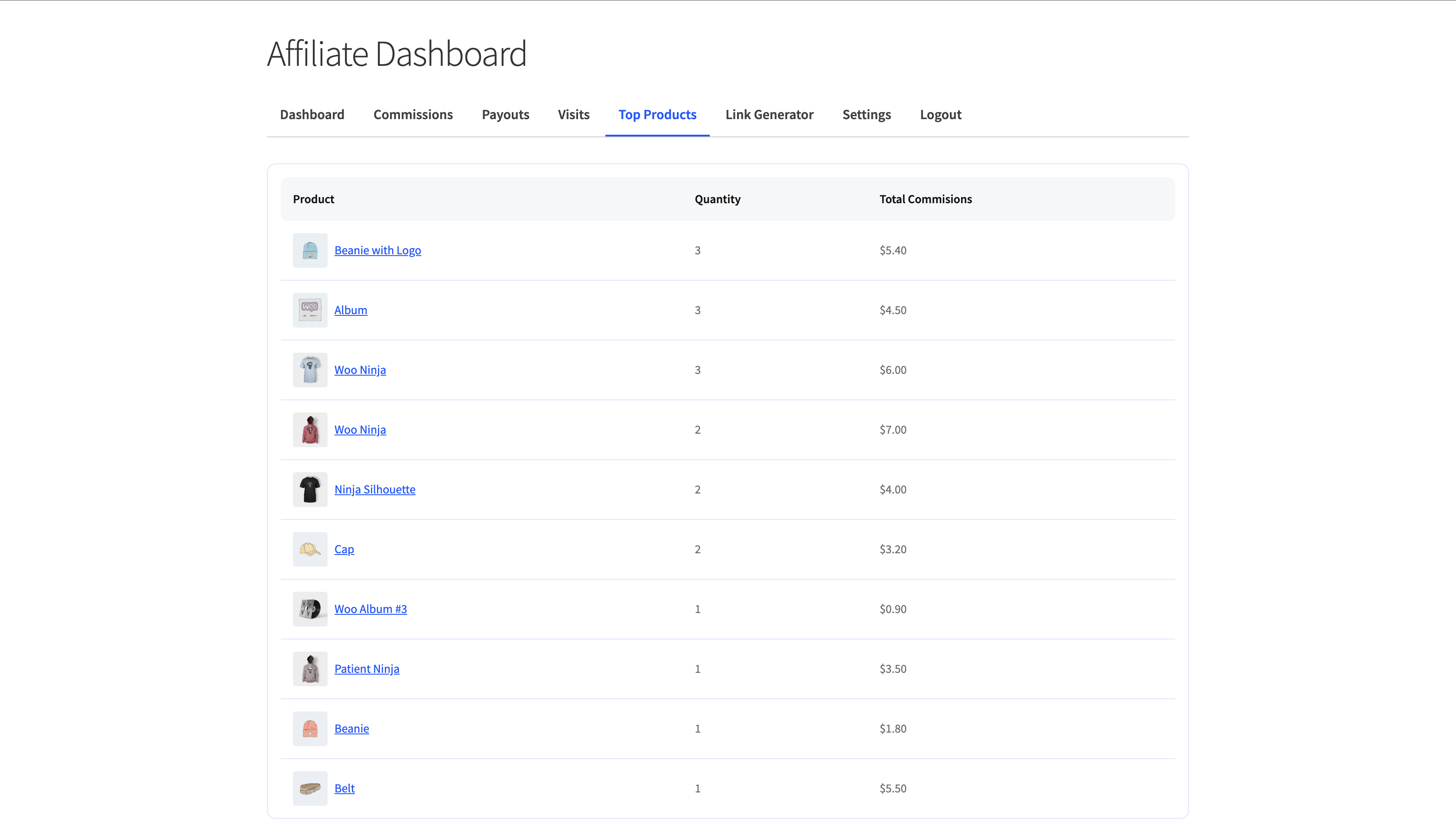
No. The affiliate dashboard sits inside the WooCommerce My Account page, or on any page where you place the dashboard shortcode. Affiliates see only their own earnings, commissions, payouts, visits, top products, and link generator.
Which shortcodes are included?
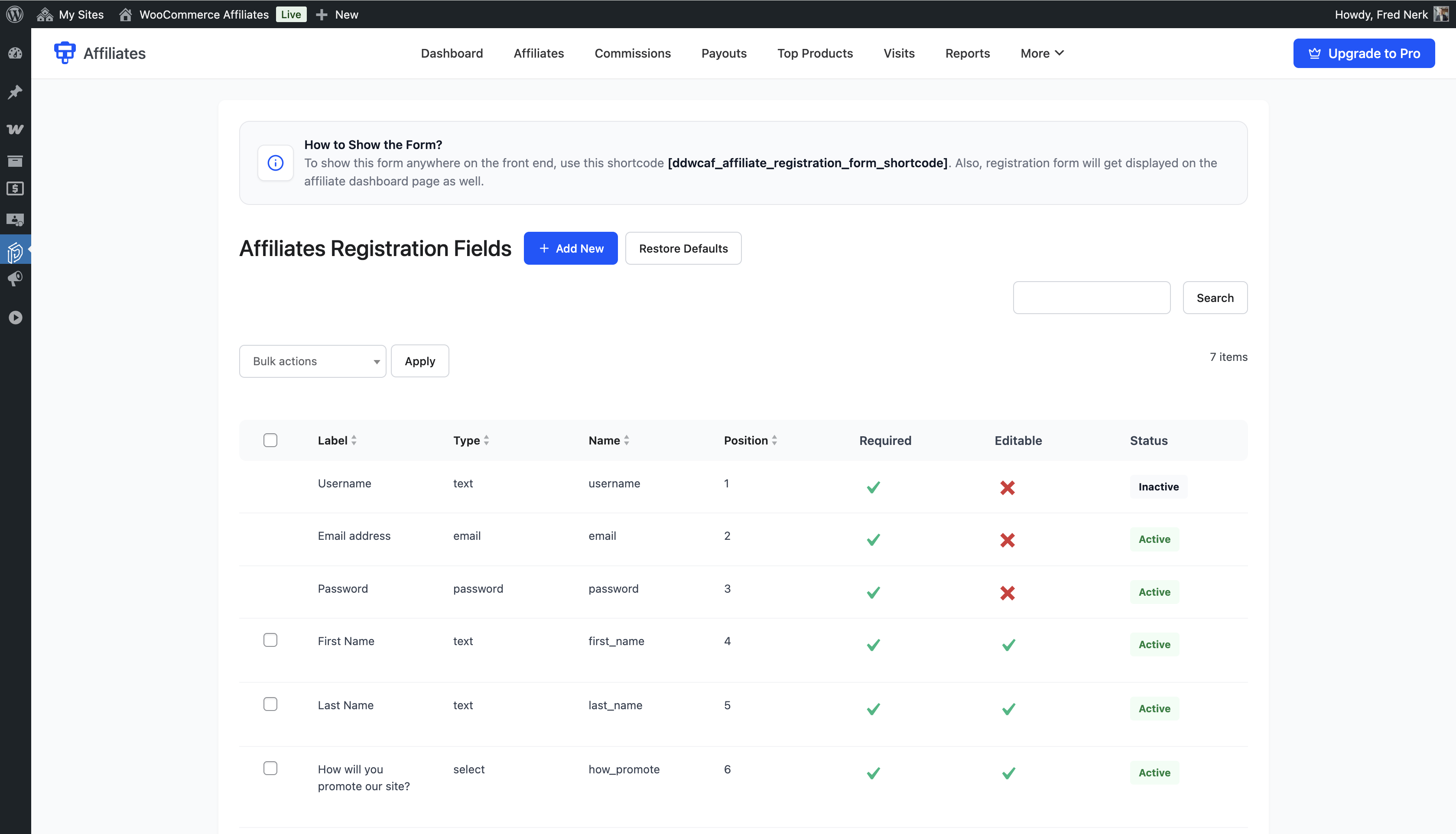
[ddwcaf_affiliate_registration_form_shortcode] outputs the affiliate registration form, with the login form next to it if you want. [ddwcaf_affiliate_dashboard_shortcode] outputs the affiliate dashboard. Both tags can be renamed under Configuration > Shortcodes.
Do commissions include tax and discounts?
That is your choice. Configuration > Commissions has a net of tax setting and a setting that excludes the discounted amount, so a coupon does not increase what you owe the affiliate.
Can I control who is allowed to become an affiliate?
Yes. Under Configuration > General you pick which WordPress user roles can register as affiliates, and every application still needs your approval before it becomes active.
Can I change the look of the affiliate dashboard?
Yes. Configuration > Layout sets the brand colour, card background, border, text, value, and table header colours, plus the icon size on the summary cards.
Do I need to write any code?
No. Everything is set through labelled admin fields, and the pages are built with shortcodes. Developers who want to go further will find hooks and filters through the codebase.
Where do I get support?
Post in the support forum here on WordPress.org for the free version. The full documentation is at docs.devdiggers.com/woocommerce-affiliates. Pro licence holders get direct support from DevDiggers.
更新日志:
- Upgraded to DevDiggers Framework 1.1.0: admin screens now open instantly without a full page reload, with skeleton placeholders while a screen loads.
- Improved list screens: the title action buttons, search box, bulk actions and pagination now follow one consistent layout.
- Fixed minor PHP warnings and JavaScript errors seen after in-place navigation.
- Bug fixes and stability improvements.
- Added Pro previews across the configuration screens so you can see what the Pro version does before deciding: lifetime commissions, subscription renewal commissions, referral fraud prevention, the affiliate leaderboard, automatic payouts, PayPal Payouts and Stripe Connect.
- Added Stripe Connect to the withdrawal methods list, and noted on the PayPal row that automatic payouts are a Pro feature.
- Moved the affiliate leaderboard settings to the General tab. The Shortcodes tab now only holds the leaderboard shortcode itself, alongside the other shortcodes.
- Made the default "How will you promote our site?" options translatable, along with the confirmation shown when removing a row in the admin.
- Tested with WordPress 7.1 and WooCommerce 11.0.1.
- Fixed a fatal error that could occur when another DevDiggers plugin was active at the same time. Both plugins can now load together without conflict.
- Fixed the Documentation link on the Plugins screen, which pointed at a page that no longer existed.
- Tested with WordPress 7.1 and WooCommerce 11.0.1.
- Rewrote the plugin documentation so the free and Pro feature lists match what each version actually does.
- Fixed a fatal error on the plugin dashboard.
- Updated the framework for better speed and stability.
- Added a setup wizard for first time configuration.
- Updated the framework for better speed and stability.
- General performance improvements and code cleanup.
- Fixed the licence issue introduced in the previous release.
- Fixed a compatibility issue with some themes.
- Fixed a conflict with other DevDiggers plugins.
- Fixed a compatibility issue with Affiliates for WooCommerce Pro below v2.0.0.
- Added compatibility with the latest WordPress and WooCommerce releases.
- Added DevDiggers Framework integration for a single admin experience across DevDiggers plugins.
- Redesigned the affiliate dashboard with a responsive layout.
- Rebuilt the admin dashboard for smaller screens.
- Added drawer based mobile navigation for admin settings.
- Refactored the backend to an object oriented structure.
- Added a new SVG icon set for the affiliate dashboard.
- Added compatibility with the latest WordPress and WooCommerce releases.
- Fixed security issues.
- Added WooCommerce HPOS compatibility.
- Added compatibility with the latest WordPress and WooCommerce releases.
- Fixed security issues.
- Added compatibility with the latest WordPress and WooCommerce releases.
- Fixed security issues.
- Initial release.