
ARWP Agents
| 开发者 | artisanswp |
|---|---|
| 更新时间 | 2026年11月22日 07:36 |
| PHP版本: | 7.4 及以上 |
| WordPress版本: | 7.1 |
| 版权: | GPL-2.0-or-later |
| 版权网址: | 版权信息 |
详情介绍:
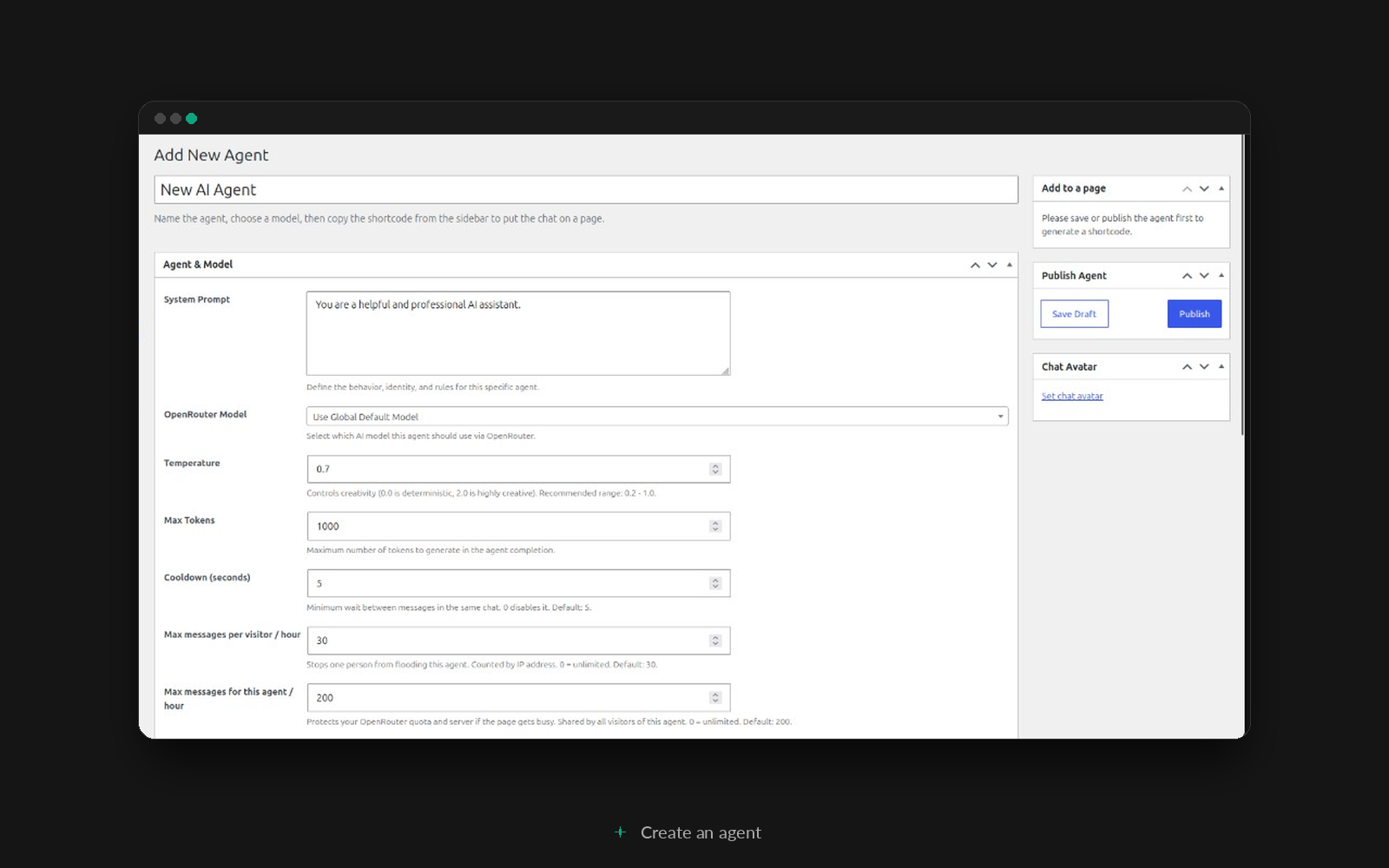
- System prompt. The instruction the model follows. A new agent starts with "You are a helpful and professional AI assistant."
- Model. Use the site default, or pick a different model.
- Temperature, from 0 to 2. Lower answers vary less. The starting value is 0.7.
- Max tokens. The longest reply the model may write. The starting value is 1000.
- Cooldown. How many seconds someone must wait between messages in the same chat. It starts at 5. Set it to 0 to turn the wait off.
- Who can use this chat. Anyone who can view the page, logged-in visitors, or specific roles. People who can edit the agent can always open it.
- Messages per visitor, per hour. Counted by IP address. It starts at 30. Set it to 0 for no cap.
- Messages per logged-in visitor, per hour. Each account has its own count. It starts at 0, which means no cap. Guests are not counted.
- Messages per role, per hour. Everyone with that role shares one count. 0 means that role has no extra cap.
- Messages for this agent, per hour. Shared by everyone using that agent. It starts at 200. Set it to 0 for no cap.
- History. How many earlier messages are included with each new one. Leave it empty to send the last 40. A longer history costs more.
- Blocked phrases. One phrase per line. A message that contains one is rejected and is not stored.
- Blocked patterns. One regular expression per line. A pattern that is not valid is not saved.
- Light or dark. Dark is the default.
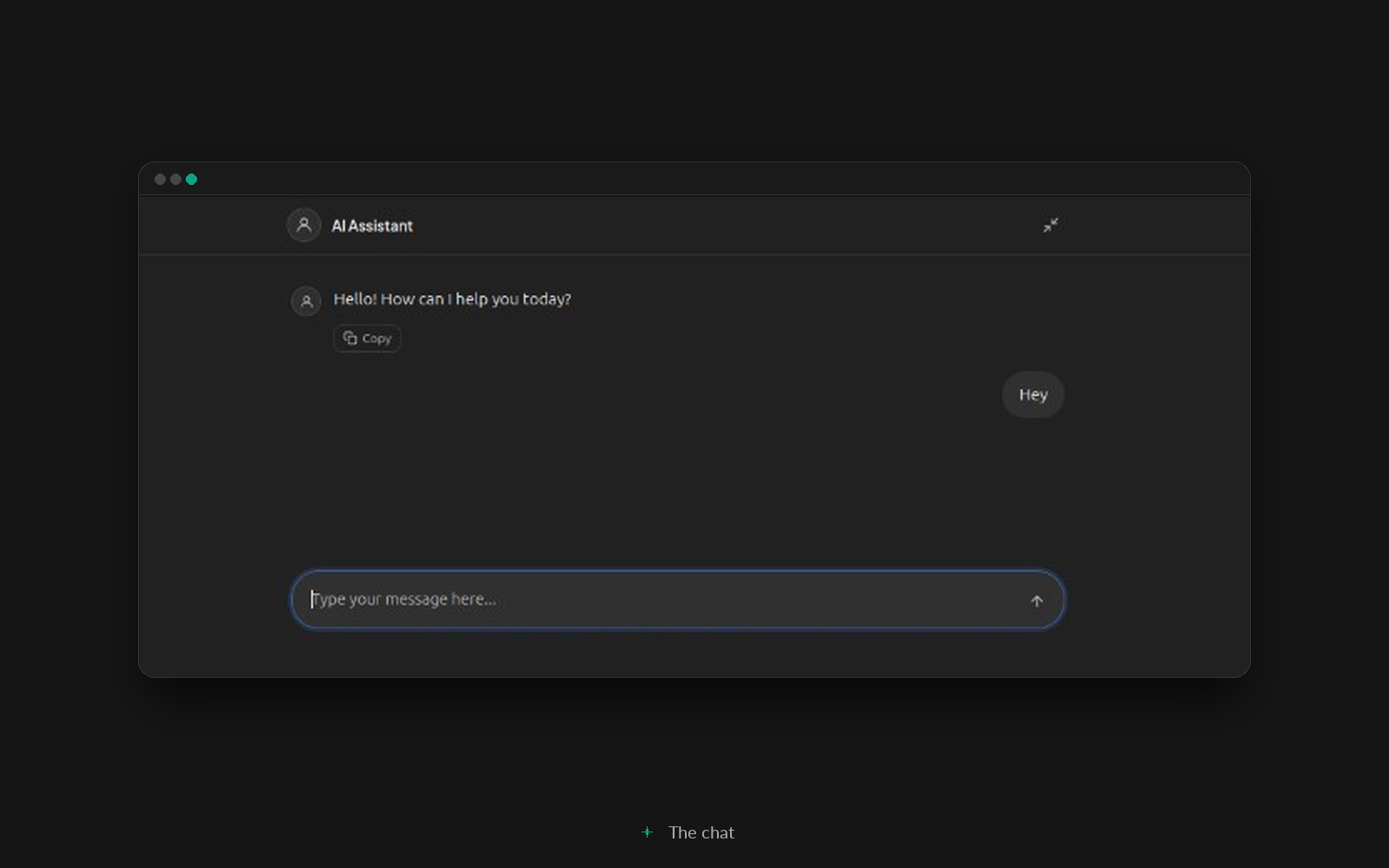
- The title shown in the header. If you clear it, the agent name is used. Otherwise it starts as "AI Assistant".
- A greeting, shown only when the chat has no messages yet. It starts as "Hello! How can I help you today?"
- The placeholder in the message box.
- A color for the send button and the visitor's messages. It starts as blue.
- A featured image, used as the avatar.
- A short description under the title.
- A header logo beside the avatar.
- Suggested messages, shown when the chat is empty. Choosing one sends it.
- A disclaimer under the message box. It is shown as plain text.
[arwp id="123"]
Use the ID shown for that agent. Paste the shortcode into any page or post. A draft is shown only to people who can edit it.
What people see
The greeting appears first. Replies arrive as they are written, and a visitor can stop one that is still coming in. Messages can include Markdown. There is a copy button on the agent's replies, and a button to open the chat full screen. One message can be up to 8,000 characters.
The browser stores a token for that chat, so the same visitor on the same device picks up the conversation later. By default anyone who can open the page can write a message, including people who are not logged in. An agent can instead require a logged-in visitor or a specific role.
Read the chats
ARWP Agents → Chats lists each conversation, the agent, whether the visitor was a guest or a logged-in visitor, the number of messages, and the tokens used. Open a row to read it, or delete it. Names and contact details stay hidden until an administrator turns that on in Settings.
Only administrators can create agents, change the API key, or open Chats.
What leaves your site
A message is sent to OpenRouter so the chosen model can reply. The request includes that message, the agent's system prompt, the recent messages from the same chat, and the model settings for that agent. Nothing is sent until someone uses a published shortcode.
OpenRouter's terms are at https://openrouter.ai/terms and its privacy policy is at https://openrouter.ai/privacy.
If a reply fails, visitors see a short note that the assistant is unavailable. An administrator who is logged in sees the actual error.
安装:
- Install and activate ARWP Agents.
- Go to ARWP Agents → Settings. Save your OpenRouter API key and choose a default model.
- Go to ARWP Agents → Add Agent. Write the prompt, then publish.
- Copy the shortcode, such as
[arwp id="123"], and paste it into a page or post.
屏幕截图:

常见问题:
Do I need an OpenRouter account?
Yes. The plugin does not include a key. Create one at https://openrouter.ai/ and save it under ARWP Agents → Settings. Replies are charged to that account.
Where do I put the chat?
In the content of any page or post, using that agent's shortcode, or with the ARWP Chat block. Each agent has its own.
Can each agent use a different model?
Yes. An agent can follow the default model from Settings, or use another model from the list. If no default is saved, the plugin uses openai/gpt-4o.
Who can send a message?
Each agent chooses anyone who can view the page, logged-in visitors, or specific roles. People who can edit that agent can always open it. Only administrators can create or edit agents.
Can visitors spend my OpenRouter credit?
Yes, when the shortcode or block is on a public page and the agent allows that visitor. A new agent waits 5 seconds between messages, allows 30 messages per visitor each hour, and 200 messages an hour for that agent. You can also cap messages per logged-in account and per role. Settings can stop the whole site for the day after a token ceiling or a reported dollar ceiling. Set a number to 0 to turn that cap off. Existing agents start with the account and role caps off. The daily ceilings start off.
Where is the API key stored?
In Settings, where it is encrypted in the database, or in wp-config.php as define( 'ARWP_OPENROUTER_API_KEY', '...' );. The constant wins.
Where are the conversations stored?
On your site. The visitor's browser keeps a token so the chat can continue. Visitors can download or delete their own chat. Administrators can read, download, and delete conversations under ARWP Agents → Chats. Settings can delete chats older than a chosen number of days. Names and contact details stay hidden until an administrator turns on Show names and contact details in Chats. Before the first send, the visitor must accept a notice that the message leaves the site for OpenRouter. Deleting the plugin also deletes the agents, the chats, and the saved API key.
What if the key is missing or OpenRouter does not answer?
The chat box still appears. The reply does not. Visitors see a general message. Logged-in administrators see the specific error. The agents screen also links to Settings when no key is saved.
更新日志:
- Settings can stop new messages after a daily token ceiling or a reported dollar ceiling, and email once near 80% and once when messages stop.
- Chats can be kept for a set number of days. Visitors can download or delete their own chat, and administrators can download a CSV or a transcript.
- The ARWP Chat block places the same chat as the shortcode.
- Visitors must accept a notice that the message is sent to OpenRouter before the first send in a browser session.
- Blocked patterns keep escapes such as \d when an agent is saved or cloned.
- Each agent can limit who may chat: anyone who can view the page, logged-in visitors, or specific roles.
- Added hourly caps per logged-in account and per role.
- The OpenRouter key is encrypted in the database, or read from ARWP_OPENROUTER_API_KEY in wp-config.php.
- Chats hides names and contact details unless an administrator turns that on.
- Agents can block phrases and patterns, and show a description, header logo, suggested messages, and a disclaimer. A blocked pattern cannot stall the site.
- Renamed the plugin to ARWP Agents.
- Lengthened internal prefixes on PHP, options, hooks, custom tables, and the chat script.
- The chat shortcode is now
[arwp id="123"]. - Updated marked to 18.1.3 and Select2 to 4.1.0.
- First public release, with an OpenRouter connection, a chat for each agent, shortcode placement, and a conversation log.
- Only administrators can create or edit agents.
- Cooldown and hourly limits are on by default.
- Visitors see a general message when a reply fails. Administrators still see the detail.
- Hardened database queries.
- Sanitized the remaining request inputs.
- Bundled Select2 with the plugin instead of loading it from a third party.