
The SEO Framework – Fast, Automated, Effortless.
详情介绍:
- It is brilliant. The SEO Framework is an expert system for SEO. It is the only solution that can intelligently generate critical SEO meta tags in any language by reading your WordPress environment. This automation saves you a considerable amount of time that could be used to write more content or focus on other tasks. It also removes the need for advanced SEO knowledge.
- It comes preconfigured. With The SEO Framework, we provide an excellent starting point for your website by rationally optimizing all your pages. Naturally, you can also tweak it however you like. If you're not an SEO expert, learn what you may wish to optimize in our Setup guide.
- It helps you optimize your metadata. We made the only SEO plugin that follows Google's webmaster guidelines to the letter. It took years of research and tweaking to translate this well inside your WordPress interface. Finally, you can freely optimize your pages without having to worry about making critical mistakes.
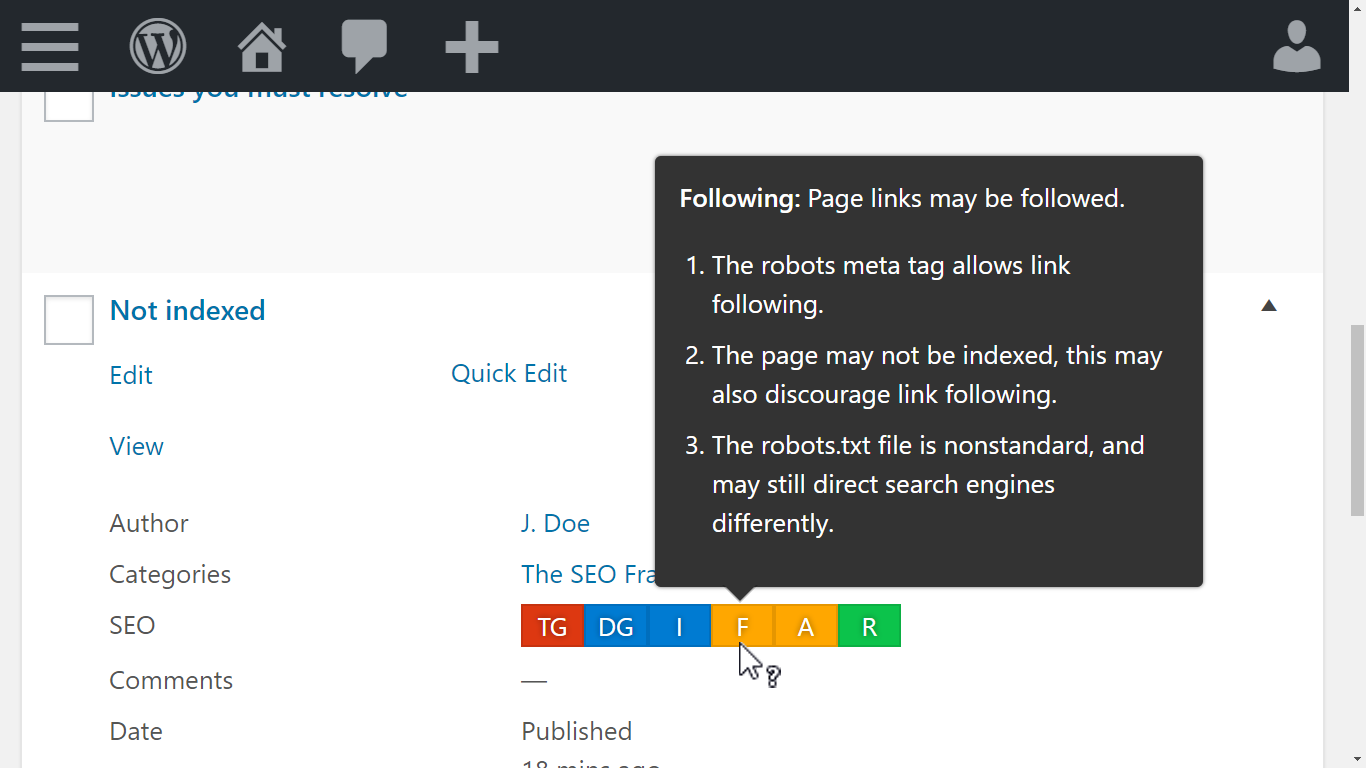
- It creates a beautiful overview. On your post, term, and user overview pages, you'll find color-coded guidelines. They suggest how to improve your pages as you hover over them with your mouse cursor. For example, when your titles are unbranded or when WordPress blocks indexing. Instinctively, touch-and keyboard navigation is also supported.
- It includes exceptional support. We don't outsource our support. We're here for you. Feel free to drop by our support channels at any time to ask a question. More than 5000 inquiries have been answered personally in the past nine years, typically within 72 hours.
- It leaves no room for errors. We focus on the quality of features you need over the quantity on features you don't. This trait makes this plugin unique, faster, more accurate, nearly bug-free, and more sustainable. The added benefit is that your site is unlikely to get penalized by search engines. We won't steer you into writing unnatural content or allow you to trick search engines.
- It remains genuine and pure. We built The SEO Framework for small to large corporations and enterprises. The interface is entirely accessible and seamlessly integrates within your dashboard. Therefore, interacting with this plugin feels natural. It might feel dull, but your WordPress dashboard shouldn't be a billboard for our branding. We won't ever change this.
- It improves search presence. The SEO Framework ranks your website distinctively by enabling breadcrumbs for Google Search via structured data. It also automatically generates titles and descriptions according to Google's guidelines and quickly helps search engines find the website's latest changes via the built-in optimized sitemap.
- It makes social sharing easy. The SEO Framework automatically supports and allows you to further tailor the Open Graph, Facebook, Twitter Cards, and Fediverse protocols. It helps your posts stand out when they're shared on various social networks, including Pinterest, Discord, WhatsApp, and Mastodon.
- It feels more than accessible. We handpicked our color scheme so that people with any medically recognized color-vision deficiency can distinguish the guidelines set by search engines. We also implemented full keyboard-navigation and screen-reader support.
- It protects you from mistakes. The SEO Framework steers you from making significant and common SEO mistakes. It leaves little room for you to mess up because the plugin already does everything SEO for you. For example, it automatically prevents duplicated content mistakes by enforcing strict canonical rules.
- It follows best-practices and beyond. The biggest problems with WordPress plugins are security and compatibility. As part-time security researchers, we focus on making this plugin impenetrable. The SEO Framework also uses WordPress's API whenever possible, making this plugin integrate neatly with every other plugin written with that in mind.
- It has developers at heart. We encourage other developers to enhance and add functionality to this plugin. We've done so ourselves, already, with our extensions. Check out our API, and feel free to contribute!
- It respects your privacy. The SEO Framework sends us no information and does not create cookies. Learn more from our strictly adhered-to privacy policy.
- Used another SEO plugin? Easily migrate your metadata.
- Need a helping hand getting started? Read our quick setup guide.
- Want to improve your pages? Learn how to optimize your metadata.
- Focus guides you through the process of writing targeted content that ranks with focus keywords and synonyms.
- Articles enhances your published posts by automatically adding important Structured Data.
- Transport migrates and transforms metadata from Rank Math, Yoast SEO, and SEOPress to this plugin.
- Honeypot catches comment spammers through five lightweight yet powerful ways.
- Cord helps you connect your website to Google Analytics and Meta Pixel.
- Local lets you set up important local business information for search engines to consume.
- AMP binds The SEO Framework to the AMP plugin for AMP supported articles and pages.
- Monitor keeps track of your website's SEO optimizations and statistics.
- Incognito hides all development-comments from The SEO Framework.
- Origin redirects attachment-page visitors back to the parent post.
- Title Fix makes sure your title output is as configured. Even if your theme is doing it wrong.
- 它可以防止类别、页面、子域和 WordPress 多站点域映射的规范错误。
- 它通过告诉搜索引擎查看现有的最后一页来阻止由 WordPress 中的分页漏洞引起的 SEO 攻击。
- 它不鼓励将 404 页面和空类别编入索引,即使它们不发送 404 响应。
- 它不鼓励搜索引擎索引提要和站点地图。这并不意味着他们不会使用它们;只是,他们不会在搜索结果中显示它们。
- 它将搜索引擎从评论页面引导回存储这些评论的帖子。
- Internationalization through WordPress.org. You can contribute here.
- Unicode (UTF-8) 字符识别和渲染,包括 Emoji 和 CJKV(中文、日文、韩文、越南文)。
- Right to Left (RTL) languages (Arabic, Hebrew, Farsi, etc.), through its interface and meta tag generation.
- 由于精心挑选的配色方案,完整的色觉缺陷可访问性。
- 完整的键盘导航,这样您就可以快速检查工具提示,而无需伸手去拿鼠标。
- 通过字段锚点、ARIA 标签和标题属性的全屏阅读器可访问性。
- WordPress 多站点设置,这个插件实际上是建立在一个之上的。
- 检测和输出 robots.txt 和 sitemap.xml 文件。
- 与 WordPress 核心站点地图完全整合.
- SEO controls for posts, pages, custom post types, terms, post type archives, and author archives.
- Primary term (category) selection to influence breadcrumbs and links.
- 通过 Schema.org JSON-LD 脚本输出结构化数据。
- 更改 oEmbed 以改进 Discord 上的共享。
- Detection of various other SEO plugins to help you switch graciously.
- Translation plugins like WPML, Polylang, TranslatePress, WPGlobus, and MultilingualPress.
- Page builders like Elementor and Bricks, including generated descriptions from Bricks Text and Section elements.
- E-commerce plugins like WooCommerce and Easy Digital Downloads.
- Blocking of SEO analysis and AI crawlers for Moz, OpenAI, Apple, and others, via robots.txt.
- Forum plugins like bbPress and wpForo.
- 通过 WordPress 的原生批量和快速编辑界面编辑帖子和术语。
- Headless mode via a single constant definition.
安装:
- PHP 7.4 or higher.
- WordPress 7.0 or higher.
- 用于管理员的任意现代化浏览器
- Install The SEO Framework either via your WordPress dashboard using plugin search or by uploading the files to your server.
- 网络激活此插件或在单个站点上激活它。
- That's it! The plugin now handles your website's SEO. It also protects your website against SEO attacks.
屏幕截图:
常见问题:
SEO 框架是免费的吗?
绝对!它将保持免费,没有广告,跟踪,暴露,或者 nags! 这个插件包罗万象,但是 100%的免费,不是瘫痪软件。
这里有一个高级的版本?
No. We treat this plugin as premium already. However, we do offer many free and paid extensions that help support this free plugin. We provide these via our free Extension Manager plugin.
为什么没有分析、跟踪或 404 监控?
SEO 专家使用一些高级的工具,例如 Ahrefs,SEMrush,Screaming Forg, 以及 Google Analytics 回头来会更喜欢使用 SEO 框架,因为它不会试图随意地完成他们的工作。 要正确分析您的网站,必须从外部进行分析。 如果我们在您的网站上加载这些功能,不良机器人将导致数以千计的误报,使您的数据库充满不适用于搜索引擎的无用信息。 我们避免这样做,因为它无论如何都不会帮助您。
我有一个功能请求,一个问题,或者找到了一个 bug.
Please visit the support forums and kindly tell us about it. 我们会尽量在一周内回复你,通常我们会在 3 天内回复你。
我是一名开发人员;我该怎么帮忙?
Any input is much appreciated, and everything will be considered. Please visit the GitHub project page to submit issues or even pull requests. Learn more about contributing.
颜色告诉我什么?
我们使用不同的颜色来传达信息。红色是您必须解决的错误。黄色是您可能想要解决的非严重警告。绿色很好。蓝色是待定的。灰色是未定义或不可处理的。
The sitemap doesn't contain categories, images, etc.
没有列出每一页不是问题。搜索引擎喜欢抓取 WordPress,因为它的结构一致且众所周知。 如果访问者找不到页面,那么搜索引擎为什么会找到?不要依赖您的站点地图,而要依赖于您的内容和网站的可用性。 Check out our Extension Manager. It brings extensions, like Articles, that fill in the gaps via modern and more robust means.
站点地图包含不需要的链接.
SEO 框架采用所有可公开查询的帖子、页面和 CPT,并将它们放入站点地图中。
If you don't want a page in the sitemap, consider enabling the noindex option for it. This option will also remove the page from search engine result pages.
If the link shouldn't be in the sitemap because it's meant for structural reasons, then inform the plugin or theme author that created them.
You should tell the author to check out the "public and rewrite post type arguments." The plugin or theme author should know what that means.
In the meantime, you can disable SEO for the unwanted entries via the "General Settings" under "Exclusions."
为什么不包括焦点关键字?
Google warns about the keyword stuffing approach implemented by some other SEO plugins. It forces users to write unnatural content, and it can have adverse effects on your site's ranking. 现代化的搜素引擎使用了 AI 来理解你文章的内容。这意味着你只要尽可能的编写相关内容,你就不需要担心任何的关键字。 但是,我们实施了 Google 用来帮助您为关键字找到合适的同义词和词形变化的相同 API。 此功能是我们高级扩展套件的一部分。
application/ld+json 脚本有什么作用?
JSON-LD 脚本是搜索引擎助手,它告诉搜索引擎如何连接和索引站点。我们通过 Schema.org 标准做到这一点。 They can tell the search engine if your site contains an internal search engine, which social sites you're connected to, and what page structure you're using. This is also referred to as structured data.
How do I display breadcrumbs?
The SEO Framework outputs hidden breadcrumbs for search engines to find via its Schema.org settings. You can also output these breadcrumbs visually in your theme by using a shortcode.
更新日志:
- Authors now have complete SEO controls: a meta title and description, social tags, a canonical URL, robots directives, and a redirect.
- You can now click a generated title or description and edit it directly, instead of retyping it from scratch.
- We added Fediverse support, so Mastodon can credit the author when someone shares your page.
- Breadcrumb settings now let you pick the taxonomy for each post type and omit the post type archive.
- The breadcrumb shortcode can now omit the Home crumb and collapse long trails with its new
maxattribute. - The optimized sitemap now has a CSS stylesheet, so it stays readable when browsers stop applying XSLT.
- TranslatePress sites now get a sitemap for each language, and Polylang and WPML now advertise working sitemap URLs in robots.txt.
- You can now add a TikTok profile in the Schema.org settings.
- You can now enter a Facebook domain verification code in the Webmaster settings.
- Pages built with Bricks now get a generated description from their text.
- We fixed many edge-case issues and corrected inaccurate or outdated PHP and JavaScript documentation throughout the plugin.
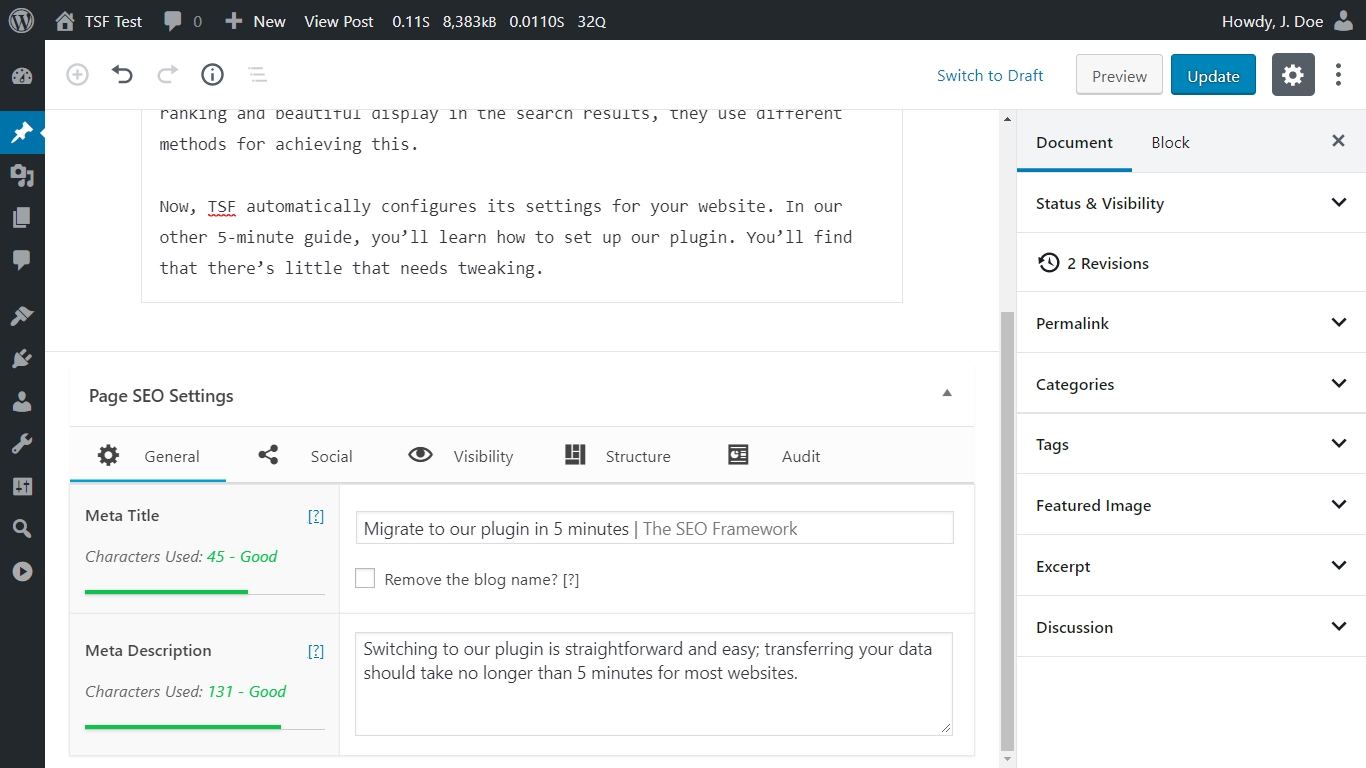
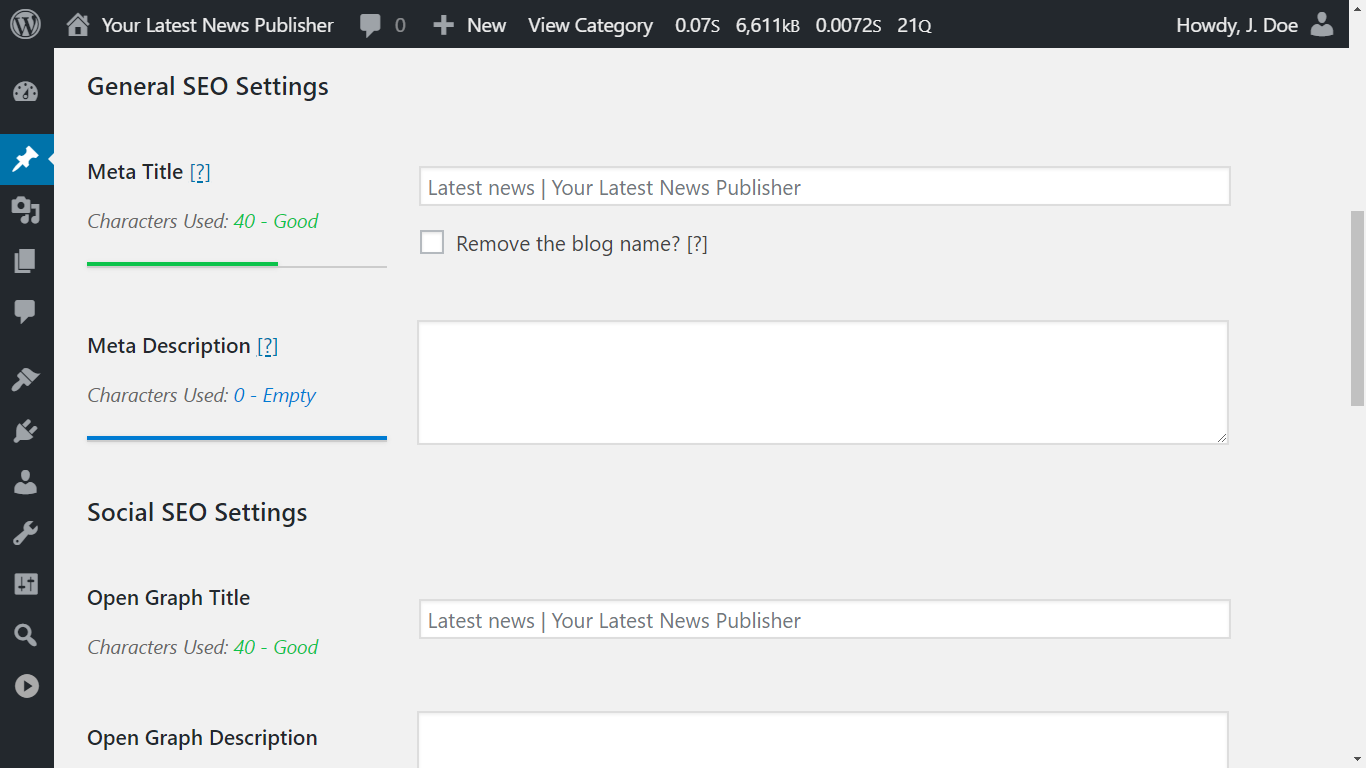
- General: meta title and meta description fields, and a "Remove the site title?" checkbox.
- Social: Open Graph title and description fields, Twitter Card title, description, and card type fields, and a social image field.
- Authorial Info: Facebook, Fediverse (new), and X profile fields.
- Visibility: canonical URL, robots indexing, link following, archiving, and 301 redirect fields.
twitter:creator and fediverse:creator use the author's X handle and Fediverse profile when you've set them. We store these fields once per user, including on Multisite, the same way we already stored Authorial Info.
The WordPress users sitemap listens to these settings. An author you set to noindex or to redirect leaves the sitemap, and an author you set to index stays listed, even when you set all author archives to noindex. The sitemap still lists only authors who have published posts. It also returns a 404 error when no author is indexable.
The SEO Bar comes along. The users list now shows it, and profile pages show it, too. A user who can't edit posts isn't a public author, so the SEO Bar shows only the indexing item for them.
Edit generated values directly
TSF fills empty title and description fields with a blurred placeholder showing what it generates. Until now, you had to retype that text from scratch to change a word. Now, click the empty field and the placeholder stays, with your cursor where you clicked. Start typing and the text becomes normal text you can edit. Clear the field and the placeholder returns.
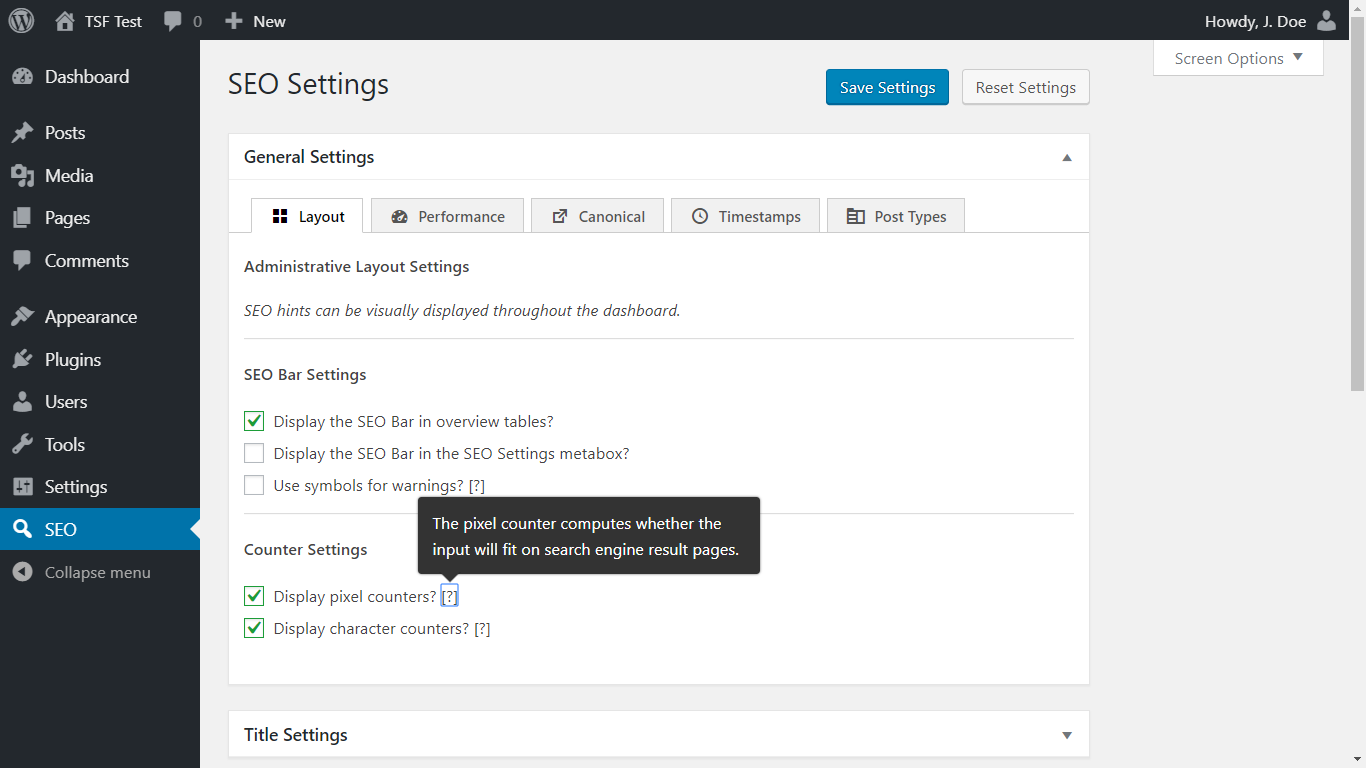
New sites have this enabled by default. Existing sites keep the previous behavior until you enable "Edit generated values directly?" at SEO Settings > General Settings > Layout, under Editing Settings.
Fediverse support
Mastodon can credit an author when someone shares your page, provided your page says who wrote it. We added the fediverse:creator meta tag and rel=me profile links for that, so Mastodon and other Fediverse platforms can credit and verify the profile.
You set a site profile and an author fallback at SEO Settings > Social Meta Settings, and each author can override that fallback on their own profile page. Each profile has a handle and a profile URL. Enter the @username@domain handle from Mastodon's Author attribution, or paste a profile URL to fill both fields. TSF also adds the author's Fediverse profile to the Schema.org sameAs links.
Our Fediverse creator and Mastodon article walks through setting up the credit and the green checkmark.
Breadcrumb settings
Two new settings at SEO Settings > Schema.org Settings change your breadcrumbs, and one cleanup applies automatically:
- Choose the taxonomy: singular breadcrumbs can use a chosen taxonomy for each post type. The default keeps the current trail, so products keep using Brands until you select Product categories. "Exclude taxonomy crumb" removes the term trail.
- Omit the archive: singular breadcrumbs can omit the post type archive. For products, that archive is the shop page.
- Cleaner names: breadcrumbs no longer prefix archive names, such as "Category:", "Archives:", or "Author:". This affects structured data and the shortcode alike, and the trail skips parent pages that visitors can't view.
- Shorter trails: the new
maxattribute collapses a longer trail. Amaxbelow 3 is treated as 3. - No Home crumb: the shortcode now omits the Home crumb when its
homeattribute is empty. - Whole crumbs: crumbs now wrap as a whole instead of breaking mid-word.
- TranslatePress: each published language that has a language directory now gets its own sitemap, and robots.txt lists every language except the one served without a directory.
- Polylang and WPML: robots.txt now advertises sitemap URLs that work. Before, the URLs could include the language directory twice, or the static front-page slug, so they returned a 404 error or redirected to WordPress's sitemap.
- Cache clearing: clearing the sitemap cache now clears every language, including when your site uses a persistent object cache.
- Translated sitemap links: SEO Settings now lists the language sitemaps under "View translated sitemaps," using the language name as the link text.
- TikTok: you can now add a TikTok profile at SEO Settings > Schema.org Settings. TSF includes it in your site's Schema.org
sameAslinks. - Facebook verification: you can now enter a Facebook domain verification code at SEO Settings > Webmaster Meta Settings, under Webmaster Integration Settings. Thanks, Contributolo!
- Bricks: a page edited with Bricks now gets a generated description from the text in its Text and Section elements.
- Twitter Card labels: "Twitter Title" is now "Twitter Card Title," and "Twitter Description" is now "Twitter Card Description."
- Feeds: posts you exclude from on-site archive listings are now also omitted from the feed.
0 is no longer treated as empty. The detailed log linked below lists the rest.
We also corrected inaccurate or outdated PHP and JavaScript documentation throughout the plugin.
It has been a slow year for releases: over 10 months without an update. Behind the scenes, we spent months experimenting with and refining our development workflow. AI-assisted review helped us uncover issues, but Sybre personally verified every single letter written for this update.
We also built and published open-source tools:
- wp-plugin-regression runs WordPress Playground sites and compares plugin output before and after changes.
- makepot-tsf generates translation templates using WP-CLI's internationalization tools, without requiring a WordPress installation.
DONOTCACHEPAGE not to store those responses. That can't remove an empty response your cache already stored, so run your cache plugin's "Purge All," "Clear all cache," or equivalent action after updating.
Support the development
We hope you'll love this update as much as we do. Please consider supporting us by posting a fantastic review, getting a license, or doing your friends and colleagues a favor by installing TSF for them.
If this update saved you time, you can also sponsor our work on GitHub. Sponsorship helps fund development without adding nags or upsells.
Detailed log
To hit on something right by luck without search I call good luck, to do something well after study and practice I call doing well; and those who pursue this seem to me to do well.
Full changelog
- You can find the full changelog here.