
GSheetConnector – CF7 Google Sheets Connector & Save CF7 Entries to Database
| 开发者 |
westerndeal
abdullah17 gsheetconnector |
|---|---|
| 更新时间 | 2026年10月4日 01:03 |
| PHP版本: | 7.4 及以上 |
| WordPress版本: | 7.1 |
| 版权: | GPLv2 or later |
| 版权网址: | 版权信息 |
标签
下载
详情介绍:
- Real-time Google Sheets sync – Send Contact Form 7 submissions to your Google Sheet as soon as they are successfully submitted. No manual exports or copy-pasting.
- Simple setup – Connect your Google account, map your CF7 form to a spreadsheet once, and future submissions are automatically added as new rows.
- Keep form entries organized – Store leads, inquiries, registrations, RSVPs, orders, and other Contact Form 7 data in a structured spreadsheet.
- Easy access for your team – Share, search, sort, and filter incoming submissions in Google Sheets without giving team members access to your WordPress dashboard.
- Local submission backup – Optionally store Contact Form 7 entries in your WordPress database, independently of the Google Sheets connection.
安装:
- In your WordPress dashboard, go to Plugins → Add New.
- Search for CF7 Google Sheets Connector.
- Click Install Now, then click Activate.
- Make sure Contact Form 7 is also installed and activated, as it is required for this plugin.
cf7-google-sheets-connector folder to /wp-content/plugins/ and activating it from the Plugins screen in WordPress.
2. Connect Your Google Account
- In your WordPress dashboard, go to Contact → Google Sheets → Integration.
- Click Sign in with Google.
- Sign in to the Google account you want to use and approve the requested permissions.
- After successful authentication, your connected Google account will appear in the Integration tab.
- Create a new Google Sheet or open an existing spreadsheet in Google Sheets.
- Note the Sheet Name, Sheet ID, Tab Name, and Tab ID.
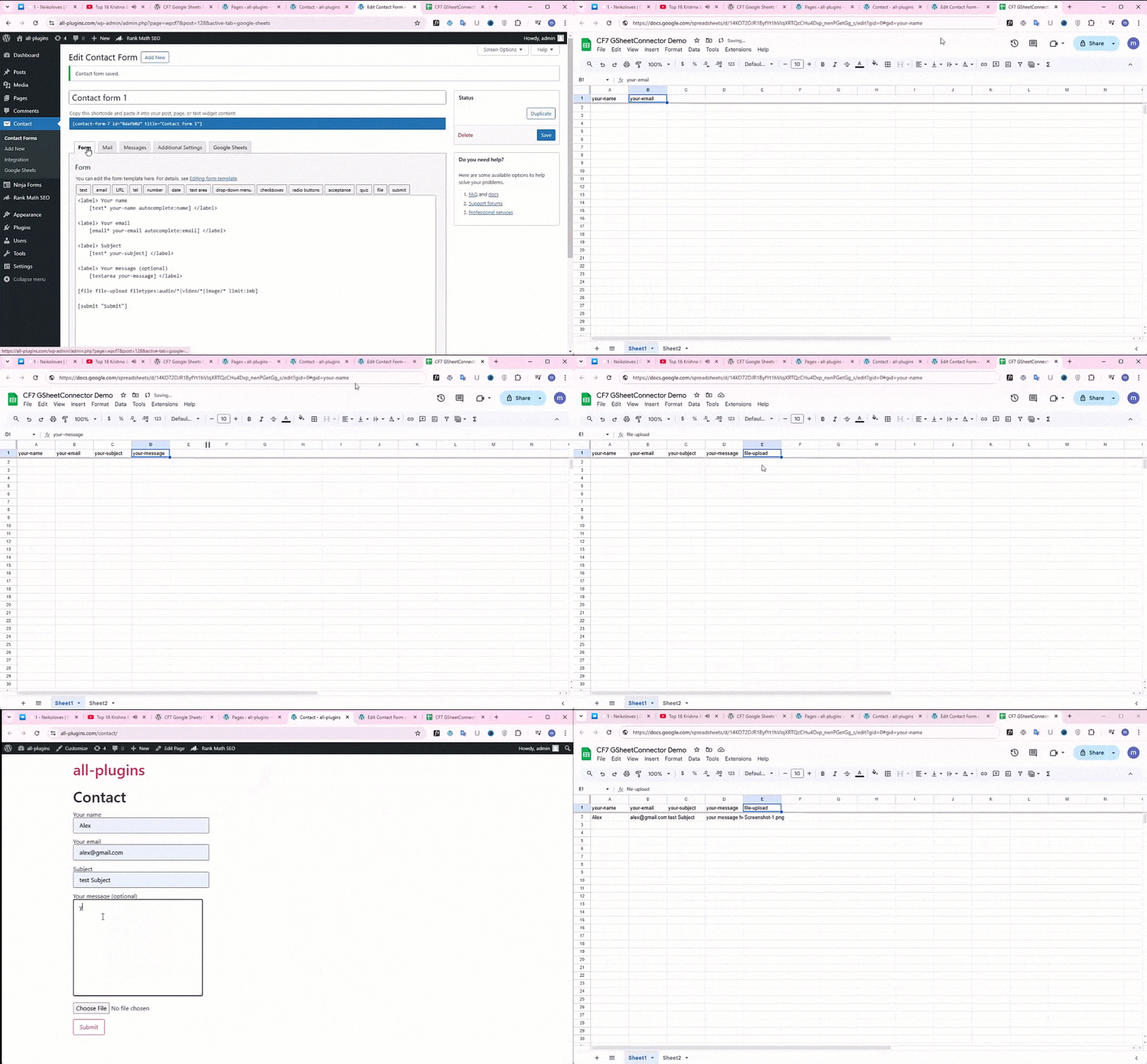
- In the first row of your worksheet, add the column headers that correspond to your Contact Form 7 fields.
- Add
dateas the first column if you want to store the submission date.
[text your-name]
[email your-email]
[text your-subject]
[textarea your-message]
Your Google Sheet header row can be:
date | your-name | your-email | your-subject | your-message
Make sure your spreadsheet headers match the Contact Form 7 field names exactly.
Use lowercase field names with hyphens where required, and avoid spaces, leading numbers, underscores, or quotation marks in your column headers.
4. Connect Contact Form 7 to Google Sheets
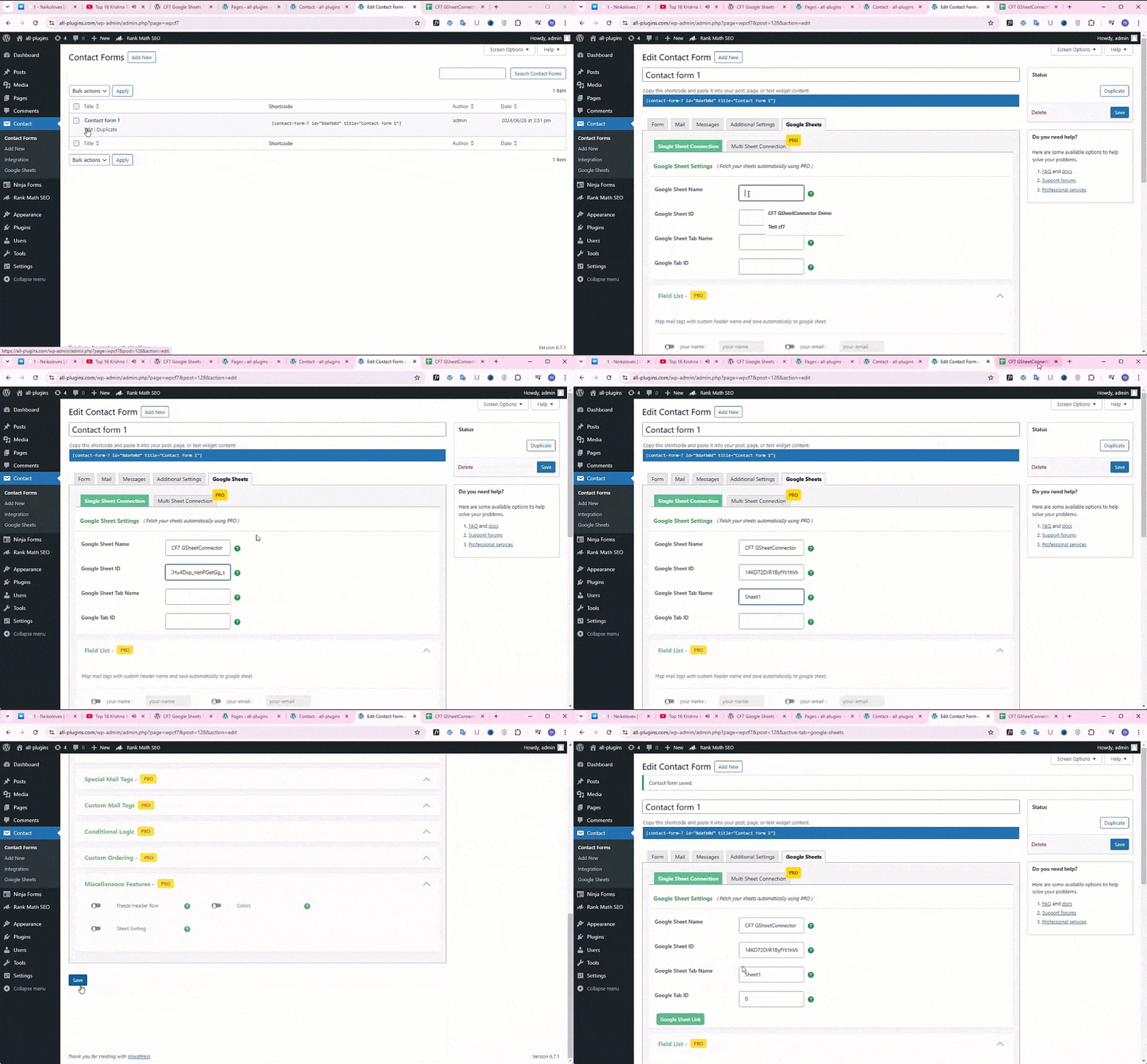
- Go to Contact → Contact Forms in your WordPress dashboard.
- Edit the Contact Form 7 form you want to connect.
- Open the Google Sheets tab inside the form settings.
- Enter the Sheet Name, Sheet ID, Tab Name, and Tab ID for your spreadsheet.
- Save your form settings.
- Submit a test entry through your Contact Form 7 form.
- Open your Google Sheet and confirm that the submission appears as a new row.
屏幕截图:





常见问题:
How do I connect Contact Form 7 to Google Sheets?
Install and activate CF7 Google Sheets Connector, then go to Contact → Google Sheets → Integration and connect your Google account using Google OAuth 2.0. Next, create or open your Google Sheet, add your Contact Form 7 field names as column headers, and enter the Sheet Name, Sheet ID, Tab Name, and Tab ID in the Google Sheets tab of your Contact Form 7 form. After saving the settings, submit a test form entry. The submission should appear automatically as a new row in your Google Sheet.
Does Contact Form 7 automatically send submissions to Google Sheets?
Contact Form 7 does not send submissions to Google Sheets by itself. CF7 Google Sheets Connector adds this integration. Once your form and spreadsheet are connected, new Contact Form 7 submissions are automatically sent to Google Sheets in real time, so you don't need to manually export or copy form data.
Do I need to create a Google Cloud project to connect Contact Form 7 to Google Sheets?
No. The recommended Quick Connect method uses Google OAuth 2.0 authentication and lets you connect your Google account without creating your own Google Cloud project or API credentials. For advanced requirements, CF7 Google Sheets Connector PRO also supports manual Google authentication using your own Google Cloud project and OAuth credentials.
How do I connect my Google account?
Go to Contact → Google Sheets → Integration and click Sign in with Google. Choose the Google account you want to connect and approve the requested permissions. Once authentication is complete, the connected account will appear in the Integration tab. No Google Cloud Console setup is required when using the recommended Quick Connect method.
Can I use a Google Service Account instead of signing in with Google?
Yes. CF7 Google Sheets Connector supports Google Service Account authentication. Create a service account and JSON key in Google Cloud, add the JSON key to the Service Account settings in the plugin, and share your target Google Sheet with the service account email address. This provides a server-to-server connection without requiring an interactive Google login after configuration.
How do I map Contact Form 7 fields to Google Sheets columns?
In the free version, add your Contact Form 7 field names as column headers in the first row of your Google Sheet.
For example, if your Contact Form 7 fields are:
your-name, your-email, your-phone, your-message
Use the same names as your Google Sheets column headers:
your-name | your-email | your-phone | your-message
When someone submits the form, each value is added under its corresponding Google Sheets column.
CF7 Google Sheets Connector PRO provides advanced field mapping, custom header names, column ordering, field controls, and automatic sheet and tab detection.
Can I send Contact Form 7 special mail tags to Google Sheets?
Yes, but support differs between the Free and PRO versions. The free version supports the Contact Form 7 date special mail tag. CF7 Google Sheets Connector PRO supports additional Contact Form 7 special mail tags, including date, time, serial number, remote IP address, user agent, page URL, post information, site information, and more. PRO also supports custom mail tags and provides toggle controls to enable or disable individual mail tags.
Can I connect multiple Contact Form 7 forms to Google Sheets?
Yes. You can connect multiple Contact Form 7 forms to Google Sheets. Each CF7 form can have its own Google Sheet and worksheet configuration. The free version supports one Google Sheets feed per form. CF7 Google Sheets Connector PRO supports multiple Google Sheets feeds per form, allowing a single Contact Form 7 form to send data to multiple spreadsheet destinations.
Can Contact Form 7 submissions be saved in WordPress as well as Google Sheets?
Yes. Enable the CF7 Database feature to store Contact Form 7 submissions locally in your WordPress database in addition to sending them to Google Sheets. Stored entries can be viewed and searched from WordPress, marked as read or unread, and selected entries can be resent to Google Sheets when needed.
What happens if a Contact Form 7 submission fails to sync with Google Sheets?
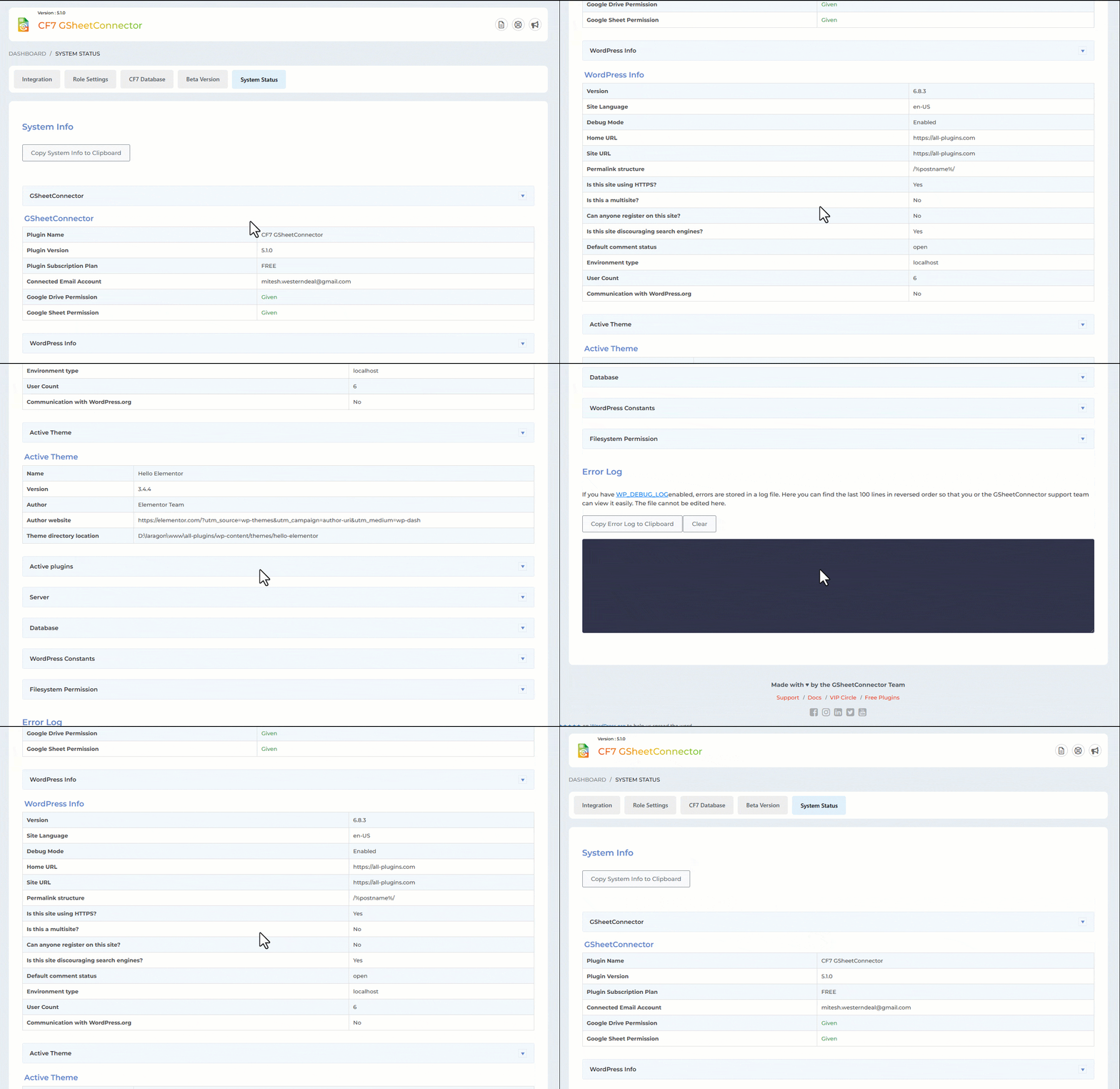
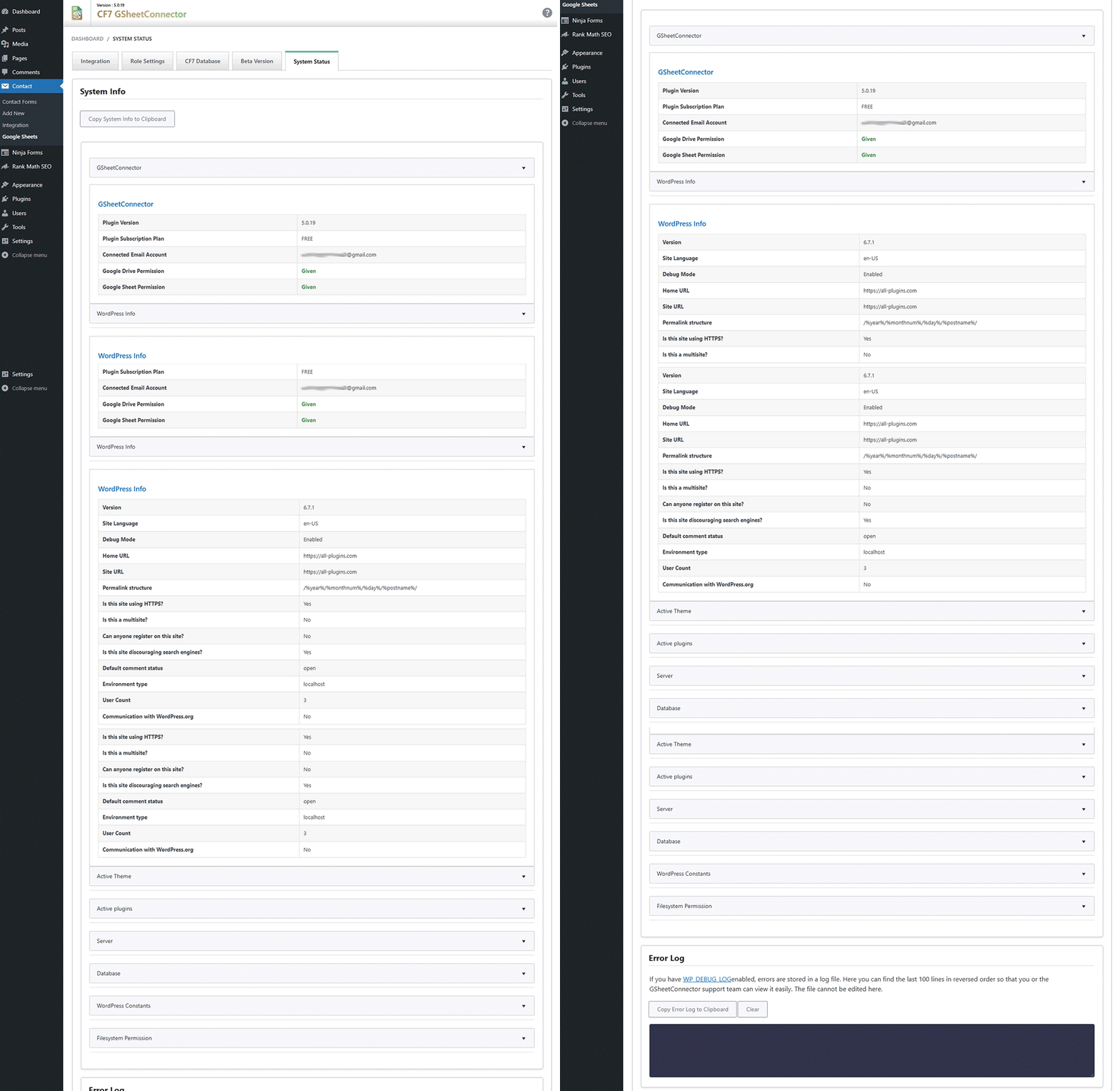
If the CF7 Database feature is enabled under Settings → General Settings, the submission can still be stored locally in your WordPress database even if the Google Sheets sync is interrupted. You can review stored entries and resend selected submissions to Google Sheets using the Send to Spreadsheet bulk action. You can also check the plugin's Error Log and System Status information for authentication, API, permission, or configuration errors.
Why is my Contact Form 7 data not showing in Google Sheets?
If your Contact Form 7 submissions are not appearing in Google Sheets, check the following:
- Make sure the correct Sheet Name, Sheet ID, Tab Name, and Tab ID are saved in the form's Google Sheets settings.
- Check that your Google account is still connected under Contact → Google Sheets → Integration.
- Make sure the first-row Google Sheets headers match your Contact Form 7 field names exactly.
- Check for incorrect spaces, underscores, capitalization, or other differences in your spreadsheet column headers.
- If you're using a Google Service Account, make sure the spreadsheet has been shared with the service account email address with the required permissions.
- Check the plugin's Error Log and System Status for authentication, Google API, or permission errors.
My Contact Form 7 form submits, but the submit button keeps spinning. Is GSheetConnector causing it?
Usually, a continuously spinning Contact Form 7 submit button indicates an issue with the form submission process itself, JavaScript, REST API communication, email delivery, or another WordPress configuration. CF7 Google Sheets Connector processes the Google Sheets integration after the relevant Contact Form 7 submission event. Check Contact Form 7, your browser console, WordPress configuration, and any email or REST API errors when troubleshooting a stuck submission.
Can I use CF7 Google Sheets Connector with Elementor, Divi, or Avada?
Yes. If you embed a Contact Form 7 form inside a page created with Elementor, Divi, Avada, or another page builder, CF7 Google Sheets Connector can still send that Contact Form 7 form's submissions to Google Sheets. The important point is that the embedded form must be a Contact Form 7 form. If you're using the page builder's own native form instead, use the corresponding GSheetConnector integration:
Is my Contact Form 7 data sent through GSheetConnector servers?
Form submission data is sent from your WordPress website to Google's APIs using the configured Google authentication method rather than being used as a separate GSheetConnector-hosted form submission database. Your WordPress site can also store submissions locally when the CF7 Database feature is enabled. As with any website handling personal information, you should configure your WordPress site, forms, Google account, spreadsheet permissions, and privacy disclosures according to the data you collect and the privacy requirements that apply to your website.
Does CF7 Google Sheets Connector protect against spreadsheet formula injection?
Yes. The plugin includes formula-injection protection for values sent to Google Sheets. Submitted values beginning with characters such as =, +, -, or @ are handled before being written to the spreadsheet to help prevent submitted content from being interpreted as a spreadsheet formula.
Does uninstalling CF7 Google Sheets Connector delete my data?
By default, uninstalling the plugin keeps saved settings so you can reinstall it without having to configure everything again. If you want stored plugin data and Google connection details removed during uninstall, enable Delete data on uninstall under Settings → General Settings before uninstalling the plugin.
Does CF7 Google Sheets Connector support WordPress Multisite?
Yes. CF7 Google Sheets Connector supports WordPress Multisite. Each site can manage its own Google connection and Contact Form 7 to Google Sheets configuration.
What's the difference between CF7 Google Sheets Connector Free and PRO?
The free version provides the core features needed to connect Contact Form 7 to Google Sheets, send form submissions automatically, configure spreadsheet columns, and optionally store submissions locally in WordPress. CF7 Google Sheets Connector PRO adds advanced features such as multiple Google Sheets feeds, automatic sheet and tab detection, advanced field mapping, custom headers and column ordering, all supported special mail tags, custom mail tags, conditional logic, Google Drive integration, spreadsheet formatting options, CSV export, role-based permissions, and manual Google authentication. See the Free vs PRO feature comparison for more details.
更新日志:
- Fixed: Google Sheet submissions being inserted into the wrong row when the header row is hidden.
- Fixed: Number field values being stored with an unwanted apostrophe in Google Sheets.
- Fixed: Filesystem permission status not being included when copying System Status information.
- Fixed: Improved CF7 database storage handling and added a filter hook to conditionally control database entry storage while maintaining sequential Entry IDs for Google Sheets submissions.
- Fixed: Improved CF7 database storage handling to prevent duplicate Entry IDs when database storage is disabled.
- Fixed: Fixed an issue where an unwanted apostrophe appeared before CF7 date field values in Google Sheets.
- Fixed: Added a filter hook to customize the Google Sheets display format for CF7 date fields while preserving the date as a real date value.
- Fixed: Fixed the Enable/Disable toggle functionality for Database Storage.
- Fixed: Number values now display correctly as numeric values in Google Sheets.
- Fixed: On Google Sheets whose header row does not start in column A (a blank first column), new Contact Form 7 submissions were written into row 1 and pushed the header row down, and values could land in the wrong columns. The submission is now always appended below the existing header row.
- Fixed: Fatal error (ArgumentCountError) on the Integration page after Google authentication when translations, such as German, added a %s placeholder to the "Connected Email Account" string.
- Improved: Updated the connected email account label to use a single translatable string with an explicit %s placeholder, ensuring compatibility with translated strings.
- Fixed: Database issue where data was not showing.
- Fixed: Increased the Google Sheets API request timeout to reduce intermittent cURL timeout errors during form submission.
- Removed: GDPR consent/review checkbox from the form submission process.
- Added: Chart and graph table structure for the Contact Form 7 database.
- Added: Charts and graphs to the dashboard.
- Added: GDPR compliance and Privacy Policy functionality.
- Changed: Contact Form 7 database table structure.
- Improved: Authentication functionality and reliability.
- Fixed: Entries were being written to incorrect columns and shifting further to the right with each submission instead of being added to new rows.
- Fixed: Date and time columns no longer display a stray apostrophe in the Google Sheets formula bar and are no longer automatically reformatted based on the spreadsheet locale.
- Fixed: Contact Form 7 date field values are now sent to Google Sheets in
dd-mm-yyyyformat instead of the rawyyyy-mm-ddformat submitted by the browser. - Fixed: Nonce validation for feed pagination requests.
- Fixed: JavaScript
updateSlider()error affecting the loading and saving of Manual Google Sheets Configuration.
- Fixed: Minor stability improvements and enhanced error logging.
- Added: File uploads submitted via Contact Form 7 are now copied to a local
uploads/cf7gsfolder, protected from directory listing. - Fixed: Resolved an issue that could cause unexpected output during plugin activation on some environments.
- Added: Database indexes to improve performance on sites with a large number of stored entries.
- Added: Enhanced plugin security by restricting plugin installation to trusted sources.
- Fixed: Date, time, and timezone handling for entries, error logs, and debug logs.
- Fixed: Form submission sync issue on WordPress multisite installations.
- Fixed: Simultaneous form submissions overwriting spreadsheet data.
- Fixed: Google Sheets sync errors are now properly recorded in the error log.
- Fixed: Negative numbers, phone numbers, and social handle values syncing incorrectly.
- Fixed: Spreadsheet settings being reset when duplicating or programmatically saving forms.
- Fixed: Entry list pagination issue.
- Fixed: Google Sheets sync for forms containing more than 26 spreadsheet columns.
- Fixed: Compatibility issues with newer PHP versions.
- Fixed: Unsaved changes warning conflict with WordPress and other plugins.
- Fixed: Minor security and stability improvements.
- Improved: Google Sheets sync performance and overall admin performance.
- Improved: Connected Google account loading in the admin area.
- Improved: Overall code quality and WordPress Coding Standards compliance.
- Added: Updated the README and added the connected feeds table to the dashboard.
- Added: Custom database tables for storing plugin data instead of post meta to improve performance and data management.
- Added: Delete alert message and confirmation popup in Feed Settings.
- Added: Dashboard tab for quick access to plugin information, notices, and settings.
- Fixed: Proper handling and display of error messages when required Google Sheets and Google Drive permissions are not granted in the Integration tab.
- Fixed: Improved handling of invalid OAuth tokens to prevent repeated debug log entries on page refresh.
- Fixed: Security-related issues.
- Fixed: Activate, Install, and Deactivate functionality issues in the Extensions tab.
- Fixed: Fixed Freemius integration issue.
- Fixed: Admin notices not getting closed and showing error.
- Fixed: OAuth authentication failure caused by API request timeout and PHP 8.2 compatibility issues when saving API credentials.
- Fixed: Permission issues with the plugin settings page by switching to the "manage_options" capability.
- Improved: Code compatibility based on WordPress guidelines.
- Updated: Made few performance tweaks to minimize unnecessary API calls and lower the overall quota usage.
- Fixed: Updated the text domain name.
- Fixed: Improved responsive CSS.
- Updated: Updated the header logo and the dashboard widget logo.
- Updated: The plugin name from "Google Sheet Connector for CF7" to "GSheetConnector for CF7".
- Updated: The plugin name from "CF7 Google Sheet Connector" to "Google Sheet Connector for CF7".
- Updated: Readme file updated.
- Fixed: UI improvements.
- Fixed: Debug log display moved to the uploads folder directory.
- Fixed: Compatible with Contact Form 7 version 6.1 (latest version).
- Added: Moved saving of credentials to database for Auto API Integration.
- Fixed: Minor UI changes.
- Fixed: Vulnerabilities issues.
- Added: Freemius integration.
- Added: Showcased the "Manual Method" button on the Integration tab.
- Added: "Requires By" in our plugin and "Required By" in the parent plugin.
- Fixed: Alert displayed while moving to another page after saving settings.
- Fixed: Undefined error while clicking on "Copy to Clipboard" button.
- Fixed: Fix the CSS conflict with the Contact Form 7 plugin.
- Added: Display a notification when authentication expires.
- Fixed: Google hasn't verified this app error.
- Security: Enhanced user input sanitization to prevent malicious code execution in connected Google Sheets.
- Fixed: Not allowing users to enter the administration screen.
- Fixed: Vulnerabilities issues.
- Added: UI changes.
- Added: Links for support and docs.
- Added: Showcasing PRO features in the Google Sheets tab.
- Updated: UI changes for the tag list in the Google Sheet tab under Contact Form settings.
- Fixed: Resolved active-plugins listing issue in the System Status tab.
- Fixed: Resolved debugging view, open and close link systematically.
- Added: Error message for users without Google Drive and Google Sheets permissions.
- Added: Get Code button replaced with the Sign in with Google button.
- Added: Alert for users without Google Drive and Google Sheets permissions during authentication.
- Added: Redesigned System Status and Error Log for improved functionality and user experience.
- Fixed: Vulnerabilities issues.
- Added: A few more minor UI changes.
- Added: Minor UI changes.
- Fixed: Vulnerabilities issues.
- Added: Remove access permission from Google account while deactivating authentication.
- Fixed: Made compatible with the "Smart Grid-Layout Design for Contact Form 7" plugin.
- Updated: API library to latest version 2.12.6 and Guzzle library to version 7.4.3.
- Migrated: OAuth OOB to an alternative method, as it was deprecated from 3rd October 2022.
- Fixed: 'Line Break' on textarea issue resolved.
- Fixed: Undefined index issue.
- Fixed: Issue with incorrect or expired auth code.
- Fixed: Deactivation issue while adding incorrect and expired auth code.
- Fixed: Displaying of error while setting Contact Form initially.
- Fixed: Vulnerability issues.
- Added: 'Upgrade to PRO' links.
- Added: Google Sheet link in settings.
- Updated: Google API version to 2.10.1 and Guzzle library to 7.3.0.
- Various: UI changes.
- Added: Display authenticated email ID on the Integration page.
- Fixed: Data not getting saved under exact column names.
- Fixed: Composer functions to avoid clashing with other plugins.
- Updated: API library to avoid conflicts with "Facebook for WordPress" and other plugins.
- Fixed: Saving of incorrect file name to the Google Sheet.
- Fixed: Special mail tag issue caused by Contact Form 7 5.2.2.
- Fixed: Special mail tag issue caused by Contact Form 7 5.2.1.
- Added: Ability for users to deactivate authentication.
- Fixed: Conflicts error.
- Fixed: Displaying of single quote sign in front of numeric and date values.
- Upgraded: Google APIs Client Library to version v4.
- Added: Support for capital letters, underscores, numbers, and spaces in CF7 input field names and header names.
- Fixed: Addition of backslash in front of apostrophes and quotation marks.
- Updated: API library.
- Added: Ability to permanently close the Google Sheet Connector Pro notice.
- Added: Hide Google Sheet menu and settings based on user role Contact Form 7 edit capabilities.
- Fixed: Displaying of Google Sheet Connector notice to be dismissible.
- Various: UI changes.
- Fixed: No longer deletes authentication data when upgrading to the Pro version.
- Changed: Renamed classes and functions to avoid conflicts when upgrading to the Pro version.
- Various: UI changes at the Google Sheet tab under Contact Form settings.
- Removed: A prior connection limitation.
- Fixed: Connections of Contact Forms with Google Sheet.
- Added: Limitation to connect the first 5 Contact Forms to Google Sheet.
- Fixed: Images not being displayed.
- Fixed: Integration issues.
- Fixed: Functionality issues of limitations from the previous update.
- Various: UI changes and bug fixes.
- Added: Limitation for the number of Contact Forms that can connect to Google Sheet.
- Added: Google Sheet Connector dashboard widget for quick access to connected forms.
- Added: Option to clear logs.
- Fixed: Multisite plugin activation issue.
- Fixed: Bypassing of Contact Form 7's built-in data validation.
- Fixed: Contact form data not being fetched to Google Sheet.
- Fixed: Page hijacking (loading issue) on the front end after submit actions.
- Added: Integrated new special mail tags (including Flamingo serial number) with the spreadsheet without underscores.
- Added: Integrated special mail tags with the spreadsheet without underscores.
- Fixed: Date format to match WordPress standards.
- Updated: Google Spreadsheet library.
- Changed: Class names for the PHP Google Auth library.
- Added: Delete all data on uninstallation of the plugin.
- Fixed: Class name conflicts with other plugins.
- Fixed: Issue sending hidden fields via a dynamic-text extension.
- Added: Settings link on plugin activation.
- Fixed: 500 Internal Server Error when sheet name or tab name is not set.
- Added: .pot file for easier translation.
- Updated: Plugin description and related details.
- Fixed: Date format and display issues related to non-English dates.
- Fixed: Class name conflict with other plugins.
- First public release. Integrated Contact Form 7 with Google Sheets.