CI Calorie Calculator
| 开发者 | calculatorio |
|---|---|
| 更新时间 | 2026年10月19日 19:39 |
| PHP版本: | 7.4 及以上 |
| WordPress版本: | 7.1 |
| 版权: | GPLv2 or later |
| 版权网址: | 版权信息 |
详情介绍:
[ci_calorie_calculator].
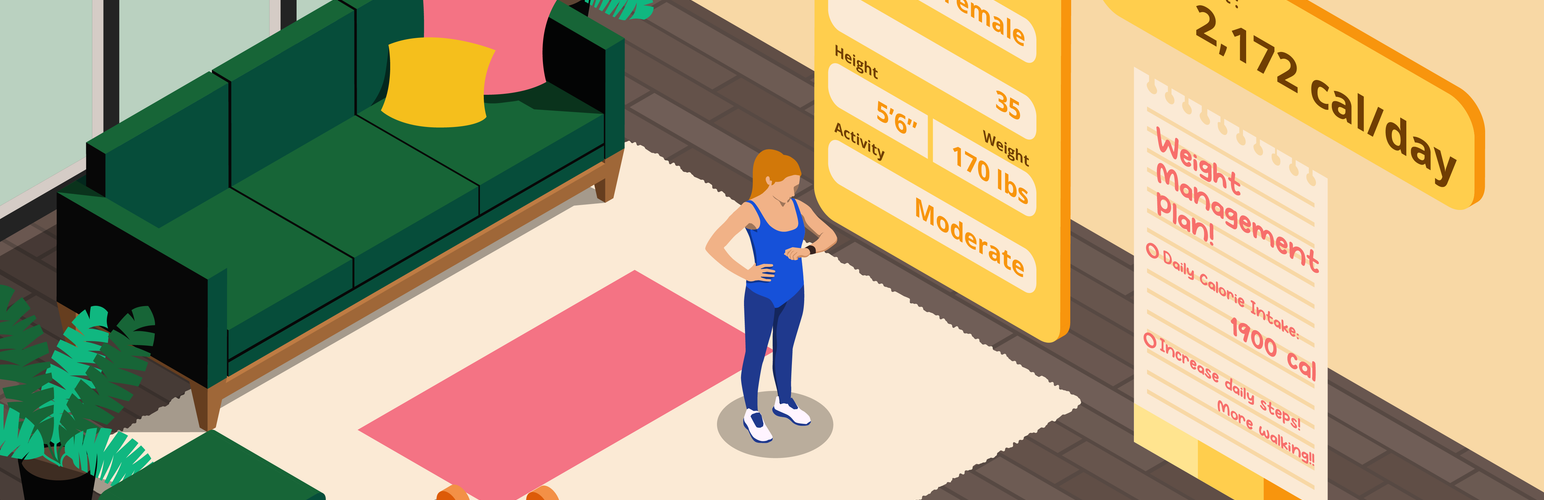
What you enter: Gender, Age, Height, Weight, Activity, Zigzag Plan Goal, Joules, Calories, BMR Estimation Formula, Body Fat.
What you get: DAY.
Features:
- Works as soon as it is activated: no account, no API key and no settings page.
- Calculates in your visitor's browser. Nothing they type is sent to calculator.io or anywhere else, and the plugin loads no ads, trackers or external scripts.
- Responsive: the form and the results sit side by side on wide pages and stack on narrow ones. The frame resizes itself to fit the calculator.
- Optional light, dark or automatic (follows the visitor's system setting) theme, a custom accent colour and a maximum width, all set in the shortcode.
- The calculator runs in an iframe, so your theme's styles cannot break it and it cannot break your theme.
安装:
- Upload the /ci-calorie-calculator/ folder to the /wp-content/plugins/ directory, or install the plugin from the Plugins screen.
- Activate the Calorie Calculator plugin through the "Plugins" menu in WordPress.
- Add the
[ci_calorie_calculator]shortcode to a page or post.
屏幕截图:
常见问题:
How do I add the calculator to a page?
Add the shortcode [ci_calorie_calculator] to a page or post. In the block editor use a Shortcode block. In a theme template use <?php echo do_shortcode( '[ci_calorie_calculator]' ); ?>.
Which shortcode attributes are available?
title (1 or 0), theme (light, dark or auto), accent (a hex colour such as #2563eb) and max_width (for example 720px, 80% or 40rem). See the Usage section for examples. Invalid values are ignored and the default is used instead.
How do I get a dark calculator?
Use theme="dark" for always dark, or theme="auto" to follow the visitor's light/dark system setting. The default, theme="light", keeps the calculator light on any background.
Can I hide the heading?
Yes. Use title="0" and the heading with the calculator's icon is not printed, so you can write your own.
Does the plugin send data anywhere?
No. The calculation happens in the visitor's browser, nothing they enter leaves the page, and the plugin makes no requests to calculator.io or any other external service. It sets no cookies and loads no ads or trackers.
The calculator is the wrong height or has a scrollbar.
The frame adjusts its height automatically while the page is open. If your theme or a caching or optimisation plugin removes scripts from the page, the frame keeps a default height; exclude the plugin's ci-embed.js file from script optimisation.
How many calories should I eat per day?
On average, adult males need between 2,000 and 3,000 calories a day to maintain their weight, while adult females need between 1,600 and 2,400. Your exact needs depend on age, weight, height, biological sex, and activity level, which is why the calculator estimates them from your own inputs.
How does the calorie calculator work?
It first estimates your Basal Metabolic Rate (BMR), the calories your body burns at complete rest, using the Mifflin-St. Jeor, Harris-Benedict, or Katch-McArdle equation. It then multiplies that BMR by an activity factor (typically 1.2 to 1.95) to give your total daily energy expenditure (TDEE), the calories needed to maintain your weight.
How many calories should I cut to lose weight?
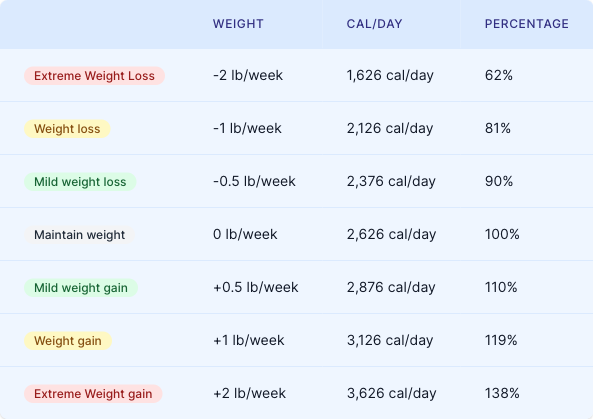
Because roughly 3,500 calories equals about one pound of fat, eating 500 calories below your daily maintenance level aims for about 1 pound of weight loss per week. Cutting up to 1,000 calories a day targets 2 pounds per week, but losing more than 2 pounds weekly can harm your health and muscle mass.
What is a zigzag (zig zag) calorie diet?
Zigzag calorie cycling alternates higher- and lower-calorie days while keeping your weekly total the same, preventing your metabolism from adapting to a constant low-calorie intake. For example, to hit a 14,000-calorie week you might eat 2,300 calories on three days and 1,775 on the other four instead of a flat 2,000 every day.
What is the fewest calories I should eat per day?
Unless you are monitored by a medical professional, Harvard Health Publications recommends women eat no fewer than 1,200 calories per day and men no fewer than 1,500. Chronically eating below this baseline forces your body to prioritize survival functions while shutting down processes essential for hormone production and overall health.
更新日志:
- New shortcode attributes:
title,theme(light, dark, auto),accentandmax_width - Responsive layout: form and results wrap into one column on narrow pages, wide tables scroll inside their own box
- The frame now follows the calculator's height when it changes or the window is resized
- Fixed the missing heading icon
- The plugin's JavaScript and CSS are now shipped unminified
- The WordPress-side script and styles load only on pages that use the shortcode
- Removed leftover files of earlier plugin versions
- Tested up to WordPress 7.1
- Initial release of Calorie Calculator