Dejunk DB
| 开发者 | ab16982 |
|---|---|
| 更新时间 | 2026年9月27日 18:28 |
| 捐献地址: | 去捐款 |
| PHP版本: | 7.4 及以上 |
| WordPress版本: | 7.1 |
| 版权: | GPLv2 or later |
| 版权网址: | 版权信息 |
详情介绍:
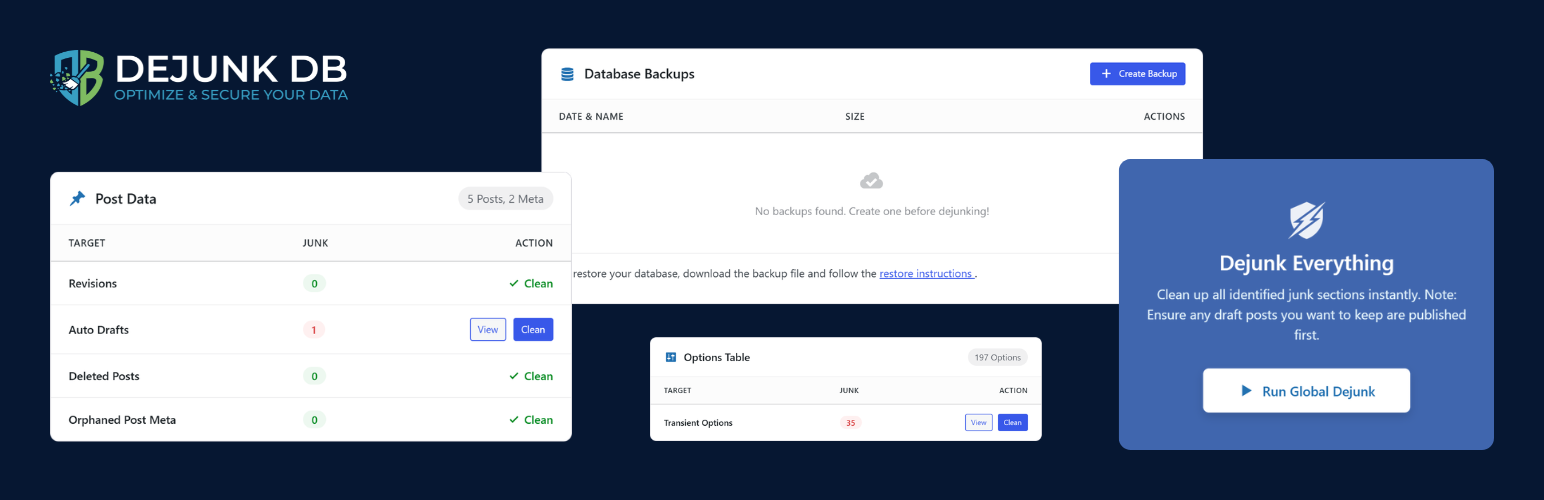
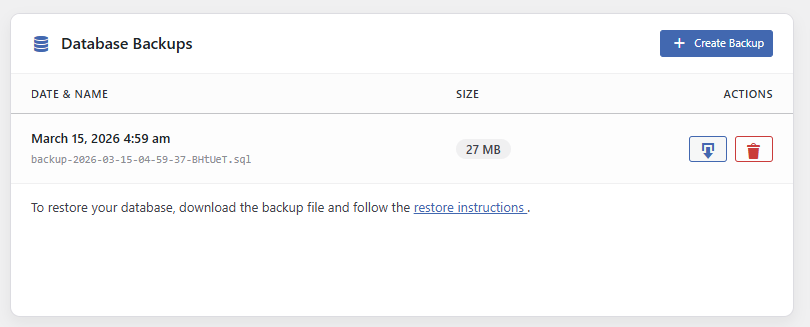
- Built-In Database Backups: Create, download, and manage secure
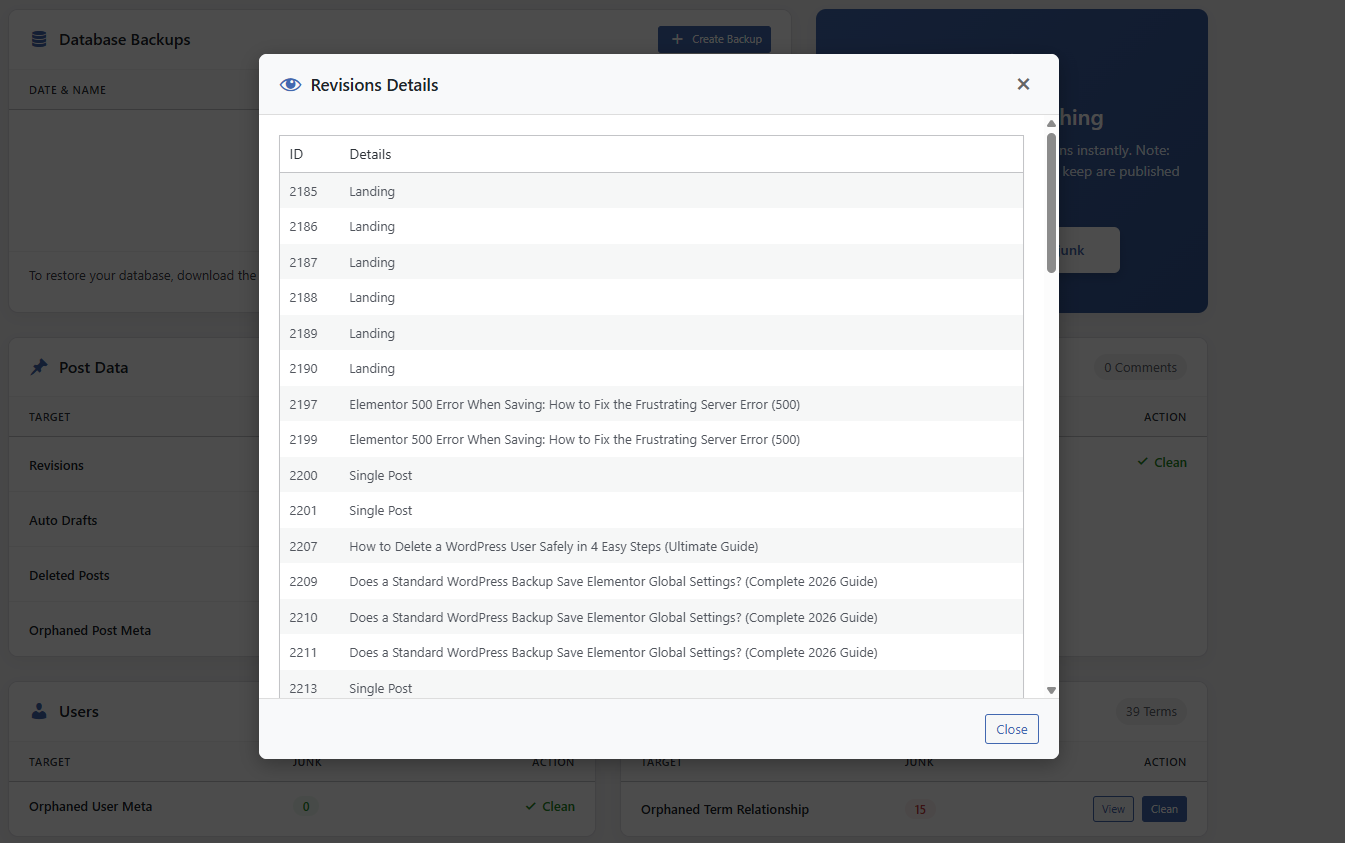
.sqlbackups of your database directly from the plugin dashboard before you clean. - Preview Before Dejunking: View the exact items (up to 500 records) that are flagged for deletion in a clean, AJAX-powered modal so you know exactly what is being removed.
- Post Data Cleanup: Safely remove Post Revisions, Auto Drafts, Trashed Posts, and Orphaned Post Meta.
- Comment Cleanup: Quickly delete Spam, Trashed, and Unapproved Comments.
- User & Term Cleanup: Clear out Orphaned User Meta and Orphaned Term Relationships.
- Options Cleanup: Flush stale and expired Transient Options (
_transient_and_site_transient_) that bloat thewp_optionstable without wiping active transients. - Table Optimization: Run standard MySQL
OPTIMIZE TABLEcommands on all your WordPress tables with a single click. - Global "Dejunk Everything" Switch: A master switch to clean up all identified junk sections instantly.
- Clean Uninstall: When you uninstall Dejunk DB, it automatically cleans up its transients and securely deletes all backup files it created, leaving zero footprint.
安装:
- Upload the
dejunk-dbfolder to the/wp-content/plugins/directory, or install the plugin directly through the WordPress plugins screen by searching for Dejunk DB. - Activate the plugin through the 'Plugins' menu in WordPress.
- Navigate to Tools -> Dejunk DB in your WordPress admin menu.
- Important: Click "Create Backup" in the Database Backups card.
- Review the junk categories and click "Clean" individually, or use "Run Global Dejunk" to clean everything at once.
屏幕截图:
常见问题:
Is it safe to delete post revisions and orphaned meta?
Yes. Orphaned meta refers to data left behind when a post or user is deleted. Revisions are old versions of your posts. Removing them will not affect your live website content, but will significantly reduce database size.
Where are the database backups stored?
Backups are stored in your wp-content/uploads/dejunk-db-backups directory. The plugin automatically generates an .htaccess file and an index.php file inside this folder to block direct web access, keeping your backups secure.
Can I restore a backup directly from the plugin?
For strict security compliance, automatic SQL restoration is not included in the plugin. To restore your database, simply download the .sql file from the dashboard and import it using phpMyAdmin, WP-CLI, or your hosting control panel.
Does Dejunk DB leave files behind if I uninstall it?
No. Dejunk DB hooks into the WordPress uninstall process. If you delete the plugin from the WordPress admin, it will automatically remove its generated backup folder and all .sql files to ensure no sensitive data is left behind.
Why can I only view 500 items in the preview modal?
To prevent memory exhaustion and browser crashing on large sites that may have hundreds of thousands of junk rows, the preview query is intentionally limited to 500 items. The "Clean" action, however, will remove all of them.
更新日志:
- Compatibility: Tested and verified compatibility up to WordPress 7.1.2.
- Maintenance: Verified compatibility with PHP 8.1 / 8.2 and latest WordPress database schemas.
- Security: Hardened
.htaccessdirectory rules with Apache 2.4/2.2 mod_authz directives and upgraded backup filenames with 32-character high-entropy cryptographic tokens. - Security: Added strict
.sqlextension validation on backup deletion to prevent arbitrary file deletion. - Performance: Eliminated whole-table count queries on general wp-admin requests by lazy-loading database totals exclusively on the Dejunk DB tools page.
- Performance: Implemented chunked batch streaming in the SQL Backup Engine to prevent PHP memory exhaustion on large tables.
- Fix: Resolved serialization and character escaping data corruption in SQL backup dumps by utilizing binary-safe escaping.
- Feature: Smart expired transients cleanup targeting timed-out transient options while preserving active transients.
- Feature: Added spam and trashed comment cleanup support.
- Accessibility: Added ARIA dialog roles, accessible close labels, and keyboard focus management to the details modal.
- i18n: Added missing translation wrappers and pluralization (
_n()).
- Maintenance: General code improvements and asset optimizations.
- Security: Removed automated SQL restore functionality for stricter security compliance.
- Security: Refactored all core database queries to use strict
$wpdb->prepare()parameterization. - Security: Added comprehensive nonce verification and capability checks for all AJAX actions.
- UI/UX: Removed inline JavaScript and implemented proper script enqueuing.
- Fix: Improved backup filename sanitization and backup directory protection.
- Feature: Added
uninstall.phpcleanup routine to securely remove backups and transients upon plugin deletion.
- Initial public release.