GateForge
| 开发者 | ravenx25 |
|---|---|
| 更新时间 | 2026年11月22日 07:47 |
| 捐献地址: | 去捐款 |
| PHP版本: | 7.4 及以上 |
| WordPress版本: | 7.1 |
| 版权: | GPL-2.0-or-later |
| 版权网址: | 版权信息 |
详情介绍:
https://www.youtube.com/watch?v=iQEJhkZ9Cj0
GateForge lets you decide where a widget or a block appears: on the front page, on one category, for logged-in visitors only, between two dates, and so on. Rules are built with a point-and-click builder and stored as data. GateForge never runs code taken from the database.
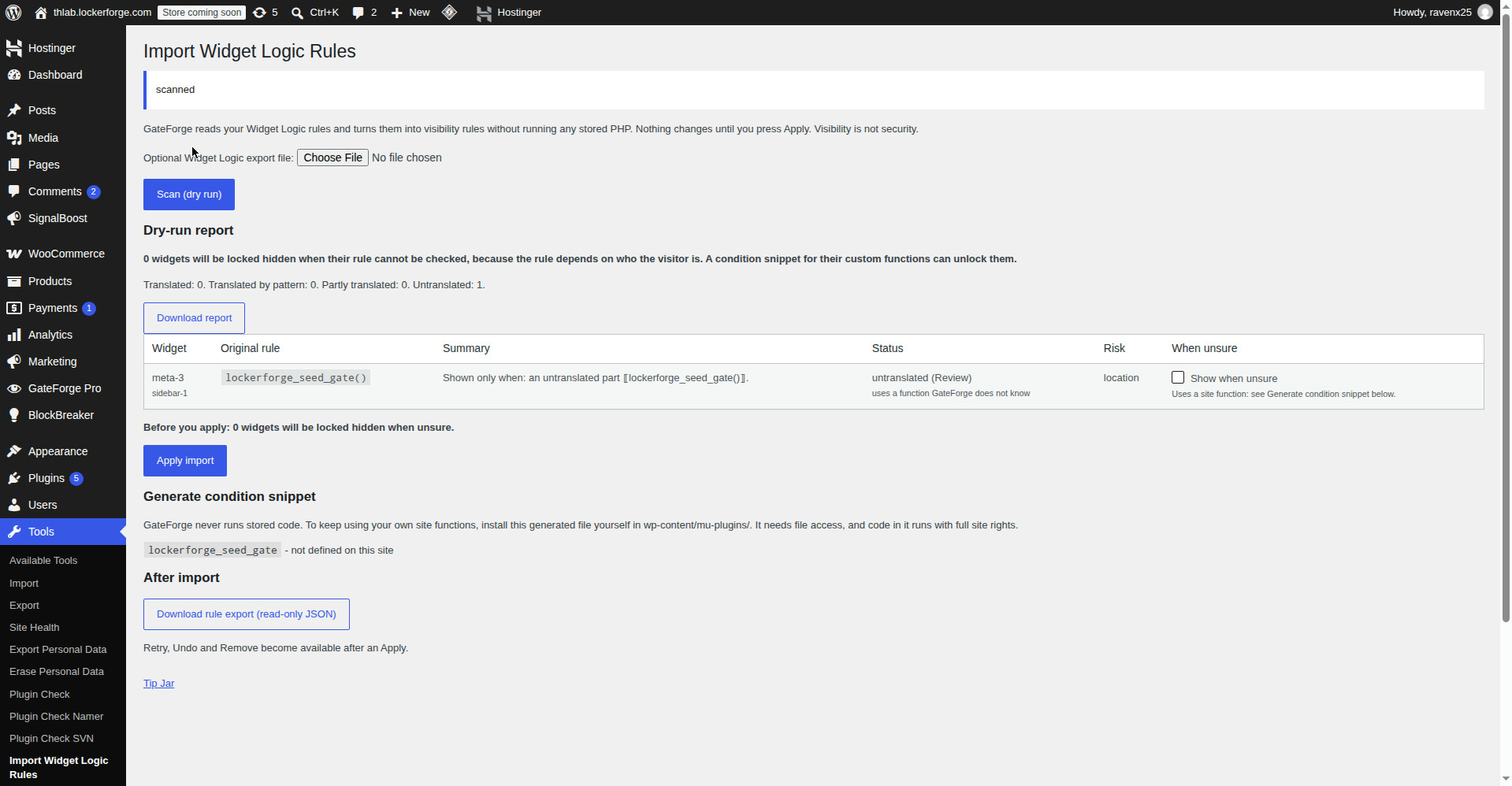
If you used Widget Logic, GateForge reads your old rules, translates what it can into GateForge rules, and shows you a report that lists every rule with its original text. Nothing is dropped silently.
What it does
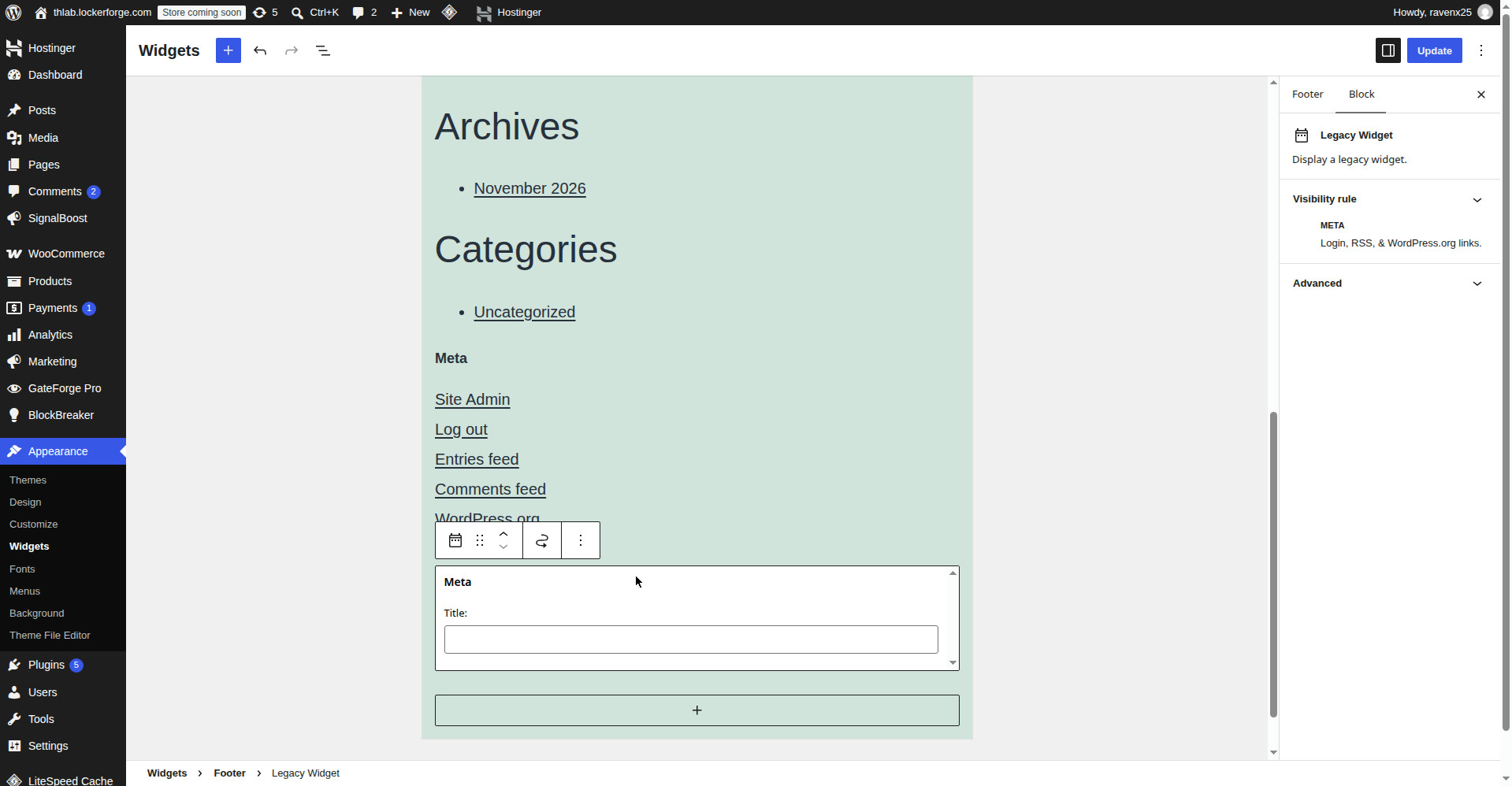
- A Visibility rule panel on every block in the post editor, the Site Editor and the block widgets editor, plus a rule field on classic widgets.
- A builder with Show and Hide, any-of and all-of groups, and a plain-English summary of every rule.
- An importer for Widget Logic rules with a dry run, a report, Undo, Retry and a separate "Remove Widget Logic data" step that never runs on its own.
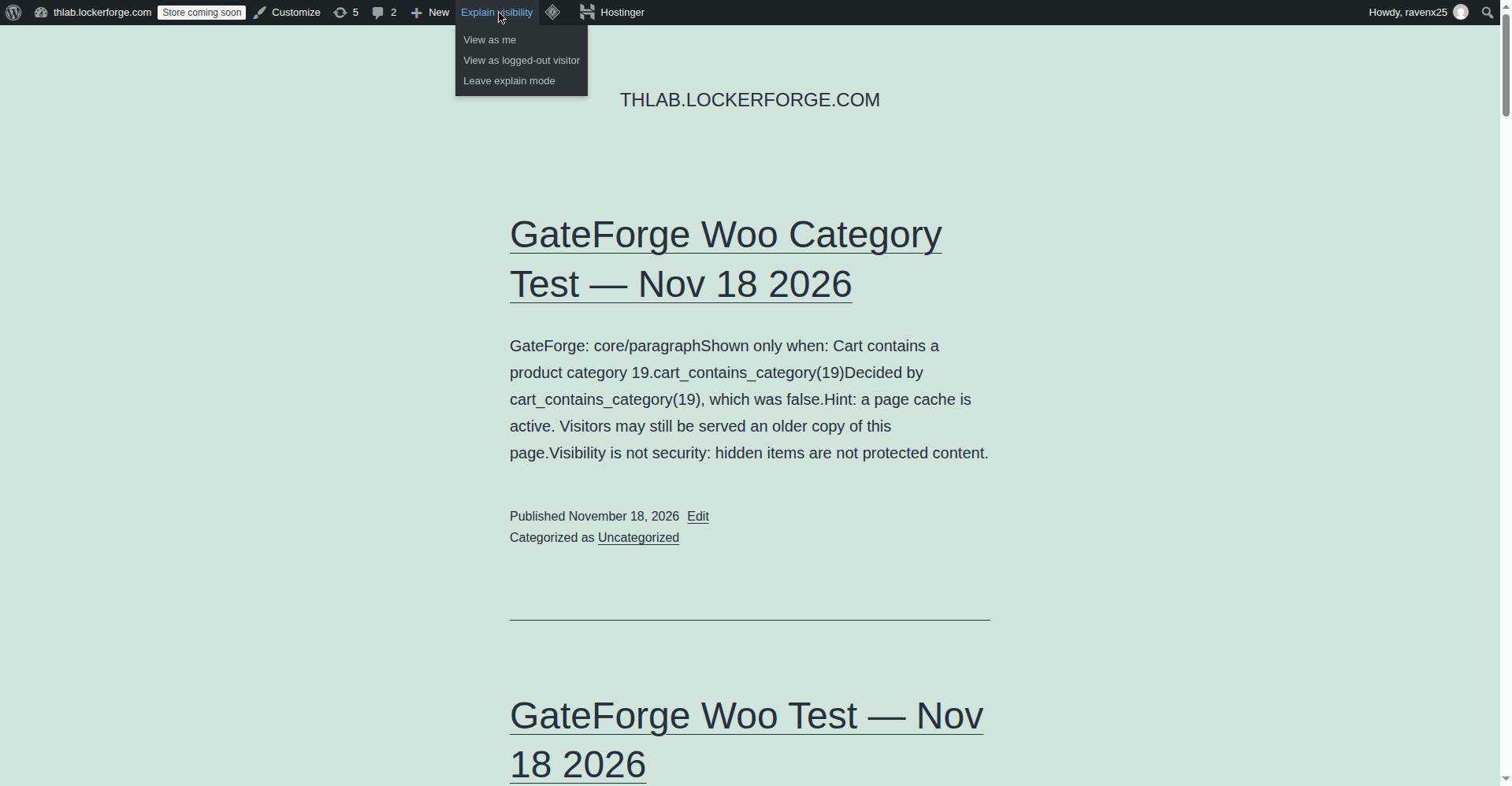
- Explain mode for administrators: a card on each widget or block that says why it is shown or hidden, with a "View as logged-out visitor" switch.
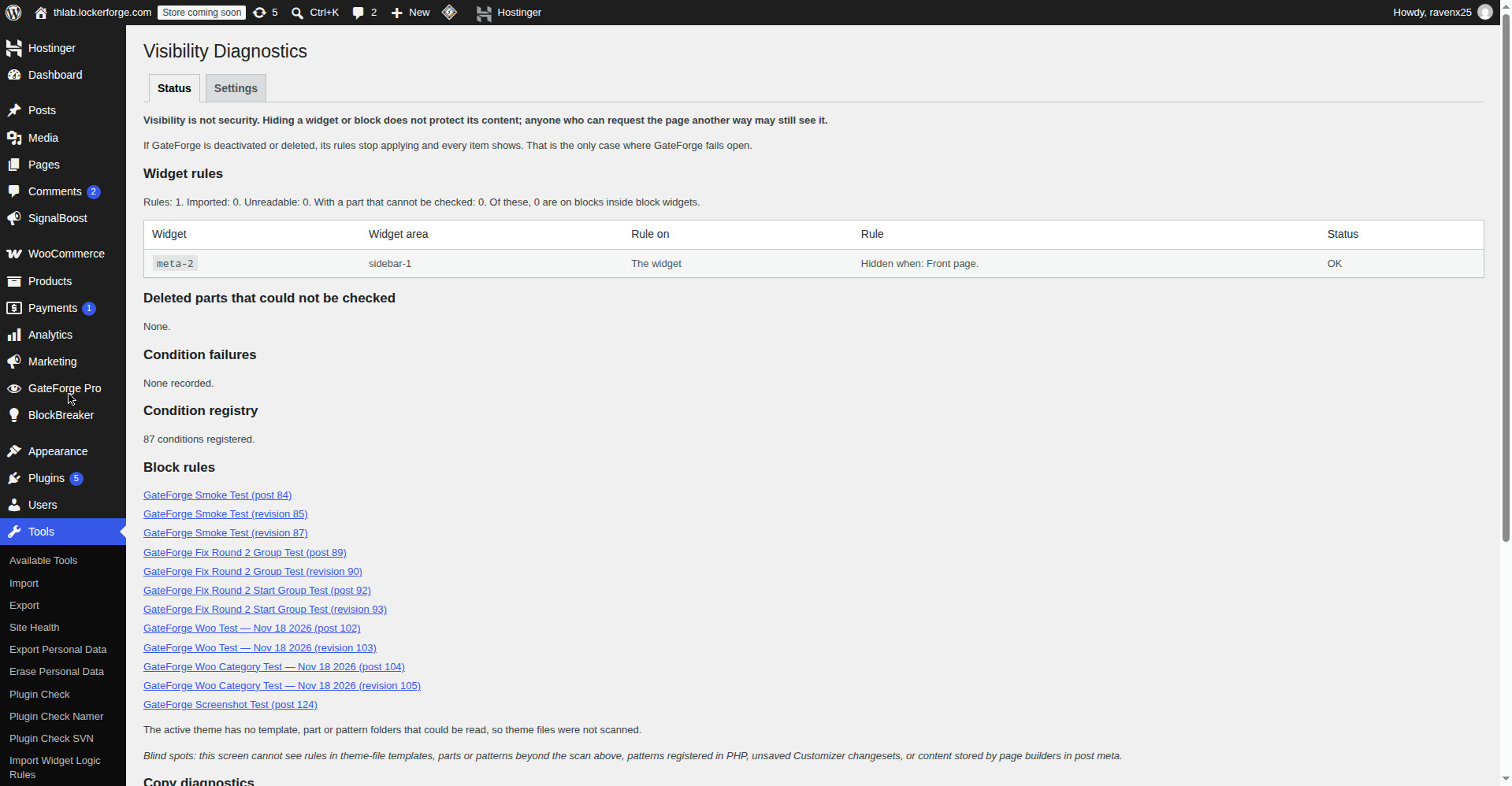
- A Diagnostics screen under Tools that lists rules that could not be checked, block rules across all content, and the limits below.
- A snippet generator for site-specific conditions: it gives you text to copy into your own code. GateForge never writes code files.
- Free scheduling: show something between a start and an end date.
- Reusable condition groups: save a set of conditions once, then reference it from many rules, and edit it in one place.
安装:
- Install and activate GateForge from the Plugins screen.
- If Widget Logic is active, deactivate it first. The importer stays disabled while it is active.
- Go to Tools, GateForge Import, run the scan and read the report before you apply it.
- Add rules to blocks from the Visibility rule panel, or to classic widgets from the Edit rule button.
屏幕截图:
常见问题:
Does GateForge run my old Widget Logic code?
No. Old rules are read as text and translated. Anything GateForge cannot translate is listed in the report and the item is hidden until you decide.
Can I hide a block only for logged-out visitors?
Yes. Add a rule with the "Visitor is logged in" condition and switch it to Hide. Remember that hidden is not protected.
Does GateForge add scripts to my front end?
No. Visitors get no extra CSS or JavaScript. The builder only loads in the editors and on GateForge screens.
Does GateForge contact any server?
No. The free plugin makes no outbound requests and collects no data.
更新日志:
1.1.2
- Review fixes: the Customizer preview and explain-mode styles are now enqueued the WordPress way instead of printed inline; the explain-mode output buffer is closed explicitly on shutdown; explain mode caps how deep it walks a stored rule tree.
- The admin notices GateForge shows on its own screens and the widgets screen are now dismissible.
- Plugin header now carries the Locker Forge plugin and author links, with the plugin link pointing at the GateForge product page.
- Reusable condition groups: save a set of conditions once and reference it from many rules. Editing the group updates every rule that uses it, with no rule re-save.
- Rules can now reference a group; a reference resolves at evaluation time. Missing groups and groups that refer to themselves fail closed (hidden).
- Group saves are validated and risk-stamped the same way rule saves are.
- First release: widget and block visibility rules, the Widget Logic importer, explain mode, diagnostics and the snippet generator.