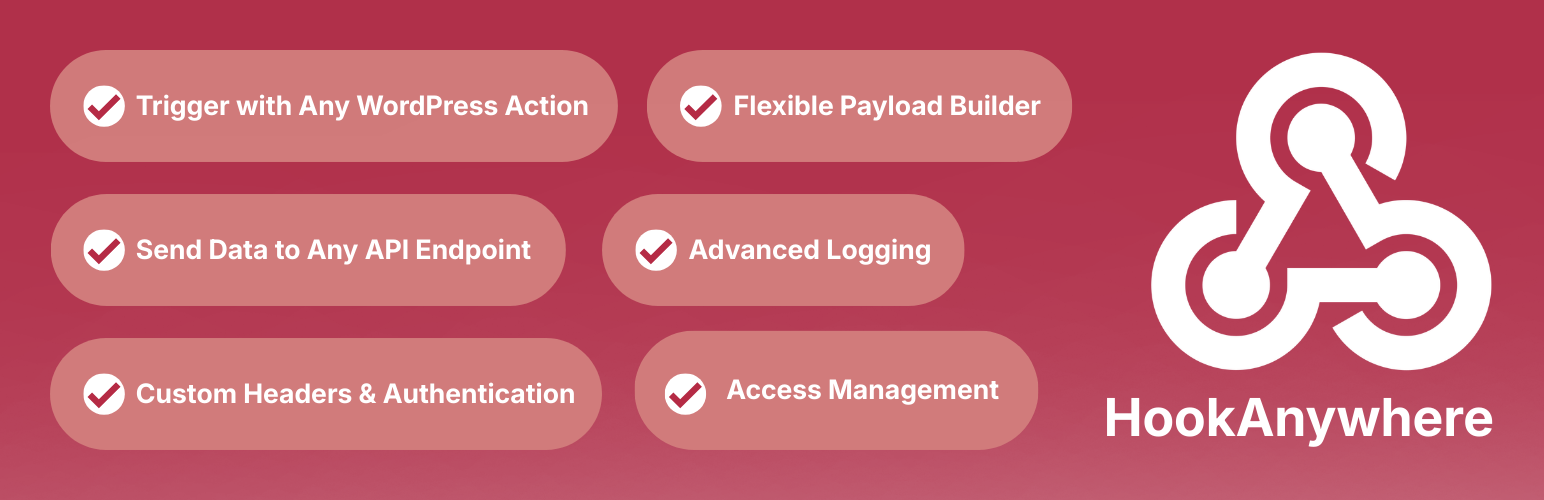
HookAnywhere - Trigger Any Action, Send Anywhere
| 开发者 | hiabhaykulkarni |
|---|---|
| 更新时间 | 2026年3月22日 14:20 |
| PHP版本: | 7.4 及以上 |
| WordPress版本: | 6.9 |
| 版权: | GPLv2 or later |
| 版权网址: | 版权信息 |
详情介绍:
安装:
- Navigate to the 'Add New' in the plugins dashboard.
- Search for 'HookAnywhere'
- Click 'Install Now'
- Activate the plugin on the Plugin dashboard
- Navigate to the 'Add New' in the plugins dashboard.
- Navigate to the 'Upload' area
- Select
hookanywhere.zipfrom your computer - Click 'Install Now'
- Activate the plugin in the Plugin dashboard
常见问题:
What makes HookAnywhere different from other webhook plugins?
Most free webhook plugins only support a limited number of predefined WordPress core events. HookAnywhere allows you to select any installed WordPress plugin and trigger webhooks from its available action hooks, making it significantly more flexible and powerful.
Can I trigger webhooks from third-party plugins?
Yes. You can select a specific WordPress plugin and view all available action hooks defined inside that plugin. You can then attach a webhook to any of those hooks.
Can I send data to any API endpoint?
Yes. You can send outgoing HTTP requests to any REST API or webhook endpoint. The plugin supports custom headers, authentication, and custom request body parameters.
Does this plugin support authentication?
Yes. You can configure authentication and pass custom headers such as API keys, Bearer tokens, or other authorization credentials required by your endpoint.
What kind of data formats are supported?
You can configure and customize the request payload, including structured JSON or other supported formats depending on your API requirements.
Does the plugin store webhook logs?
Yes. Every webhook request is logged, including request headers, payload, response body, HTTP status code, and timestamp.
Can I automatically delete old logs?
Yes. You can define a log retention period. Logs older than your selected number of days will be automatically deleted to keep your database clean and optimized.
Can I control who has access to webhooks and logs?
Yes. HookAnywhere includes role-based access control so you can manage which user roles can view or manage webhook settings.
Does this plugin support incoming webhooks?
Currently, HookAnywhere focuses on outgoing webhooks — sending data from WordPress to external systems when events occur.
Is this compatible with Zapier, Make, or n8n?
Yes. HookAnywhere works with Zapier, Make (Integromat), n8n, and any platform that accepts incoming webhook requests.
更新日志:
- Bug Fix: Prevented infinite loop crashes when executing webhooks attached to
save_postor internal HTTP API hooks.
- Initial release of HookAnywhere.