Hreflang Manager - Hreflang Implementation for International SEO
| 开发者 | DAEXT |
|---|---|
| 更新时间 | 2026年5月28日 21:13 |
| 捐献地址: | 去捐款 |
| PHP版本: | 5.2 及以上 |
| WordPress版本: | 7.0 |
| 版权: | GPLv3 |
详情介绍:
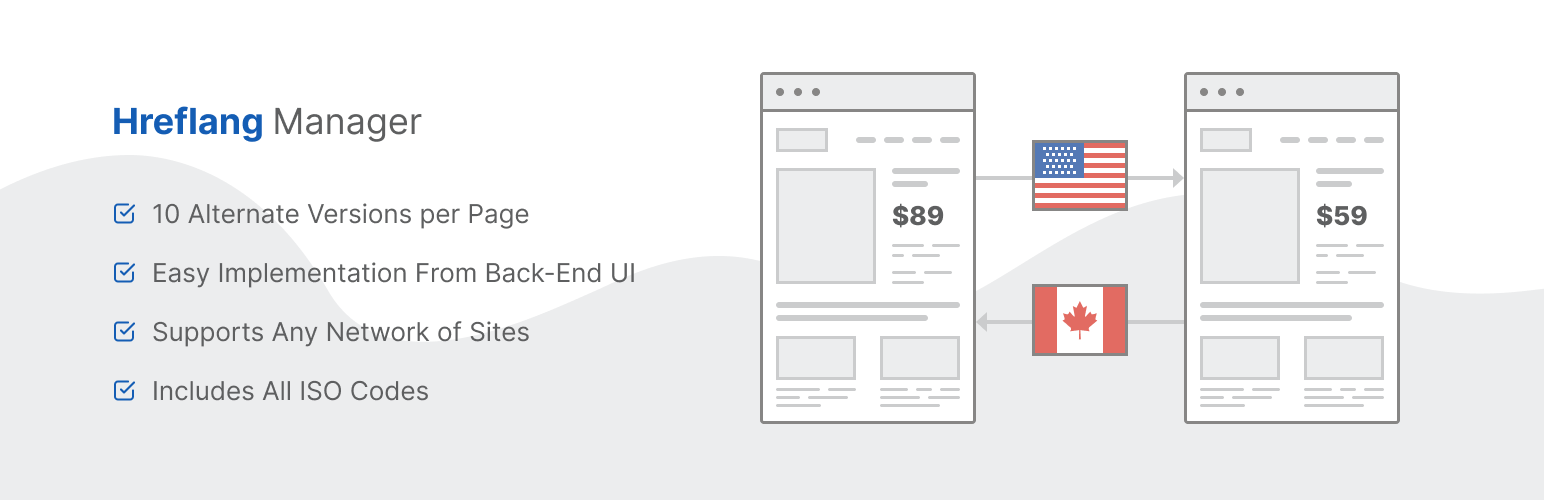
The Hreflang Manager plugin provides you an easy and reliable method to implement hreflang in WordPress.
For more information on the technical use of hreflang, please consider reading the official Google documentation.
Pro Version
The Pro version of this plugin is available on our website with additional features, including the synchronization of hreflang data across all sites in a network, an integrated Hreflang Checker for detecting implementation issues, a Locale Selector to display available alternate versions, support for adding hreflang information in XML sitemaps, up to 100 alternate versions per connection, tools for importing hreflang data from spreadsheets, and more.
Features
- Supports the hreflang implementation of different websites or the sub-sites of a WordPress network
- Supports all the languages defined with ISO 639-1
- Supports all the scripts defined with ISO 15924
- Supports all the countries defined with ISO 3166-1 alpha-2
- A maximum of 10 alternative versions of the page per connection
- Includes a tag inspector to verify the correct implementation in the front-end
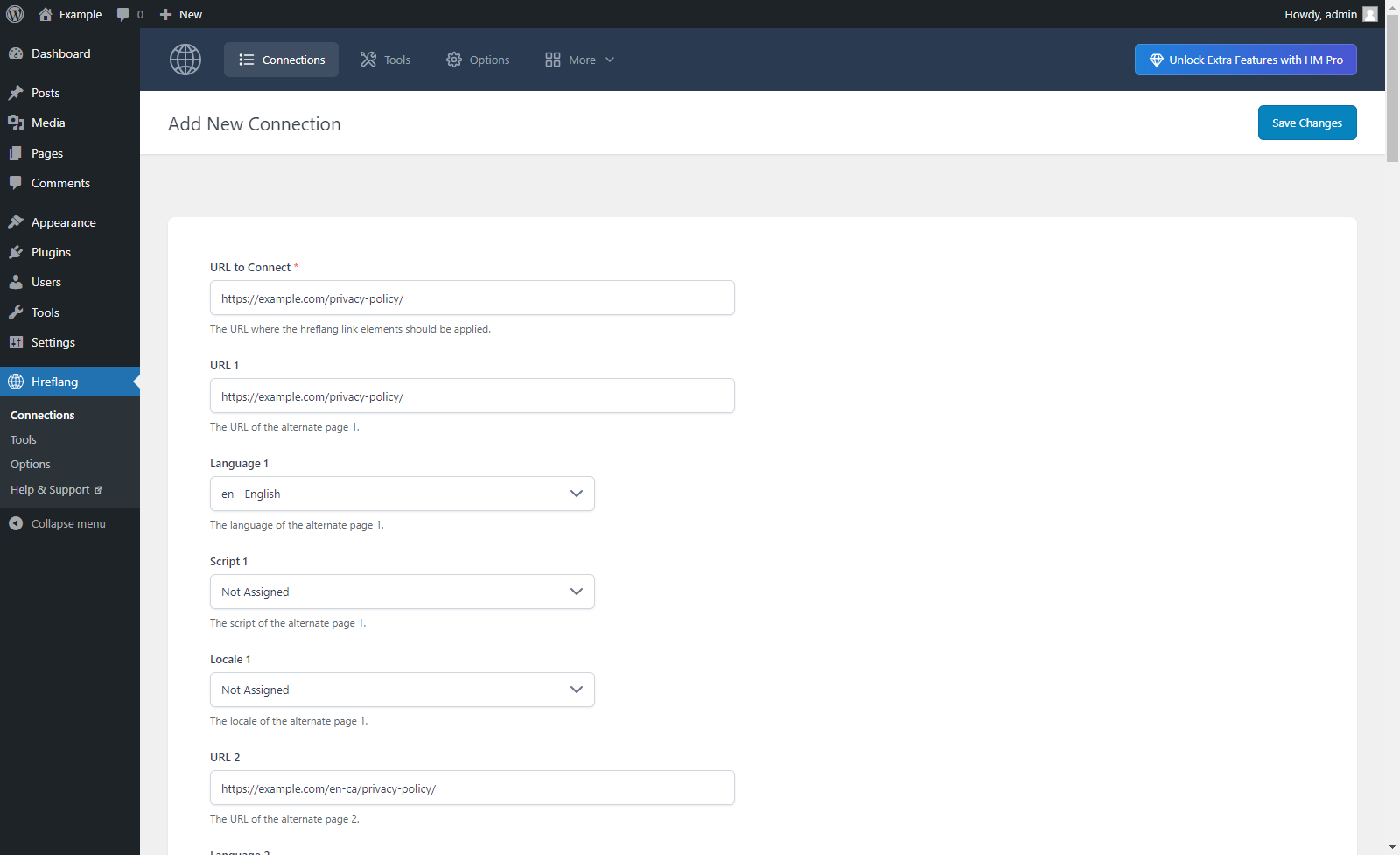
- Allows configuring hreflang from the post editor or from a centralized menu
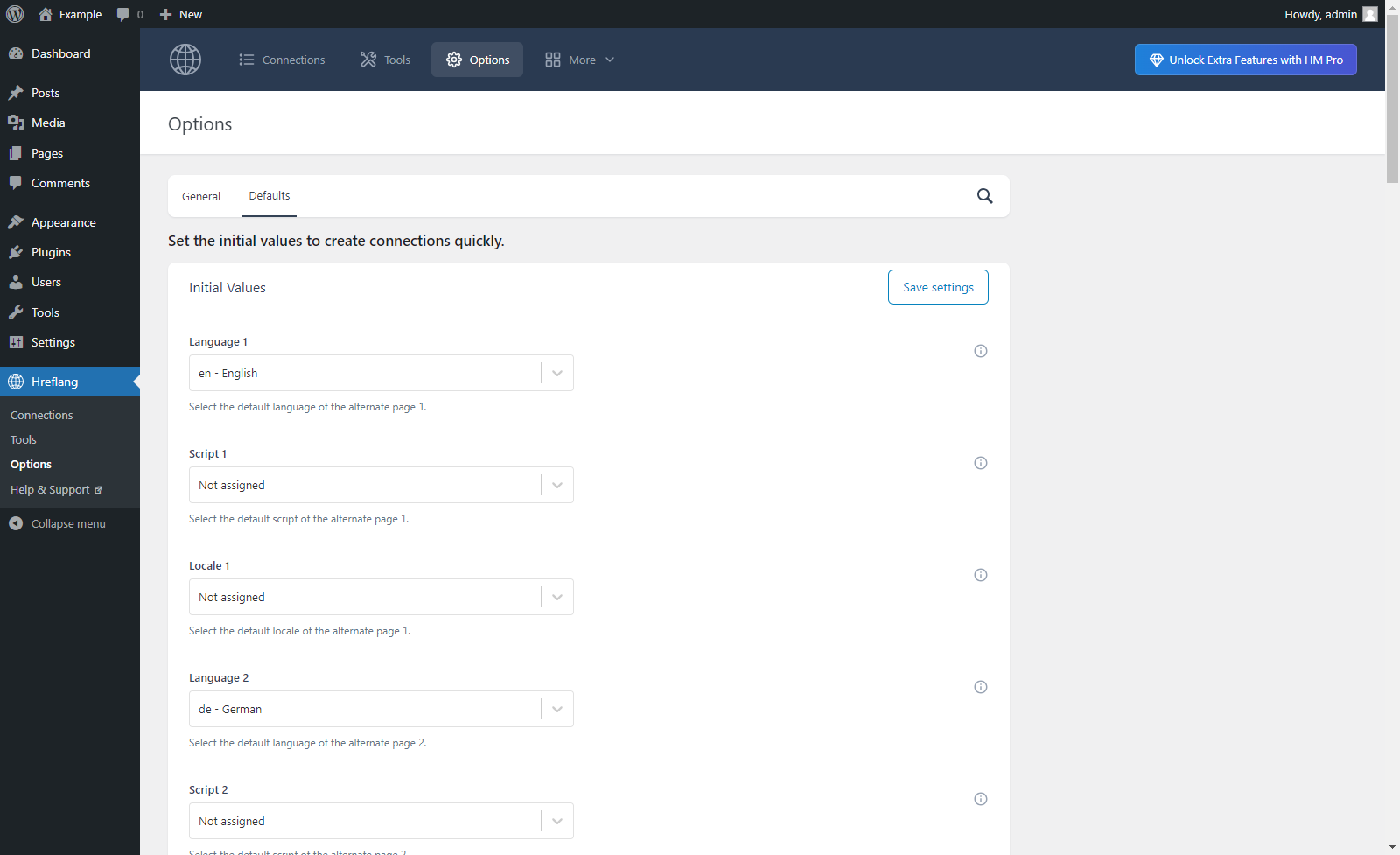
- Ability to select the default languages, scripts, and countries
- Automatically deletes the hreflang data of the deleted posts
安装:
- Upload the plugin files to the
/wp-content/plugins/hreflang-manager-lite/directory, or install the plugin through the WordPress Plugins screen directly. - Activate the plugin through the Plugins screen in WordPress.
屏幕截图:
更新日志:
1.19
May 28, 2026
- Fixed style inconsistencies introduced with WordPress 7.0.
- Updated the admin UI color palette to use branded colors instead of the default WordPress colors.
- Added a custom admin footer in place of the default WordPress footer text.
- Added the "Maximum Alternate Pages" option, allowing administrators to define a hard limit for the number of alternate pages used across the plugin UI and hreflang output.
- Removed the unexpected output message displayed during plugin activation.
- The Pro version upgrade banner previously displayed at the bottom of all plugin menu pages is now shown only in the Options menu.
- Added a notices manager class used to display documentation resources and a link to rate the plugin. A related action hook has also been introduced to allow notices to be rendered in a specific area of the plugin UI.
- The style of the post editor meta box has been updated for improved consistency with the native classic editor interface. In addition, the Select2 library is no longer used for select elements, as these have been replaced with native HTML select fields.
- Additional minor functional improvements to the post editor meta box.
- Updated Pro Version feature labels in the admin toolbar.
- Added new interfaces for adding and managing hreflang data in both the Block Editor (via a dedicated sidebar) and the Classic or non-standard editors (via a dedicated meta box).
- The Log feature has been renamed to Tag Inspector, featuring an improved interface.
- Fixed PHP notice caused by early use of translation functions.
- Resolved CSS style issue.
- The load_plugin_textdomain() function now runs with the correct hook.
- In the "Connections" menu the URLs max length is now properly set to 2083 characters.
- The PHP trim() function has been added to the "Connections" menu to remove any leading or trailing white spaces from the entered URLs.
- Major back-end UI update.
- Refactoring.
- Fixed a bug (started with WordPress version 6.5) that prevented the creation of the plugin database tables and the initialization of the plugin database options during the plugin activation.
- Nonce fields have been added to the "Connections" menus.
- General refactoring. The phpcs "WordPress-Core" ruleset has been partially applied to the plugin code.
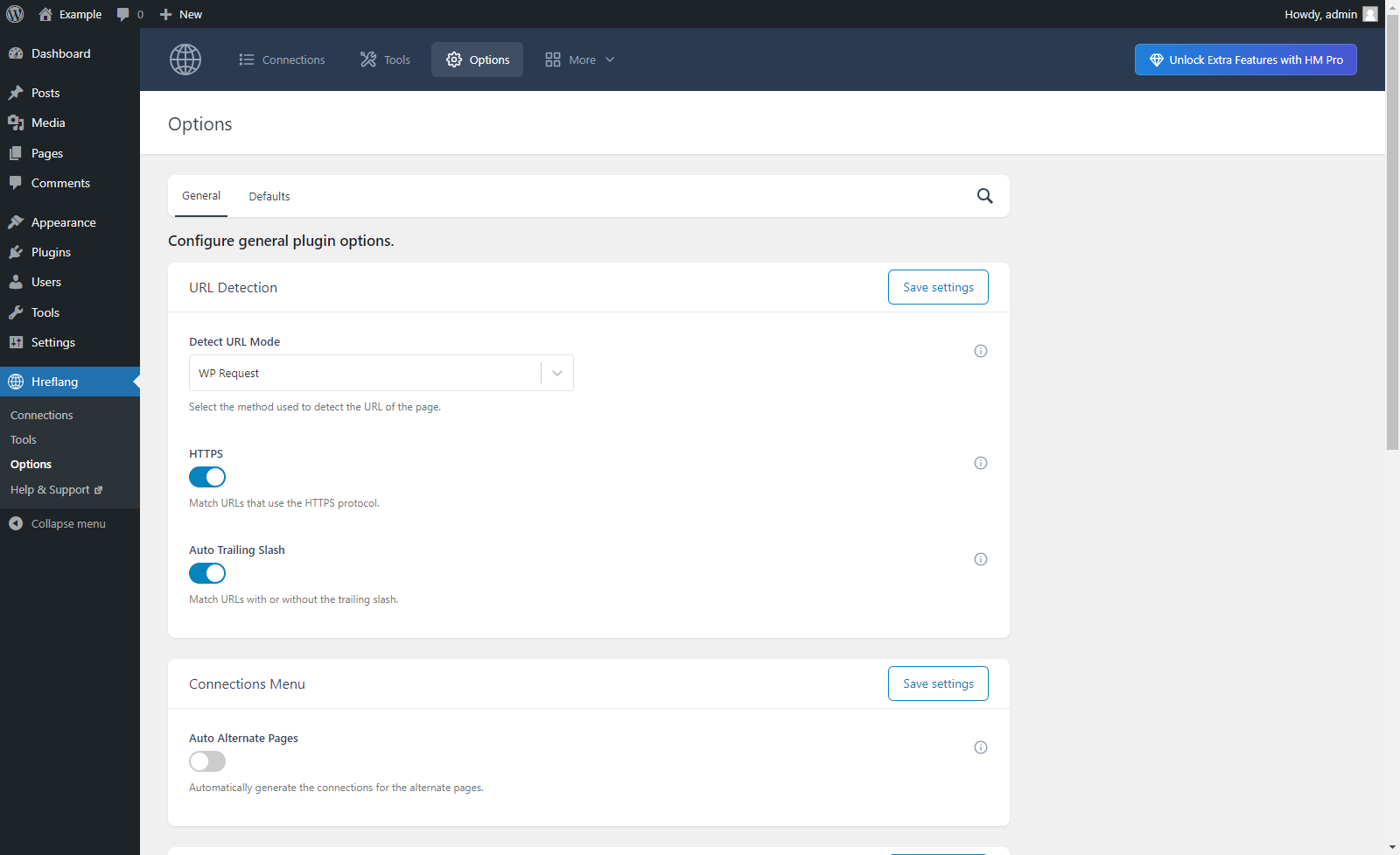
- The "Auto Alternate Pages" option has been added.
- Footer links have been added to all the plugin menus.
- Minor backend improvements.
- The text domain has been changed to match the plugin slug.
- Changelog added.
- All the dismissible notices are now generated in the "Connections" menu.
- Updated the description of the features in the "Pro Version" menu.
- The "Export to Pro" menu has been added.
- Minor backend improvements.
- The correct ISO 3166-1 alpha-2 code is now used for Lebanon.
- Minor backend improvements.
- Minor backend improvements.
- Bug fix.
- Initial release.