Hungry Resource Monitor
| 开发者 | prakharb88 |
|---|---|
| 更新时间 | 2026年1月12日 20:01 |
| 捐献地址: | 去捐款 |
| PHP版本: | 7.4 及以上 |
| WordPress版本: | 6.9 |
| 版权: | GPLv2 or later |
| 版权网址: | 版权信息 |
详情介绍:
- View top 5 resource consumers at a glance
- Real-time memory and query statistics
- Per-request tracking and analysis
- Historical data with configurable retention ⚡ Server Limits Display
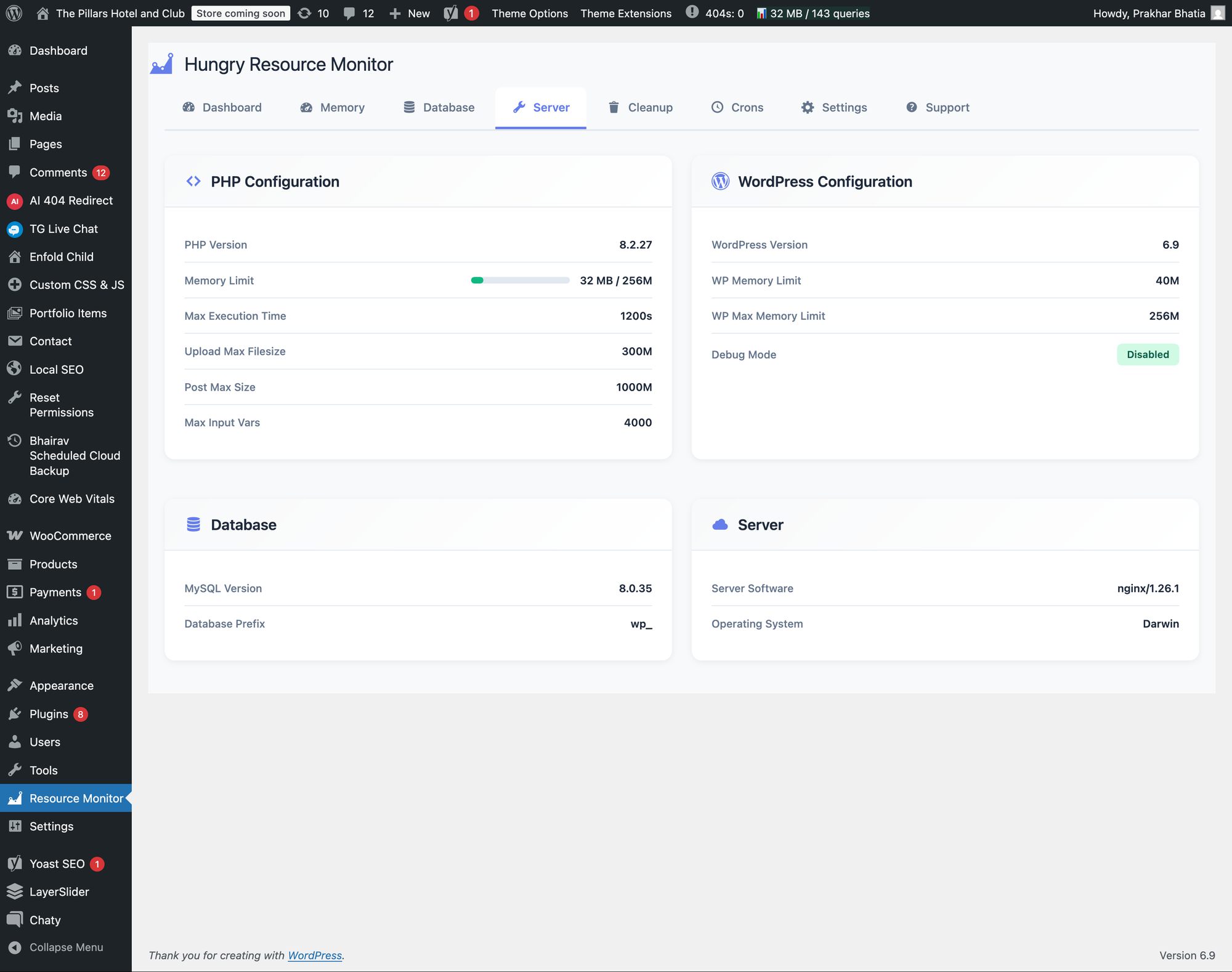
- PHP memory limits (current and peak)
- Maximum execution time settings
- Upload file size limits
- Post max size configurations
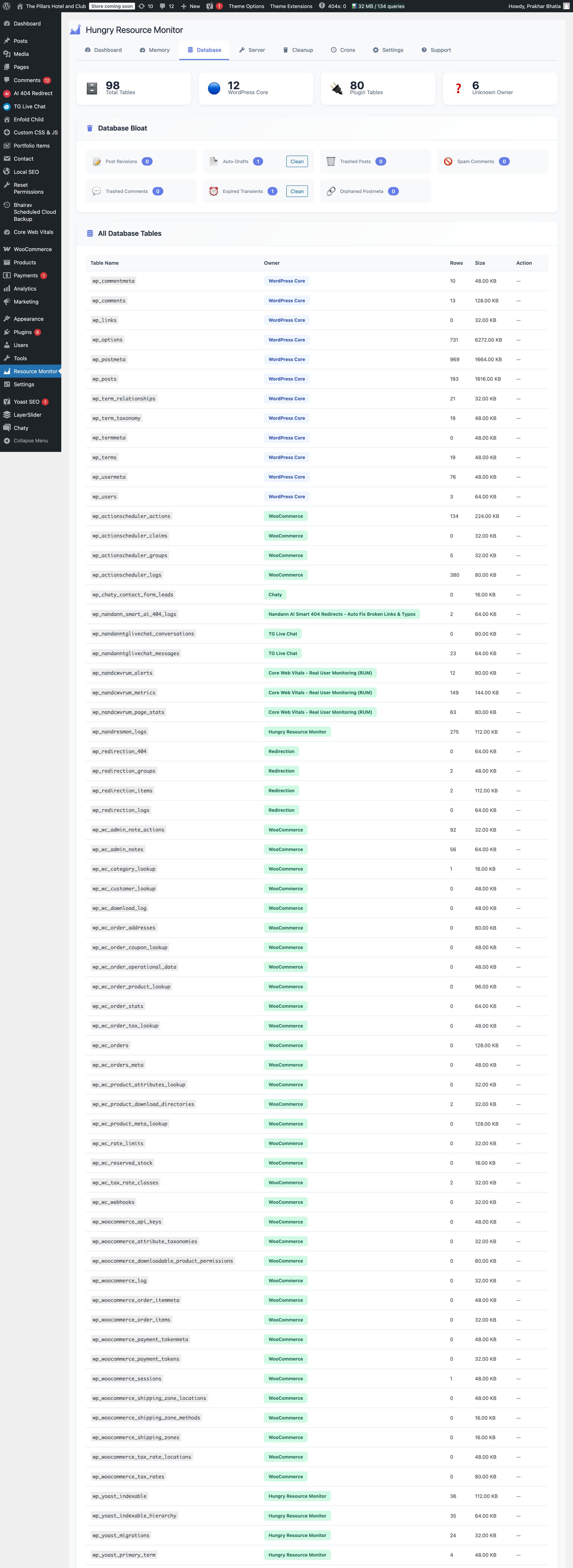
- Complete server environment overview 🧹 Database Cleanup Tools
- Remove post revisions
- Delete auto-drafts and trashed posts
- Clear spam and trashed comments
- Purge expired transients
- Clean orphaned postmeta entries 🔍 Unused Asset Detection
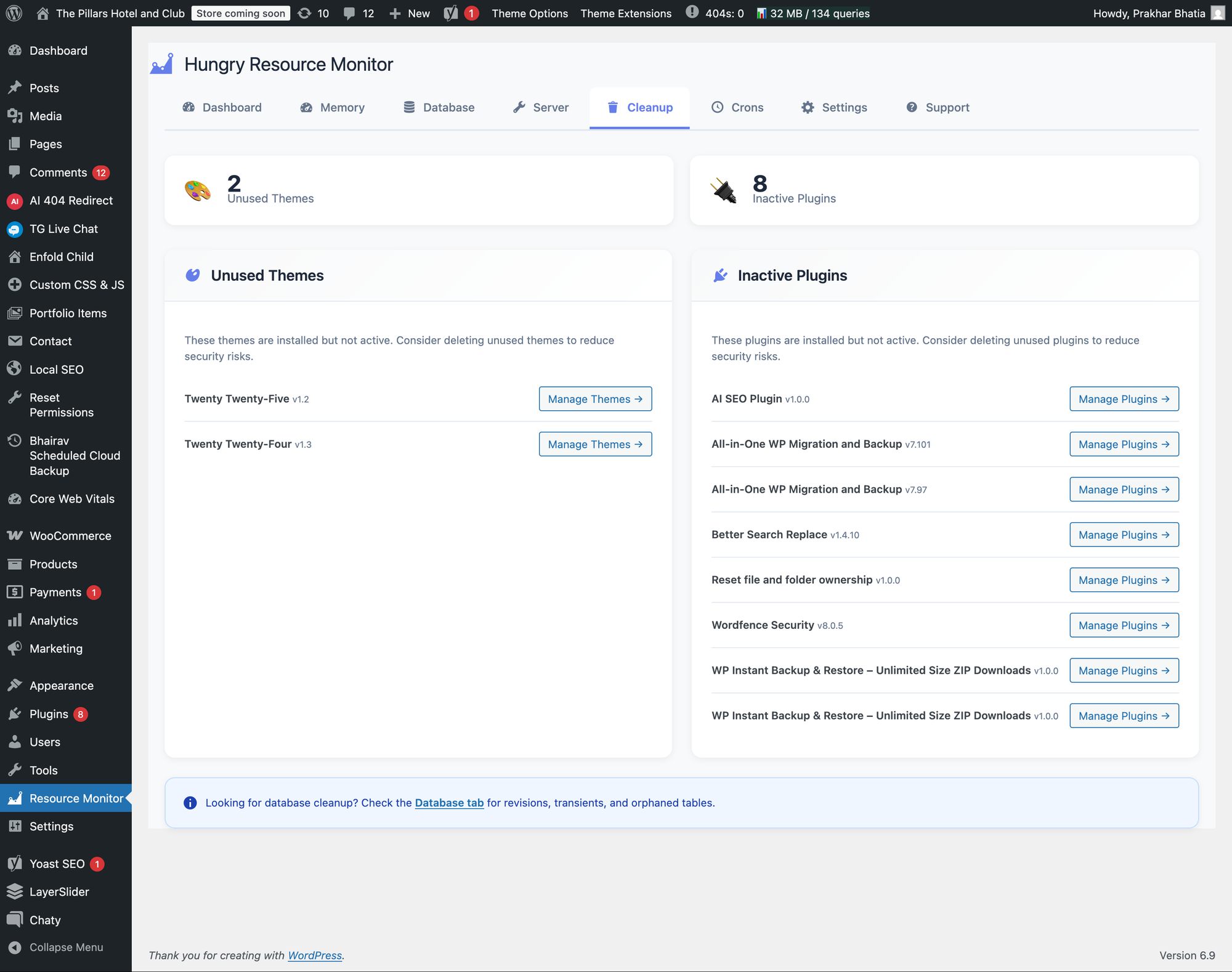
- Find and delete inactive plugins
- Identify unused themes consuming space
- Safe deletion with confirmation dialogs 📧 Email Reports
- Configurable daily, weekly, or monthly reports
- Performance summaries delivered to your inbox
- Resource usage trends and recommendations
- Optimization tips based on your site's data 🛠️ Admin Toolbar Widget
- Real-time memory and query stats
- Quick access to monitoring dashboard
- Visible only to administrators
- Activation: Plugin starts tracking resource usage immediately after activation
- Monitoring: Each page load is analyzed for memory, queries, and execution time
- Analysis: Data is aggregated to identify top resource consumers
- Reporting: Regular reports notify you of performance issues
- Optimization: Use cleanup tools to reduce bloat and improve performance
- Maintenance: Configure retention periods to manage stored data
- Performance Debugging: Identify which plugins or themes are consuming the most resources
- Database Optimization: Clean up bloat from revisions, drafts, spam, and orphaned data
- Server Monitoring: Keep track of server limits and resource availability
- Proactive Maintenance: Receive regular reports before performance issues become critical
- Site Auditing: Evaluate resource usage before and after installing new plugins
- Hosting Optimization: Make informed decisions about hosting resources based on actual usage
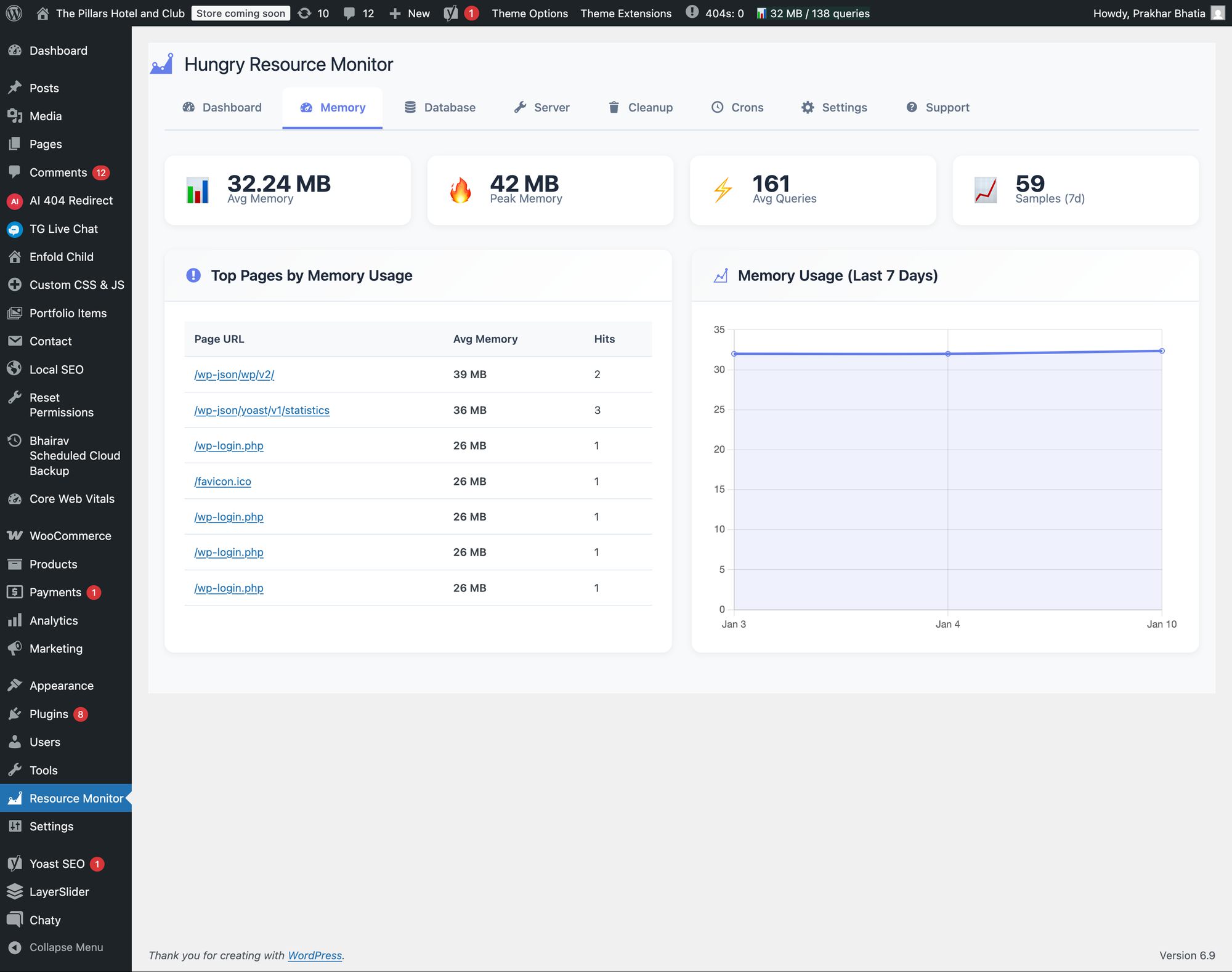
- Memory usage (current and peak)
- Database query count and execution time
- Page load execution time
- Per-request statistics and trends
- Plugin and theme resource consumption
- Post revisions (all or keep a specific number)
- Auto-drafts
- Trashed posts and comments
- Spam comments
- Expired transients
- Orphaned postmeta entries
安装:
- Upload the
hungry-resource-monitorfolder to/wp-content/plugins/ - Activate the plugin through the 'Plugins' menu in WordPress
- Navigate to 'Resource Monitor' in your admin menu
- Configure settings as needed
- Start monitoring your site's performance!
屏幕截图:
常见问题:
Does this plugin slow down my site?
No. The plugin uses minimal resources and only tracks data on page load. The tracking overhead is negligible and designed to have virtually no impact on your site's performance. Tracking can be completely disabled in settings if needed.
How long is data stored?
By default, 30 days. This is configurable in Settings. You can increase or decrease the retention period based on your needs and database size considerations.
Is this compatible with caching plugins?
Yes. Resource tracking happens at the PHP level before output caching, so it works seamlessly with all major caching plugins including WP Super Cache, W3 Total Cache, LiteSpeed Cache, and others.
Will the cleanup tools break my site?
No. The cleanup tools only remove data that is safe to delete (revisions, drafts, spam, trash, expired transients, orphaned metadata). However, as with any database operation, we recommend backing up your site before performing cleanup operations.
Can I exclude certain data from cleanup?
The plugin follows WordPress best practices for cleanup operations. Post revisions are removed entirely, but your published content is never touched. Only safe-to-delete data is included in cleanup operations.
How accurate is the resource monitoring?
The plugin tracks actual memory usage and query counts reported by PHP and WordPress. The data reflects real resource consumption on your server during each page load.
Does this work on multisite installations?
Yes, the plugin works on both single-site and multisite WordPress installations. On multisite, monitoring is performed per-site.
Can I customize the email report schedule?
Yes! You can configure reports to be sent daily, weekly, or monthly. Simply adjust the settings in the plugin's Settings tab.
What permissions are required?
The plugin requires administrator privileges to access the monitoring dashboard and cleanup tools. The admin toolbar widget is only visible to administrators.
Does this plugin collect any data externally?
No. All data is stored locally in your WordPress database. No data is sent to external servers or third-party services.
更新日志:
- Security: Upgraded Chart.js to v4.5.1
- Fixed: Replaced inline JavaScript and CSS with proper wp_enqueue_script() and wp_enqueue_style()
- Fixed: Removed unauthorized function calls
- Improved: WordPress.org compliance updates
- Initial release
- Dashboard with top 5 resource consumers
- Server limits display
- Database cleanup tools
- Unused theme/plugin detection
- Configurable email reports
- Admin toolbar widget