
Init User Engine – Gamified, Fast, Frontend-First
| 开发者 | brokensmile.2103 |
|---|---|
| 更新时间 | 2026年10月4日 01:16 |
| PHP版本: | 7.4 及以上 |
| WordPress版本: | 7.1 |
| 版权: | GPLv2 or later |
| 版权网址: | 版权信息 |
标签
下载
1.1.3
1.5.0.1
1.0.5
1.5.0.2
1.2.2
1.2.5
1.1.4
1.1.5
1.1.8
1.2.9
1.3.3
1.3.0
1.3.2
1.3.4
1.0.9
1.2.8
1.3.5
1.2.6
1.3.8
1.4.0
1.4.1
1.2.0
1.3.8.1
1.4.2
1.4.6
1.4.7
1.4.9
1.0.3
1.4.3
1.0.1
1.1.7
1.3.9
1.5.0
1.5.1
1.5.2
1.1.0
1.2.3
1.2.7
1.5.0.3
1.5.3
1.5.4
1.5.5
1.0.7
1.1.2
1.1.6
1.3.6
1.3.7
1.5.8
1.0.4
1.0.8
1.2.1
1.2.4
1.3.1
1.5.6
1.5.7
1.5.9
1.6.0
1.6.1
1.6.2
1.6.3
1.1.1
1.4.8
1.6.4
1.4.5
1.6.6
1.1.9
1.4.4
1.6.5
1.0.2
1.0.6
1.3.7.1
1.6.7
详情介绍:
Init User Engine is a lightweight, no-bloat user system for modern WordPress sites. It's designed for maximum frontend flexibility and gamified user engagement. All dynamic interfaces are rendered via JavaScript with real-time REST API interaction.
No jQuery. Minimal settings. Smart by default.
What you get:
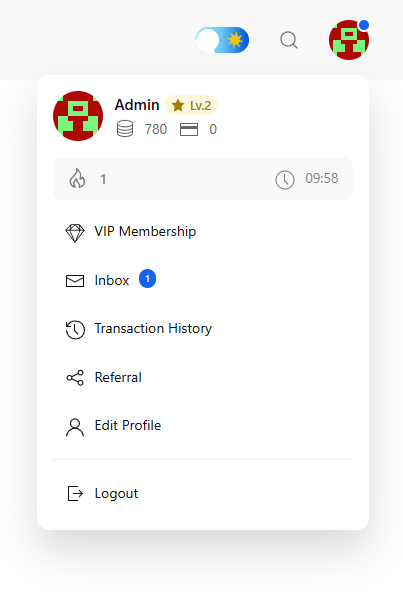
- Display user avatar and dashboard via shortcode
- Show level, EXP, Coin/Cash, and full user wallet
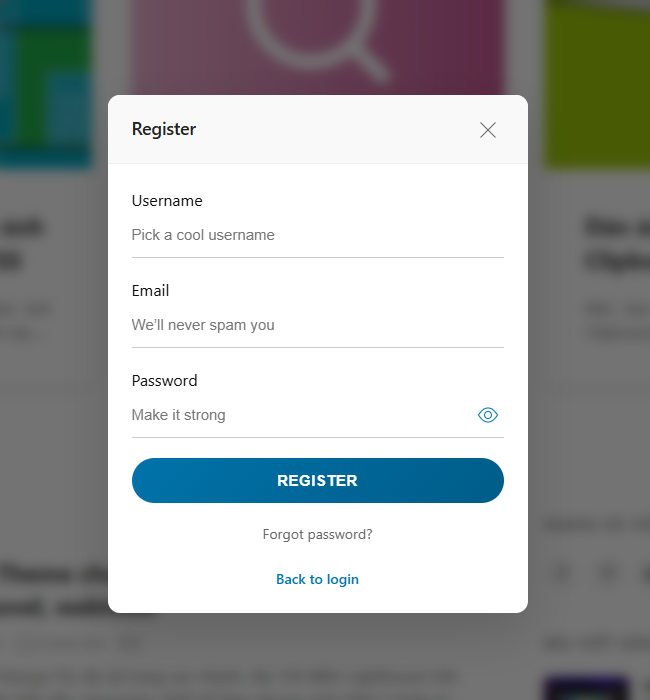
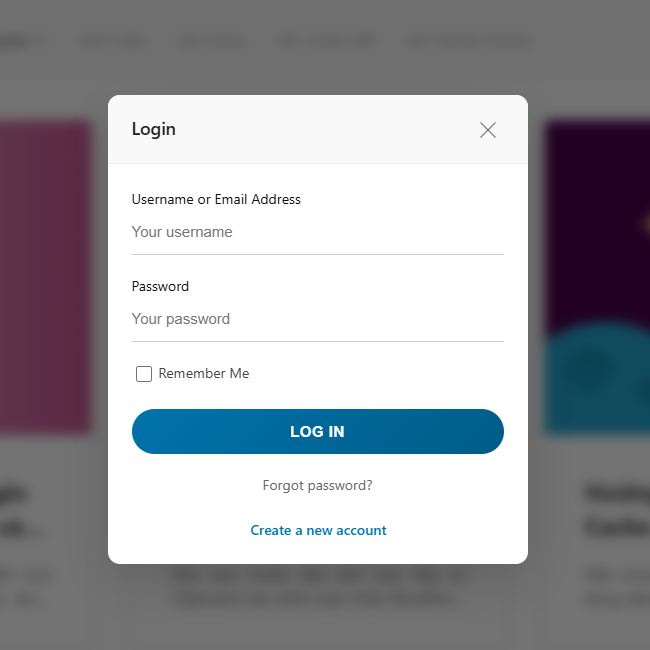
- Frontend login & registration modal with Cloudflare Turnstile (or built-in math captcha) protection
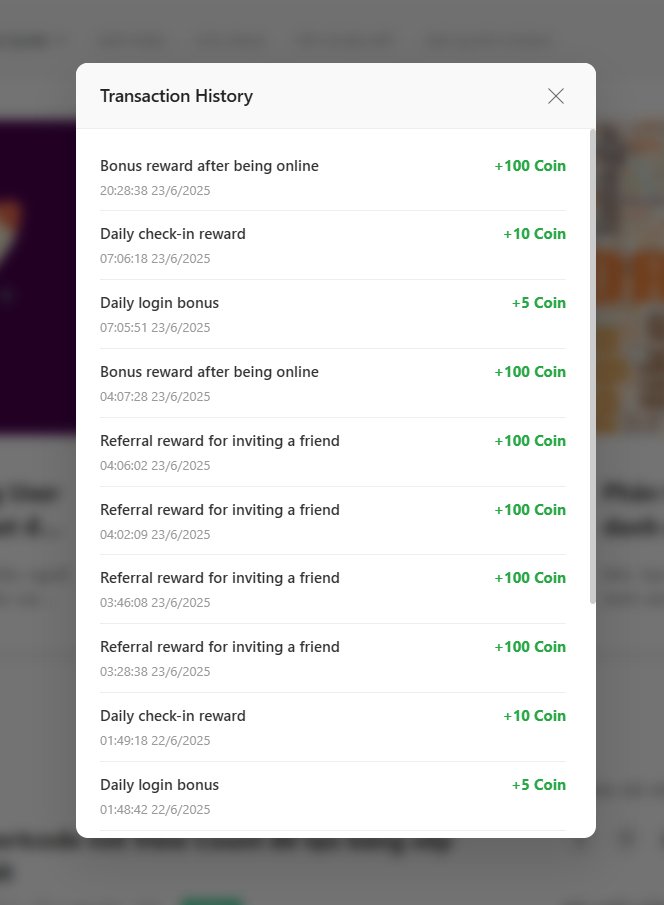
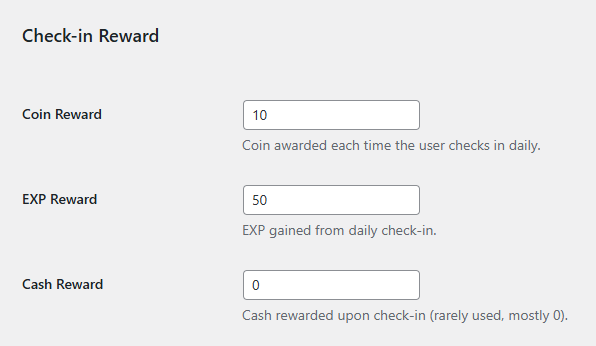
- Let users check-in daily and receive timed rewards
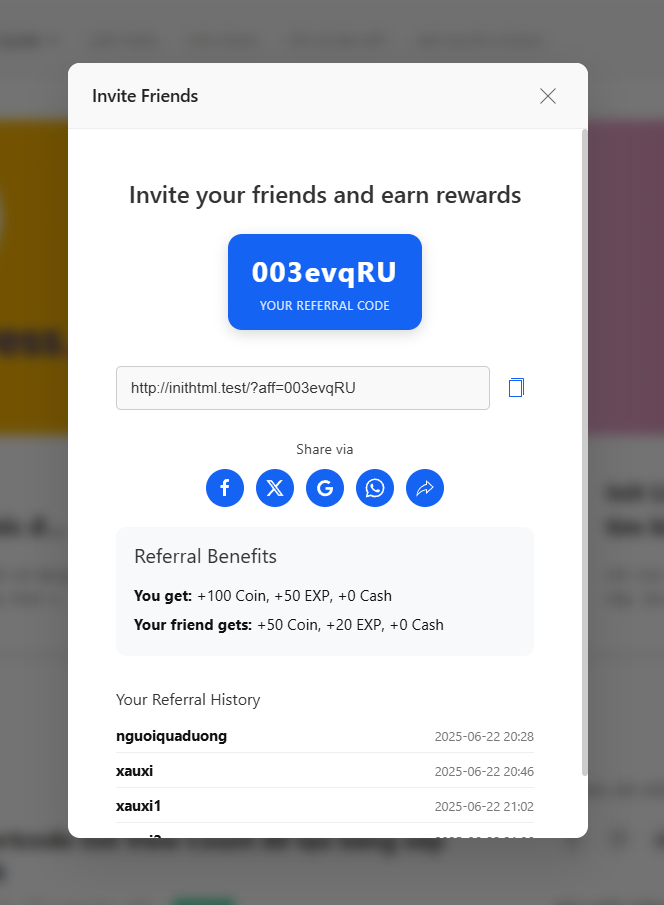
- Auto-track referral registrations with reward system
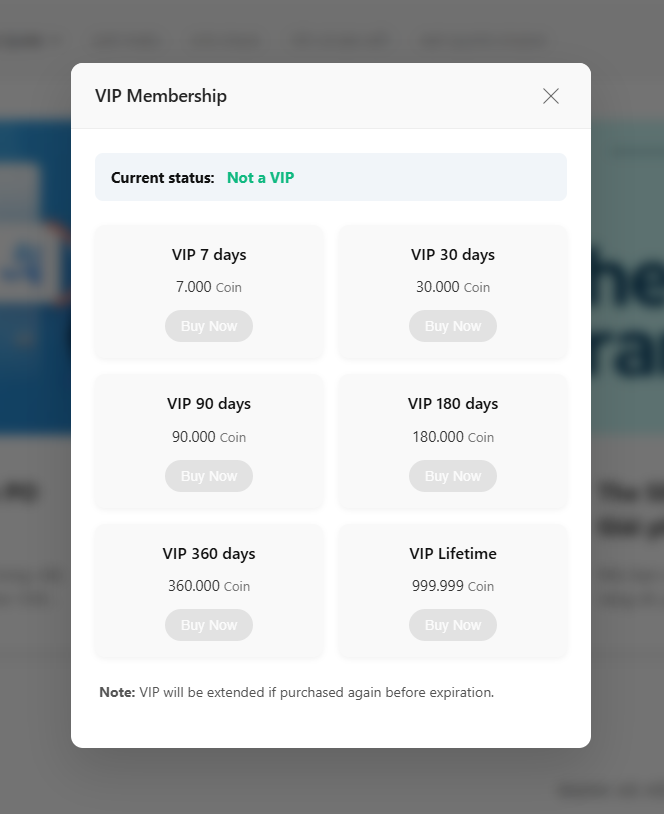
- Let users buy VIP status using Coin, Cash, or both
- Redeem Code / Gift Code and dedicated VIP Code system, with CSV export from wp-admin
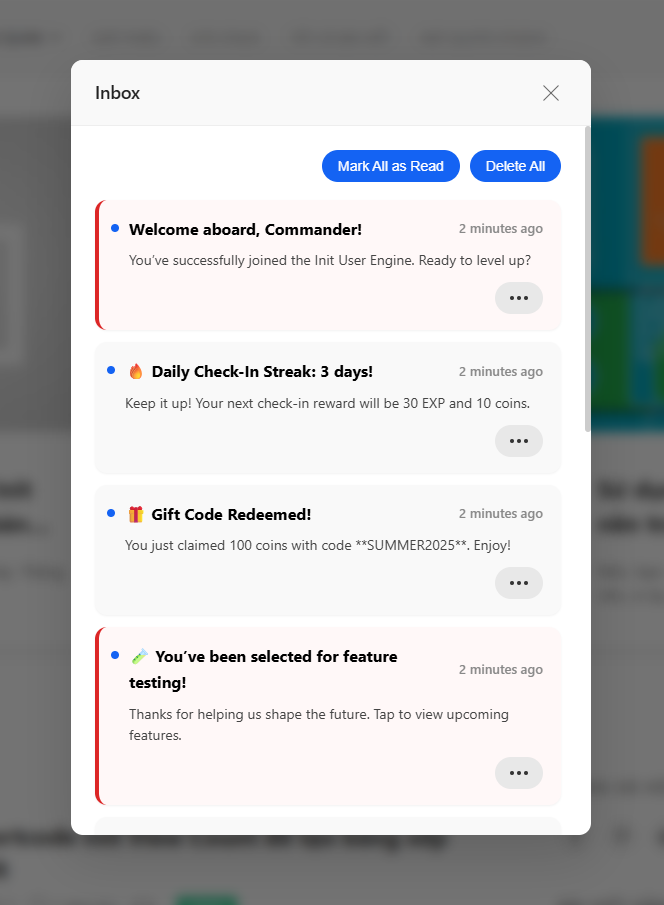
- Built-in inbox for notifications (uses custom DB table), with pinned/expiring messages and a stats dashboard
- Custom avatar support with upload & preview modal
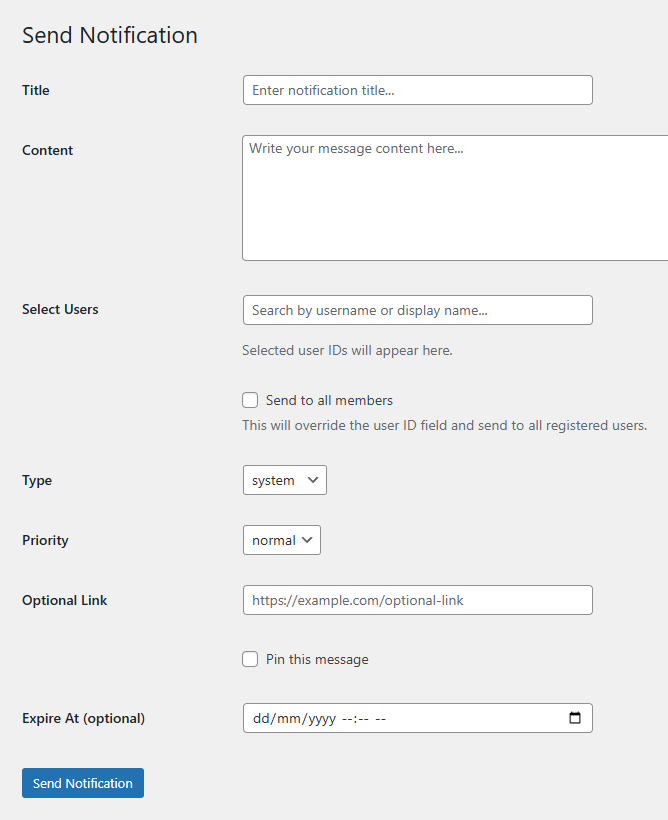
- Send custom notifications to selected users or all members from wp-admin
- Optional "Require Login to Access Site" mode that gates the entire frontend behind the built-in login modal
- Optional one-step "Login After Register" so new users land on the site already signed in
安装:
- Upload the plugin to
/wp-content/plugins/init-user-engine - Activate it via the Plugins screen
- Use
[init_user_engine]in any page/post/template - You're done – modals and logic load automatically
屏幕截图:
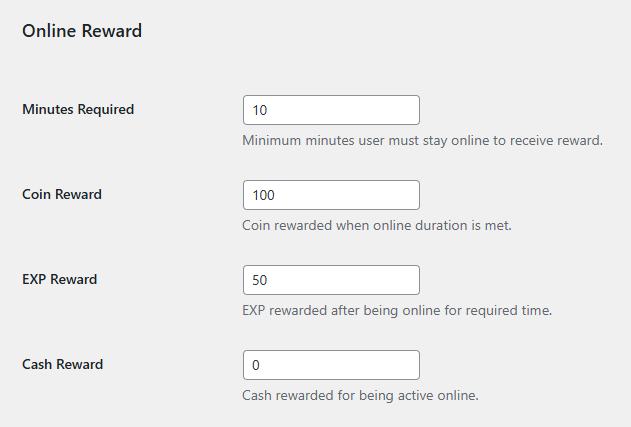
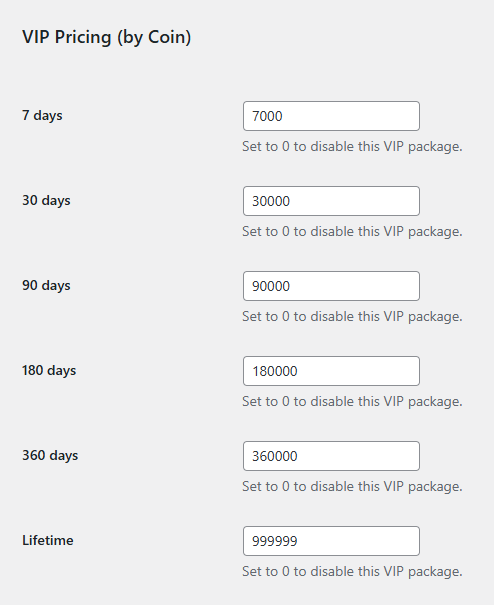
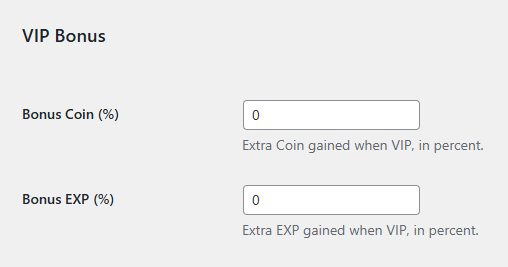
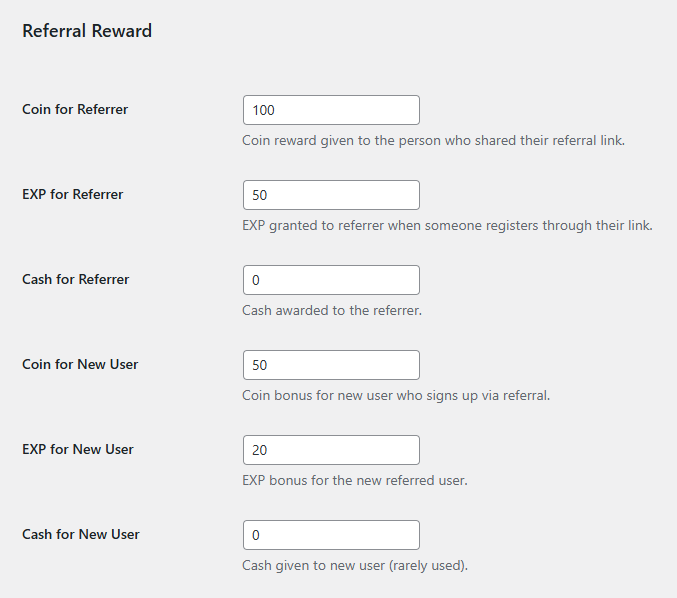
常见问题:
Where is user data stored?
= How do I customize the UI? =\ The frontend is written in modular Vanilla JS with minimal HTML structure.\ Override styles via your theme or inject custom JS as needed.
user_meta: EXP, level, Coin, Cash, VIP, referralwp_init_user_engine_inbox: inbox messages (custom DB table) = Can I extend or integrate it? =\ Yes. The plugin is built around WordPress hooks and REST API. You can inject logic viaadd_action,add_filter, or build your own UI on top of the endpoints.
更新日志:
1.6.7 – October 3, 2026
- Performance (large sites): rebuilt the database indexes used by the Inbox, after a production slow query log showed "Mark All as Read" (
UPDATE … WHERE user_id = … AND status = 'unread') taking 2.5 seconds on a 1.2M-message Inbox - New composite index
user_status (user_id, status): the unread badge count, "Mark All as Read" and the Unread tab now read the index only instead of loading every message row of the user (about 181 → 3 pages read per unread count in our 1.25M-row benchmark) - New composite index
user_pinned_created (user_id, pinned, created_at): the Inbox list (ORDER BY pinned DESC, created_at DESC) is read straight from the index, no more filesort - Dropped single-column
user_idindexes on the Inbox, Transaction log and EXP log tables. They were fully covered by composite indexes that start withuser_id, so they only cost extra writes and disk space (every Coin/EXP change writes to these tables) - Safe on big databases: the index upgrade runs in the background through WP-Cron, never inside a page load (small and new sites are upgraded instantly). It uses online DDL (
ALGORITHM=INPLACE, LOCK=NONE), so reads and writes keep working while indexes are built; it gives up after 3 seconds if it has to wait for a table lock, instead of making other queries queue behind it, then retries an hour later (up to 24 times); and a lock option makes sure only one process ever runs it. If WP-Cron is not running, the upgrade runs on the next admin page load after the event is more than an hour late - You can also run it yourself during quiet hours (replace
wp_with your table prefix); the plugin detects the new indexes and marks the upgrade as done:ALTER TABLE wp_init_user_engine_inbox ADD KEY user_status (user_id, status), ADD KEY user_pinned_created (user_id, pinned, created_at), DROP KEY user_id, ALGORITHM=INPLACE, LOCK=NONE;thenALTER TABLE wp_init_user_engine_transaction_log DROP KEY user_id;andALTER TABLE wp_init_user_engine_exp_log DROP KEY user_id; - Performance: the weekly orphaned-Inbox cleanup no longer runs a single
DELETE … LEFT JOINover the whole Inbox table. That statement scanned and locked every row (even when nothing needed deleting), blocking every member's Inbox actions while it ran; in our benchmark a member's "Mark All as Read" waited 7.9 seconds. It now walks the distinct user IDs through the index, checks them against the users table in batches of 500 and deletes only orphaned messages, at most 1,000 rows per statement (0.45 s and no table-wide locks when there is nothing to delete) - Performance: Inbox Statistics → Delete All of This Type now deletes in batches of 1,000 by primary key instead of one
DELETE … WHERE type = …, which locked the whole table until done (members' Inbox actions waited 7 seconds while 200k messages were deleted in our benchmark; now under 0.1 second) - Fixed: the orphaned-Inbox cleanup used
$wpdb->prefix . 'users'as the users table, which does not exist on Multisite sub-sites (the users table is shared network-wide). It now uses$wpdb->users - The new background event is cleared on deactivation along with the plugin's other cron events
- Added Lost Password in Modal (Init User Engine → Settings, right below Login After Register). The "Forgot password?" link in the login modal now opens a lost password form inside the same modal instead of sending visitors to
wp-login.php - Enabled by default. Turn it off if your site cannot send emails yet — the link then goes to the default
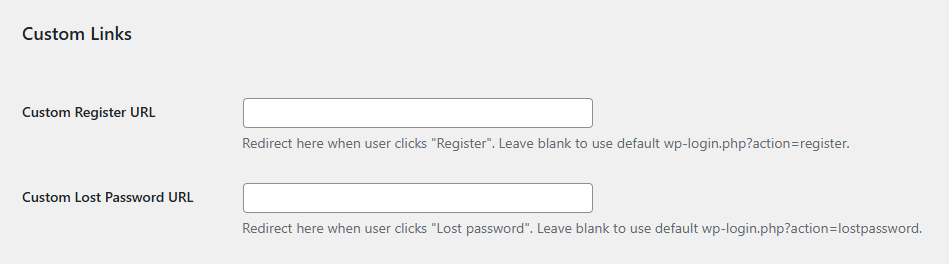
wp-login.php?action=lostpasswordpage as before - Custom Lost Password URL (Custom Links) still takes priority: when it is set, the link always goes there, whatever this option says
- Uses the native WordPress password reset flow: the form posts to
wp-login.php?action=lostpassword, so the reset email,lostpassword_form/lostpassword_posthooks and the Turnstile "Lost Password Form" protection all keep working - After submitting, visitors land back on the same page with the modal open: a success notice in the login form when the email was sent, or an inline error in the lost password form (unknown user, empty field, email sending failure, captcha failure). Any other error keeps WordPress's default
wp-login.phpbehaviour so its exact message is still shown - Template
lostpassword-form.phpcan be overridden fromyour-theme/init-user-engine/; any element can also open it withdata-iue="lostpassword" - Added filter
init_plugin_suite_user_engine_lostpassword_modal_enabled - Performance: the guest script no longer runs a
MutationObserveron the whole<body>(it fired on every DOM change of the page just to attach the password toggle to the registration form, which is already in the page) - Performance: the
get_avatar_urlfilter no longer re-runs every plugin'spre_get_avatar_datacallbacks for each avatar; it only applies Init User Engine's own avatar logic (the result is the same) - Performance: the check-in countdown now saves its state on
pagehideinstead ofbeforeunload, so browsers can keep the page in the back/forward cache - Fixed: the deactivation hook was registered against
includes/core.phpinstead of the main plugin file, so it never ran and the plugin's cron events stayed scheduled after deactivation. All three recurring events are now cleared on deactivation (they are scheduled again automatically on reactivation) - Fixed: the twice-daily cleanup compared transient expiry times (stored in UTC) with the site's local time, so on sites ahead of UTC it could delete registration captchas and rate-limit counters that had not expired yet
- Fixed: on sites using "Plain" permalinks (REST URL like
?rest_route=/inituser/v1), requests that add their own query string were malformed: the registration math captcha never loaded, and Inbox, Transaction History and Experience Log pagination failed. Query strings are now appended with&when the REST URL already has one - Updated
.pot/.po/.motranslation files with the new strings introduced above (Vietnamese translation included), regenerated with WP-CLI
- Added Streak Recovery (Init User Engine → Settings → Streak Recovery). When a member misses a few days, they can now spend Coin to keep their check-in streak instead of losing it
- Two new settings: Missed Days Allowed (how many missed days can be covered,
0= feature off) and Coin Cost per Missed Day (0= free). Off by default, so nothing changes on existing sites until an admin turns it on - Clicking Check In after a gap opens the plugin's standard modal showing the current streak, missed days, total cost and the member's balance, with two choices: keep the streak (pay), or reset it and check in anyway. Closing the modal does nothing. Missing more days than allowed simply resets the streak as before
- Keeping a streak covers the missed days but does not count them as check-ins: the streak continues from where it was and today adds +1, so streak milestone rewards (7/30/90…) behave exactly as before
- Every charge is written to the Coin transaction log as a deduction with a readable reason (e.g. "Kept check-in streak (2 missed days)"), shown in the member's Transaction History and in the admin user metabox
- The frontend only ever shows the configured Coin Label, never a hardcoded "Coin"; all new frontend and error strings are label-aware
- Safety: the price is re-checked on the server against what the member was shown (rejected if it changed), the balance is verified just before charging, and if the log entry cannot be written the Coin is handed back and the streak is left untouched
POST /checkingained three optional JSON fields:prompt_restore(answer with statusrestore_availableinstead of checking in when the streak can be kept — nothing is changed),restore_streakandrestore_cost. Clients that don't send them behave exactly as before- Added filters
init_plugin_suite_user_engine_streak_restore_max_daysandinit_plugin_suite_user_engine_streak_restore_cost, and actioninit_plugin_suite_user_engine_streak_restored - New logic lives in
includes/streak-restore.php - Fixed:
POST /checkinhad no protection against overlapping requests, so two requests fired at the same moment could both pass the "already checked in today" test and reward the same day twice. Check-ins are now serialized per user with the same short-lived mutex pattern used by the exchange endpoints; a request that arrives while another is running gets a409 busyresponse - Fixed: modals opened from the logged-in dashboard never played their open animation. The
fadeIn/slideDownkeyframes referenced by#iue-modalonly existed instyle-guest.css, which is not loaded for logged-in users. Added namespacediue-fade-in/iue-slide-downkeyframes tostyle-user.css(so a theme's ownfadeIn/slideDowncan no longer interfere) plus aprefers-reduced-motionopt-out - Fixed: leaving the Coin Label or Cash Label field empty made the frontend (dashboard data, Referral benefits, exchange and VIP screens) display a blank currency name, and the VIP purchase inbox message could show an empty label. Both now fall back to "Coin" / "Cash" through the shared
init_plugin_suite_user_engine_get_coin_label()/..._get_cash_label()helpers - Fixed: after a failed check-in request (a server error, or a network failure) the check-in button used to switch to "Checked in" or fall back to an untranslated "Check-in" (it read a translation key that was never defined); it now returns to its normal, translated label and shows the error
- Fixed: the plugin's activation hook was registered against
includes/init.phpinstead of the main plugin file, so it never ran and the database tables were only created later, on the firstadmin_init. It now runs on activation as intended (theadmin_initversion check stays as the upgrade path) - Updated
.pot/.po/.motranslation files with the new strings introduced above (Vietnamese translation included), regenerated with WP-CLI
- Fixed: permanently deleting a user (from Users → All Users, bulk delete, or the REST Users endpoint) used to leave that user's EXP history and Inbox messages behind in the database forever, since nothing ever cleaned them up after the account itself was gone
- Now hooked into WordPress core's
deleted_useraction (fires for both single-sitewp_delete_user()and multisitewpmu_delete_user(), so one hook covers both): as soon as a user is permanently deleted, their EXP log rows and all Inbox messages are deleted right along with it - Coin/Cash transaction log stays untouched on purpose — wallet history feeds into site-wide statistics and reconciliation (total coin/cash ever issued, revenue reports, etc.), so it's intentionally kept even after the user account is gone
iue_*user meta (check-in streak, login bonus flags, profile bonus flag...) needed no extra handling — WordPress core already wipes all usermeta for the user beforedeleted_userfires- Added action hook
init_plugin_suite_user_engine_user_data_purged(fires with the deleted user's ID right after cleanup) so other plugins/add-ons can hook in and clean up their own related data too - No new user-facing strings in this release, so
.pot/.pofiles are unchanged
- Added a new "Login After Register" option (Init User Engine → Settings → General, disabled by default). When enabled, a successful registration through the plugin's REST endpoint (
/register) immediately signs the new user in (wp_set_auth_cookie()+wp_set_current_user(), followed by the standardwp_loginaction for compatibility with other plugins/themes) instead of leaving them on the Login form - The frontend register form now reloads the page after a successful auto-login (instead of switching to the Login form) so the UI, nonces, and avatar immediately reflect the signed-in state
- Left disabled by default so registration and login remain two explicit, separate steps unless a site owner opts in
- Fixed: a failed login attempt from the plugin's login modal (via
wp_login_form()) used to fall back to WordPress's default behavior and redirect the visitor towp-login.php, which felt out of place on sites that never expose that page. Failed logins now redirect back to the exact page the visitor was on, with the login modal automatically reopened and an inline error message (wrong username, wrong password, or missing fields) - Implemented via the
wp_login_failedaction combined withwp_get_referer(); only intervenes when the login attempt came from a normal frontend page, so logins made directly onwp-login.phpor insidewp-adminkeep WordPress's native behavior untouched - The redirect uses two short-lived query arguments (
iue_login_failed,iue_login_code) thatassets/js/guest.jsreads once to open the modal and show the right message, then immediately strips from the URL viahistory.replaceState()so refreshing or sharing the link never re-shows the notice - Refreshed
readme.txt— the Features section was rewritten from scratch to match the plugin's actual current feature set (Turnstile/captcha, Require Login gate, Redeem/VIP Codes with CSV export, Inbox Statistics, admin user metabox, and more), several of which had been implemented in past releases but never documented here - Updated
.pot/.potranslation files with the new strings introduced above (Vietnamese translation included)
- Changed: a pinned Inbox message now only stays pinned to the top while it is unread. As soon as it's marked as read (single message or "mark all as read"), it automatically unpins and behaves like any other message, so read messages no longer take up space at the top of the Inbox modal
- Implemented by clearing
pinnedback to0in the exact sameUPDATEquery that already sets a message toread(init_plugin_suite_user_engine_mark_inbox_read()and the "mark all as read" REST endpoint) — no extra query, no change to the InboxSELECT/ORDER BY, and no new database index needed - Added a one-time backfill (runs once on upgrade, same mechanism already used for schema updates) that clears
pinnedfor any pre-existing message that was already pinned and read before this update - Added a client-side safety net in the Inbox renderer so the pin icon never shows on a read message, even for the brief moment before the backfill above has run
- Updated
.pot/.potranslation files (no new strings were needed for this change; existing ones were already sufficient)
- Added Export CSV for both code list screens (User Engine → Redeem Codes / VIP Codes)
- New "Export CSV" button next to the "Existing Redeem Codes" / "Existing VIP Codes" heading, exporting the entire list (every page, not just the current one) as a downloadable
.csvfile - Redeem Codes CSV columns: ID, Code, Type, Locked User ID, Locked Username, Coin Amount, Cash Amount, Max Uses, Used Count, Status, Valid From, Valid To, Created By, Created At, Updated At
- VIP Codes CSV columns: same as above, with VIP Days in place of Coin/Cash Amount
- Data is streamed straight to the browser in batches of 500 rows so memory usage stays low even on sites with a large number of codes
- File is written with a UTF-8 BOM so it opens correctly in Excel, and every cell is sanitized against CSV/formula injection (values starting with
=,+,-,@, or a tab are safely prefixed) - Gated behind the
manage_optionscapability plus a dedicated nonce per screen (iue_redeem_code_export_csv/iue_vip_code_export_csv) - Updated
.pot/.potranslation files with the new strings introduced above (Vietnamese translation included);.monot rebuilt as part of this change
- Added a new "Require Login to Access Site" option (Init User Engine → Settings → General). When enabled, visitors who are not logged in no longer see the site's actual content on any page
- Instead, they see a blank page in the plugin's theme color with the built-in login modal opened automatically, so they can sign in without leaving the page
- Implemented via
template_redirect, sowp_head()/wp_footer()still run in full — the plugin's own login modal, and every other theme/plugin hook attached to those actions, keeps working normally - REST API, AJAX, cron, feed, and robots.txt requests are always excluded and are never blocked by this option
- Added filter
init_plugin_suite_user_engine_require_login_bypassso other plugins/themes can exclude specific requests (e.g. a payment callback URL) from the gate - New dedicated
assets/css/require-login.cssandassets/js/require-login.jsfiles render the gate's background and auto-open the login modal, kept separate from PHP output for coding-standards compliance - Fixed: the frontend guest script (
guest.js) only exposedwindow.openLoginModal(and wired up Escape-to-close, Alt+L, and hash-triggered opening) when an avatar element was present on the page. Pages without the avatar shortcode/widget — including the new Require Login gate — could not open the login modal at all. The avatar element is now optional; the modal and its triggers work on any page as long as the modal itself is rendered (always the case viawp_footer) - Updated
.pot/.potranslation files with the new strings introduced above (Vietnamese translation included);.monot rebuilt as part of this change View full changelog (all versions): Init User Engine – Changelog