Kaldia - AEO & GEO Manager
| 开发者 | Kaldia Team |
|---|---|
| 更新时间 | 2026年9月23日 02:51 |
| PHP版本: | 7.4 及以上 |
| WordPress版本: | 7.1 |
| 版权: | GPLv2 or later |
| 版权网址: | 版权信息 |
详情介绍:
- Answers and content: are important answers explicit, self-contained and easy to extract?
- AEO and GEO: can answer engines identify entities, relationships, claims and useful information?
- Structured data: does the machine-readable representation describe what users can actually see?
- main content, headings and information structure;
- page type and relevant WordPress context;
- tables, lists and useful links;
- visible questions and answers;
- commerce information where available;
- existing JSON-LD;
- canonical and indexability signals.
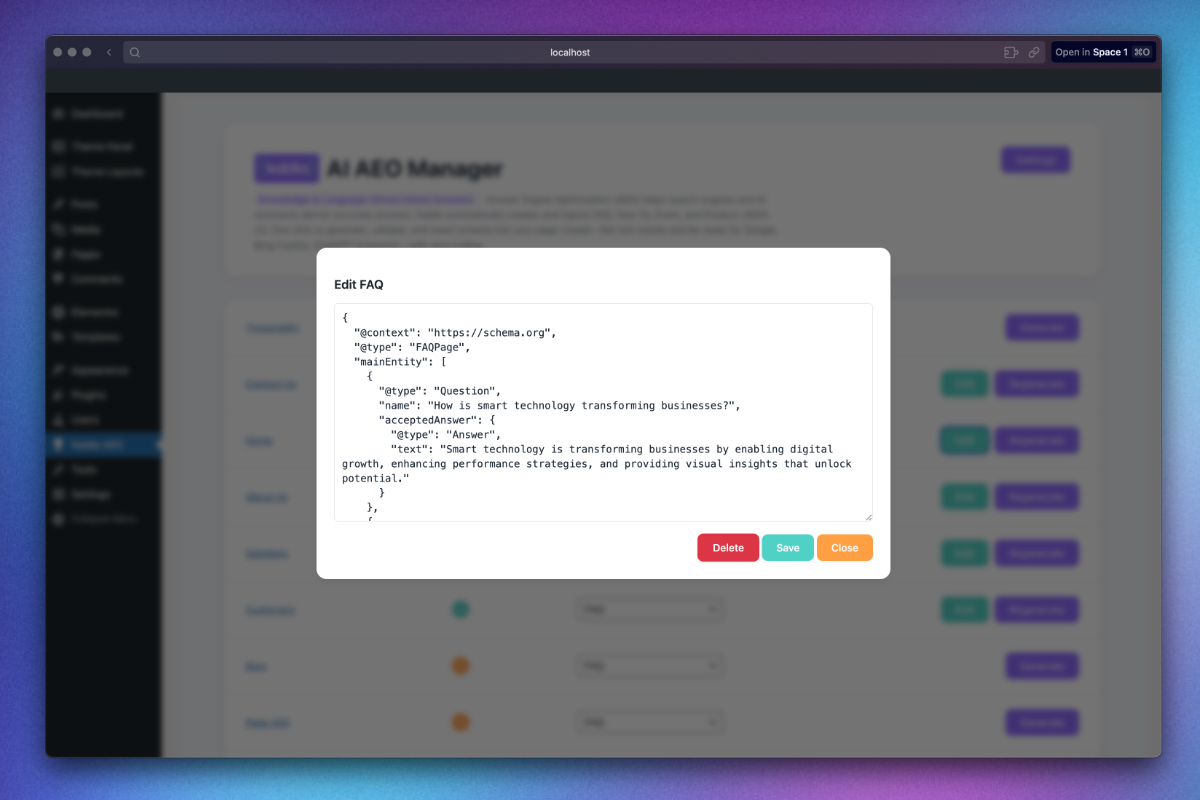
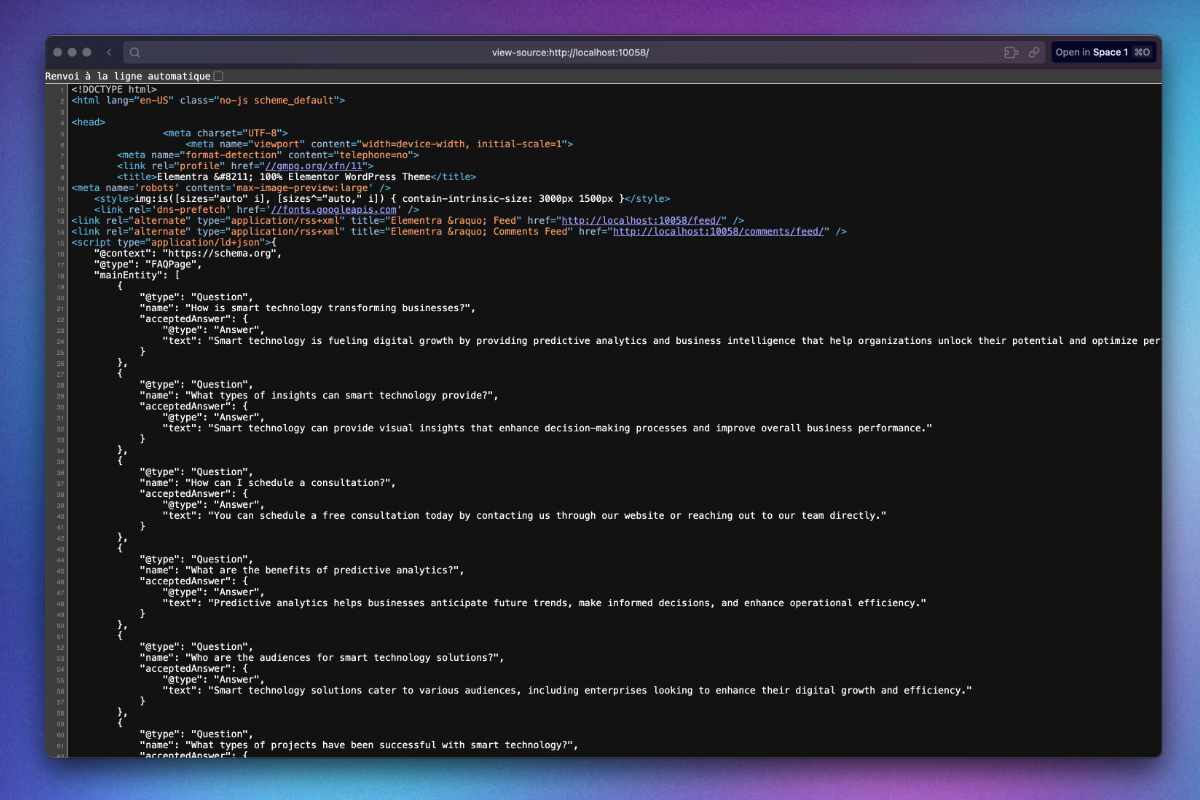
FAQPage, OfferCatalog, eligible product ratings, articles, services, products, events and breadcrumb relationships when the required evidence exists.
When page content changes, Kaldia flags its analysis and machine-readable representation for review.
AI proposes. Kaldia verifies.
OpenAI helps Kaldia interpret meaning. Kaldia keeps factual control.
AI output is checked against page evidence before supported structured-data changes can be applied. The model cannot publish JSON-LD or edit page content. Kaldia builds the final graph locally from validated facts, lets an administrator preview it, then verifies the public HTML after publication.
Structured data can reduce ambiguity around entities and relationships already present on the page. It does not guarantee rankings, rich results, citations or AI visibility.
Kaldia does not copy third-party local-business ratings into self-serving rating markup.
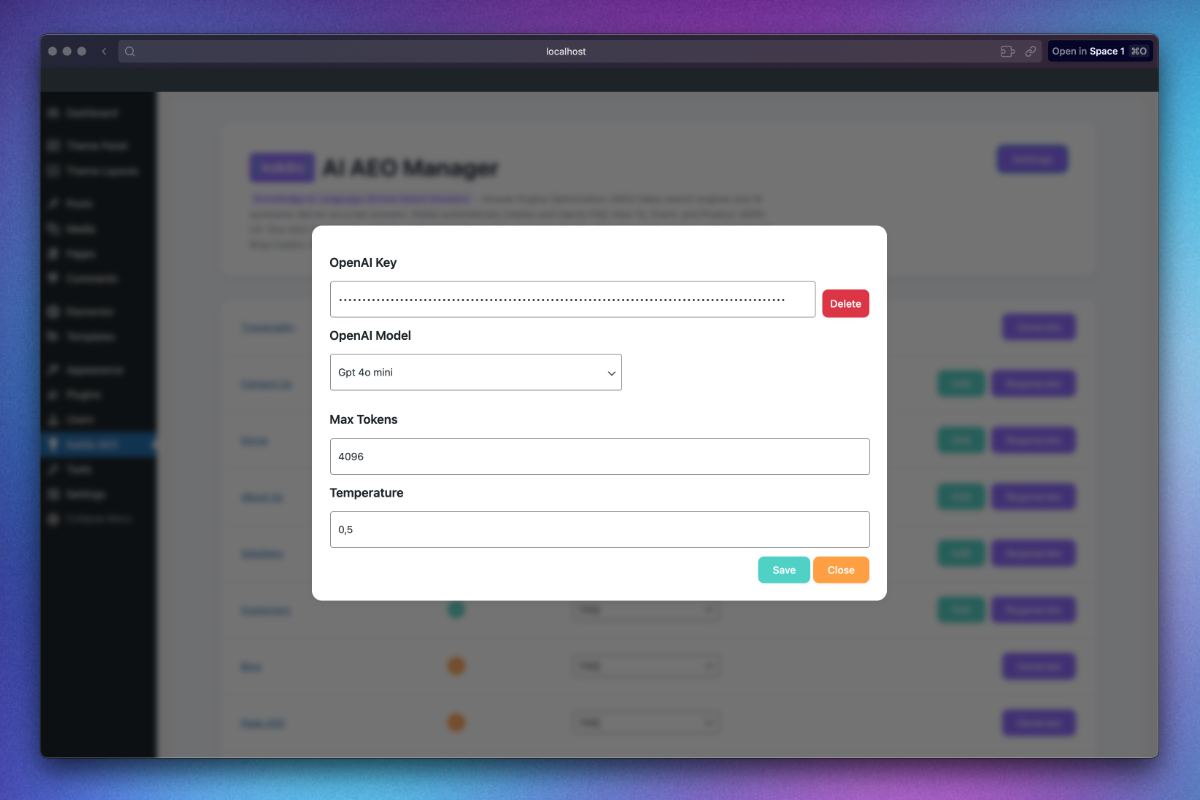
Bring your own OpenAI API key
Kaldia has no subscription and does not resell AI credits. You connect your own OpenAI API key and choose when a page is analyzed.
Kaldia uses a centrally configured, cost-efficient model selected for structured page analysis. It sends a bounded semantic evidence package instead of blindly sending full HTML. The interface estimates analysis size and cost where possible.
OpenAI failures are reported explicitly. The API key is encrypted with WordPress secrets.
Built for useful signals, not GEO folklore
Kaldia does not promise AI rankings or citations. It does not turn every heading into a question, create arbitrary FAQs for Schema, use keyword-density recipes or impose generic content-length targets.
Every recommendation must be tied to the actual page and to a concrete AEO, GEO or supporting SEO rationale.
How it works
- Kaldia creates a lightweight local list of published content.
- You select a page and start its evidence-based analysis.
- You review recommendations and any supported Schema graph.
_kaldia_faq data remains public until a reviewed V2 graph replaces it on that page. Legacy output is excluded from V2 evidence so it cannot suppress a fresh review. Applying a V2 graph creates a verified History entry and an undo point.
Kaldia no longer injects an invisible site-wide Organization or WebSite graph.
安装:
- Upload and activate the Kaldia ZIP.
- Open Kaldia and select Index my pages.
- Add an OpenAI API key in Settings.
- Open a page, select Analyze page and review the results.
屏幕截图:

常见问题:
Is Kaldia a traditional SEO audit plugin?
No. Kaldia focuses on page meaning, answerability, extractability, evidence, entities, relationships and machine representation. It does not use keyword density, arbitrary word counts or a generic site score.
Does Kaldia require OpenAI?
OpenAI is required for semantic page analysis and recommendations. Indexing, local validation, final Schema generation, public verification, History and undo run in WordPress.
Which AI model does Kaldia use?
Kaldia automatically uses a cost-efficient OpenAI model suitable for structured page analysis. Model selection may evolve as OpenAI models change.
What information is sent to OpenAI?
Only the selected page's cleaned semantic evidence, including relevant content, structure, metadata, links, visible facts and existing JSON-LD. Raw HTML, the API key and other pages are not sent in the analysis payload.
When can Kaldia generate Schema?
Only when the required facts are visible or reliably available in WordPress. For example, FAQPage needs explicit questions and answers, while OfferCatalog needs named services with associated prices and currencies.
What happens after Kaldia applies JSON-LD?
Kaldia fetches the public URL, compares the observed graph with the expected graph and records the result. A verified Kaldia change does not make the analysis stale.
Can I undo a structured-data change?
Yes. History stores the previous Kaldia graph. Undo restores it and verifies the public page again.
Does Kaldia track visitors or AI referrals?
No. Kaldia sends no telemetry and is not an analytics or AI-visibility tracking service.
更新日志:
- Made OpenAI key replacement explicit: the stored key remains unchanged until a complete new key is accepted.
- Refined WordPress.org discovery tags around AEO, GEO, structured data and JSON-LD.
- Rebuilt Kaldia around page-level understanding and evidence-based recommendations.
- Added multi-entity Schema planning, preview, verification, History and undo.
- Preserved legacy markup until a verified V2 graph replaces it.