
Logify - Activity Log, Audit Log, Event Log & User Activity Tracking
| 开发者 |
kaizencoders
mikeatkaizencoders |
|---|---|
| 更新时间 | 2026年10月20日 18:37 |
| 捐献地址: | 去捐款 |
| PHP版本: | 7.4 及以上 |
| WordPress版本: | 7.1 |
| 版权: | GPLv3 or later |
| 版权网址: | 版权信息 |
标签
下载
详情介绍:
安装:
- Go to WordPress Dashboard. Locate Plugins -> Add New
- Search Logify plugin using the search option
- Find the plugin and click Install Now button
- After installation, click on Activate Plugin link to activate the plugin.
- Download the plugin logify.zip
- Go to WordPress Dashboard. Locate Plugins -> Add New
- Click on the Upload Plugin link from the top
- Upload the downloaded logify.zip file and click on Install Now
- After installation, click on Activate Plugin link to activate the plugin.
- Install and activate the plugin — it works out of the box with smart defaults
- (Optional) Turn tracking on or off and choose your anonymization level
- (Optional) Set your log retention period to control storage
- (Optional) Add Exclusion Rules to filter out events you do not want to track
- Start monitoring your WordPress site immediately
屏幕截图:
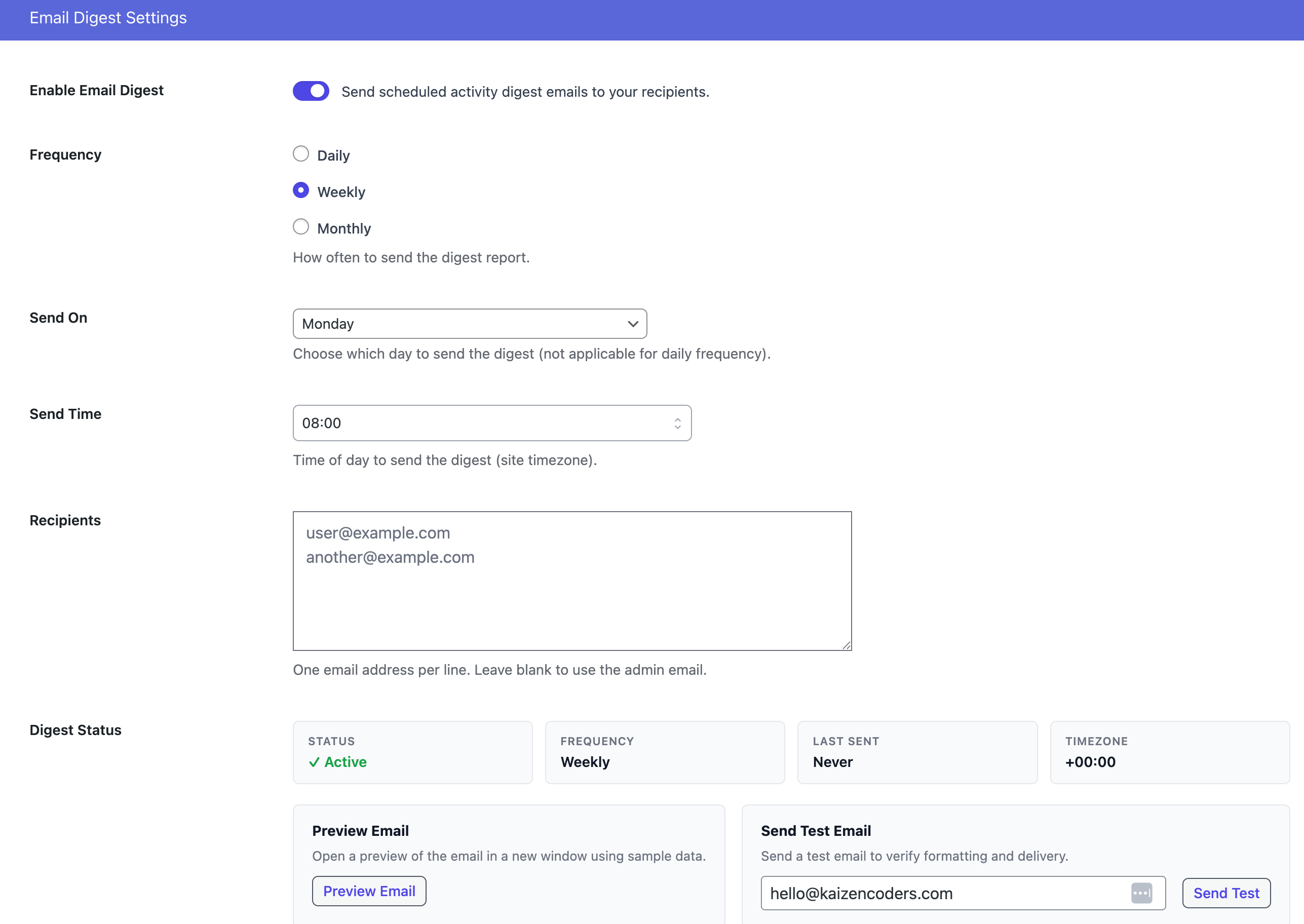
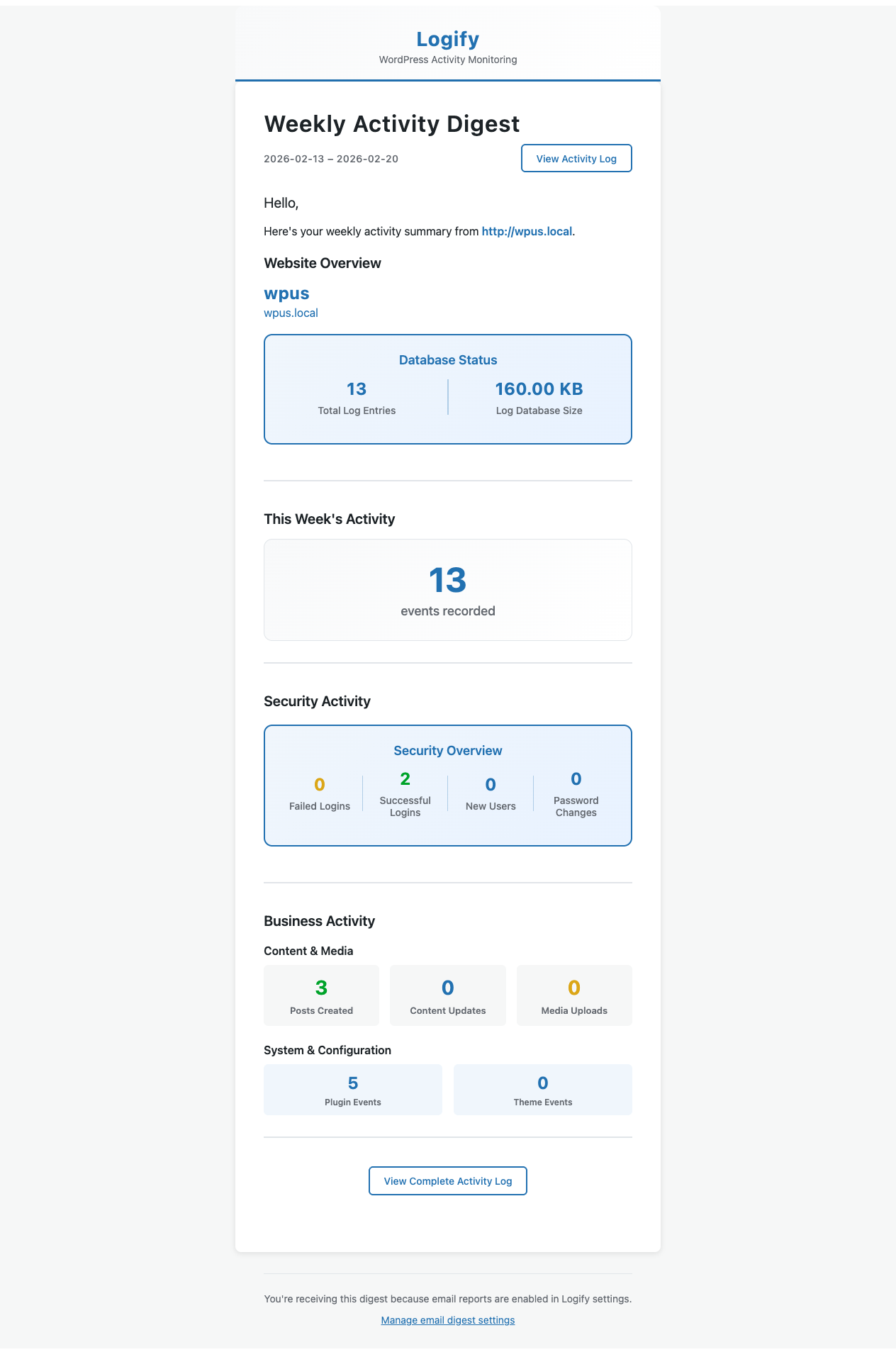
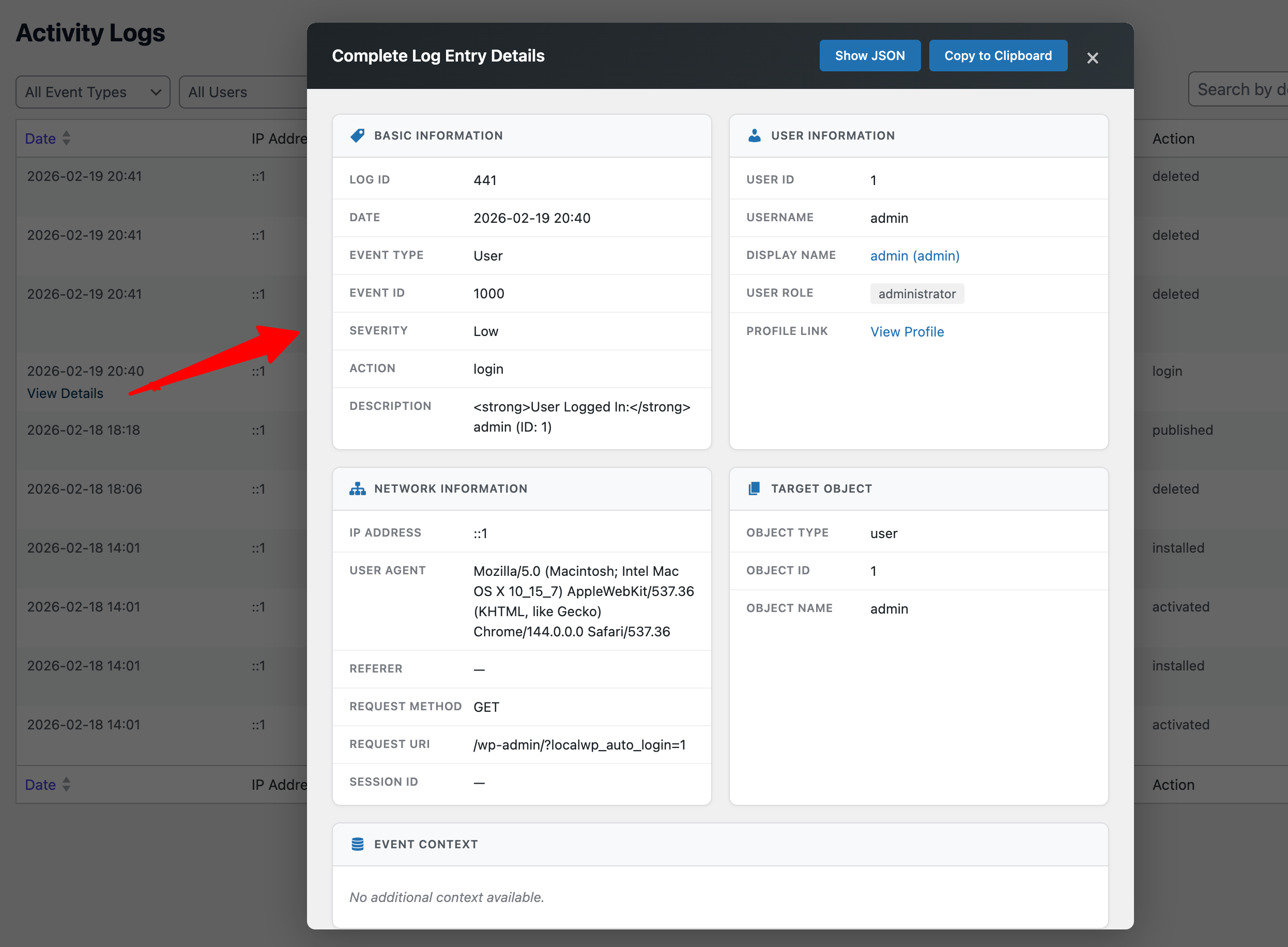
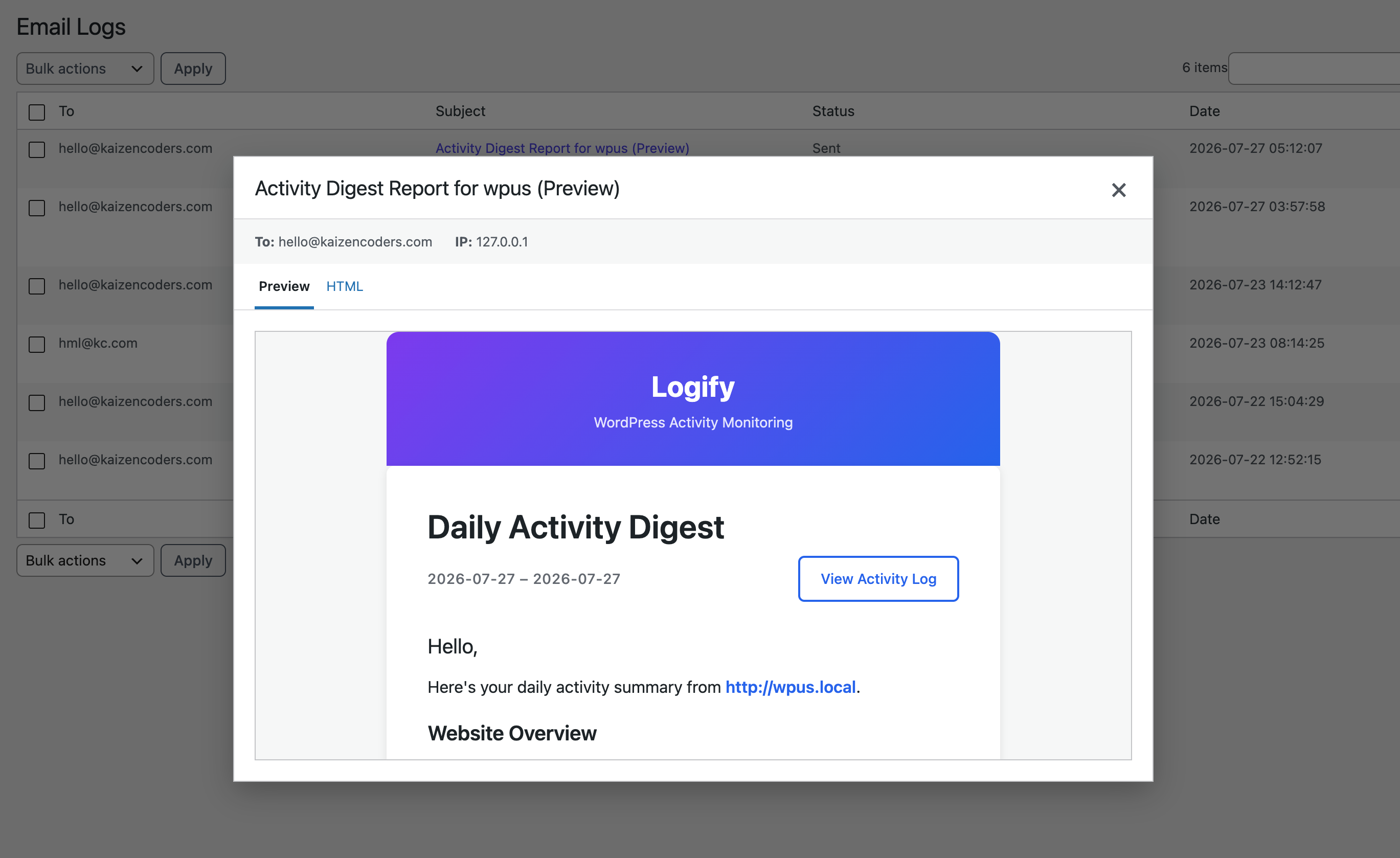

常见问题:
What is the difference between an activity log, an audit log, and an event log?
In practice they describe the same thing from different angles, and Logify is all three. As an activity log it shows user activity — who logged in and what they edited. As an event log it records system events such as plugin updates, theme switches, and settings changes. As an audit log it gives you a tamper-evident audit trail you can export for compliance. You do not need separate plugins for each.
What user activity does Logify track?
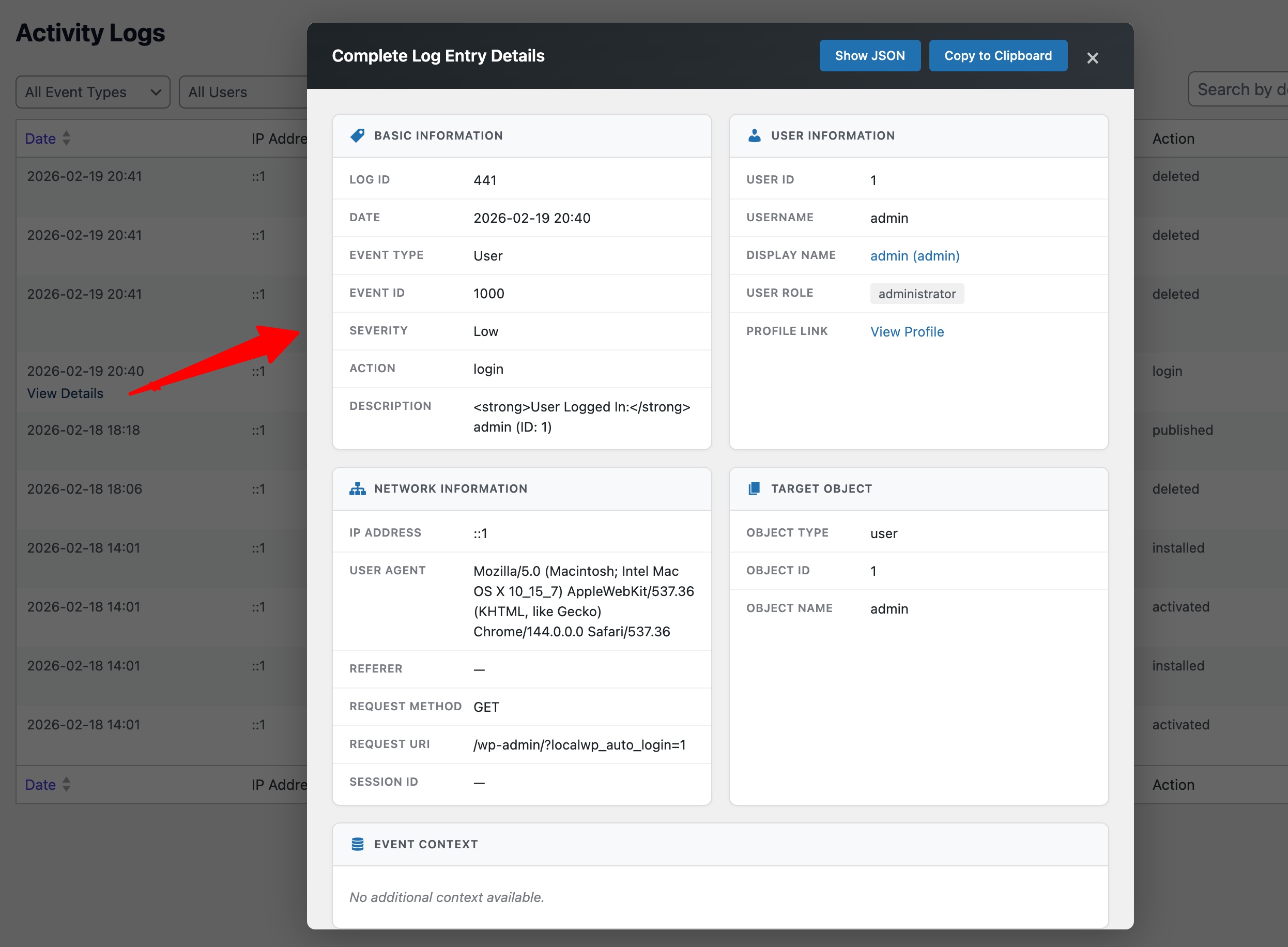
Logify records user activity including logins, logouts, failed logins, registrations, profile updates, password resets, role changes, and user deletions — each with the user, IP address, country, and timestamp. Content and system events such as post edits, media uploads, plugin and theme changes, menu and widget changes, taxonomy terms, and WordPress settings changes are logged alongside them in the same event log.
Does Logify work with WordPress Multisite?
Yes. Logify can be activated on the main site or on individual subsites, and each site maintains its own activity log.
Does this plugin affect my site's performance?
Logify is engineered for minimal impact. It uses a dedicated database table, composite indexes, and buffered writes that are saved in a single batched query on shutdown — so logging does not slow down page loads. Retention settings and Exclusion Rules keep the log lean over the long term.
Is Logify GDPR compliant?
Logify includes GDPR-ready features to help with compliance: IP anonymization, full data masking, configurable data retention, and the ability to delete logs for a specific user. Compliance responsibility ultimately lies with you and your organisation.
How long are activity logs stored?
By default, logs are retained for 30 days. You can change the retention period under Settings > General, and older entries are purged automatically.
Can I export the activity logs?
Yes. From Tools > Export Logs you can download a date-ranged archive as CSV (Excel-ready), JSON (with decoded metadata), HTML (printable report), plain text, or an audit-ready PDF. You can also use the quick "Export CSV" button on the Activity Logs screen.
Can I filter logs by user, severity, or event type?
Yes. The Activity Logs screen lets you filter by severity, event type, user, and date range, and combine filters for precise results.
My site has too many log entries from routine activity. How do I reduce the noise?
Use Settings > Exclusions. You can exclude activity by user, role, IP address, post type, post status, or whole event categories. Exclusions prevent future logging — existing entries remain unchanged.
What is the difference between filtering and exclusions?
Filtering is temporary and only affects what you see on the Activity Logs screen. Exclusions are permanent and stop matching events from being logged at all, which also keeps your database smaller.
What are severity levels?
Every log entry is scored Critical, High, Medium, Low, or Info, and displayed with a colour-coded badge. This makes it easy to spot important events at a glance, and you can filter by severity on the Activity Logs screen.
Does Logify track custom post types?
Yes. Post activity tracking covers all post types, not just posts and pages. You can exclude specific post types under Settings > Exclusions.
Does Logify track WooCommerce or Yoast SEO?
Yes, both are included in Logify Pro. WooCommerce logging covers products, orders, order items and refunds, coupons, customers, product categories and tags, and store settings. Yoast SEO logging records changes to a post's SEO fields, including titles, meta descriptions, canonical URLs, and indexing rules. Logify Pro also includes loggers for MemberPress, bbPress, Advanced Custom Fields (ACF), Gravity Forms, URL Shortify, and Magic Link. Pro license holders receive every new integration as it ships.
How do I view failed login attempts?
Failed logins are tracked automatically. Filter by the "Failed Login" event type on the Activity Logs screen. Logify also detects brute-force bursts and throttles repeated failures per IP so a single attack does not flood your log.
Does Logify send my data anywhere?
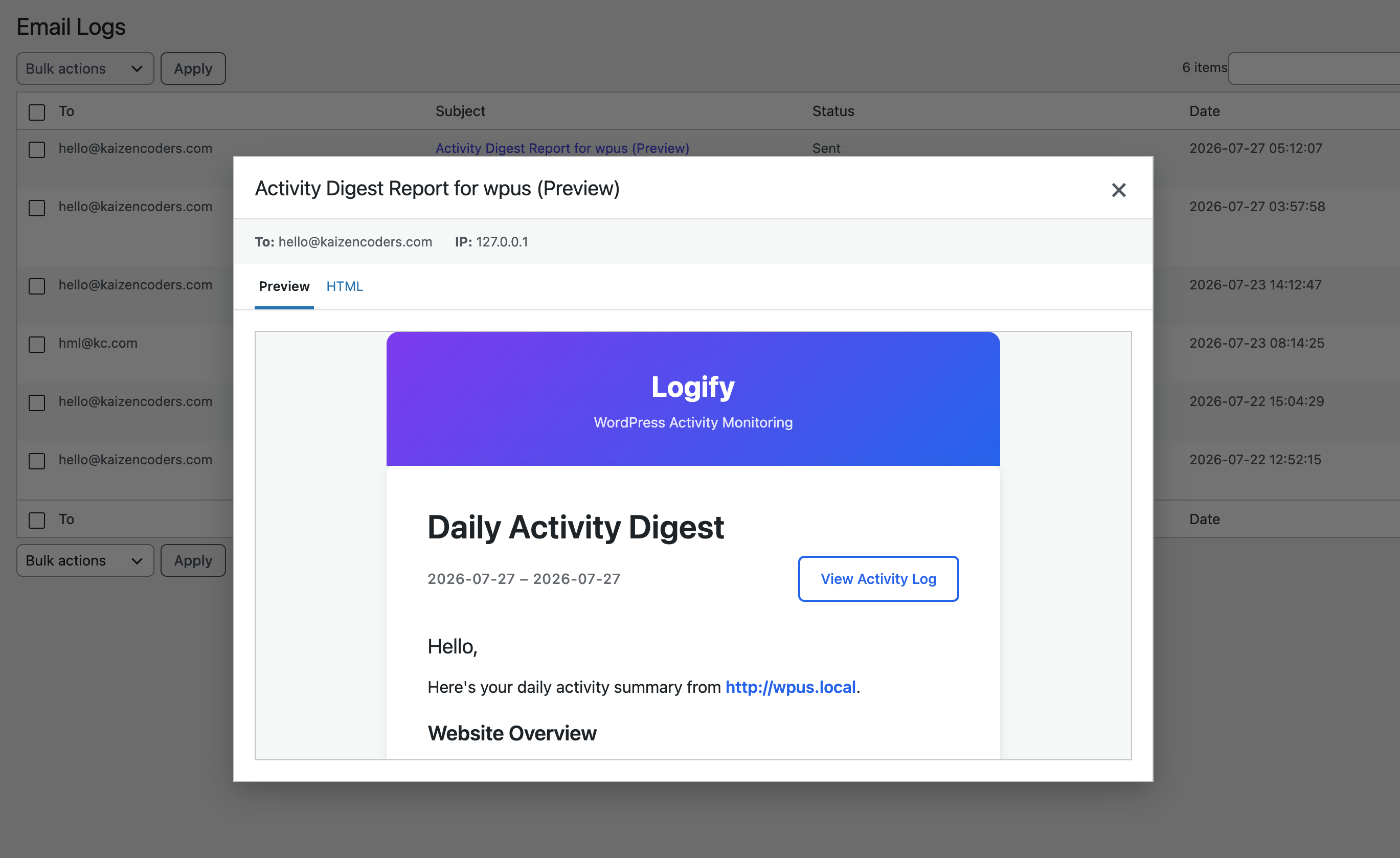
No. Your activity log is stored in your own database. The only optional external request is an IP-to-country lookup via ipapi.co, described in the External Services section above. Logify Pro can additionally send events to destinations you configure yourself, such as your own email recipients, Slack channel, webhook, or Syslog collector.
Who can access the activity logs?
Only administrators. All Logify screens require the manage_options capability, so sensitive information stays protected.
Is there a way to clear all logs at once?
Yes. Use the "Clear All Logs" button under Settings > General, bulk-delete selected entries from the Activity Logs screen, or use the WP-CLI commands listed above.
What happens to my data if I uninstall Logify?
Enable Cleanup on Uninstall under Settings > General to remove the activity log table, settings, scheduled tasks, and related metadata when the plugin is deleted. Leave it off if you want your logs preserved across a reinstall.
Where can I get support?
Create a ticket on the WordPress.org support forum, or visit our support page. Logify Pro customers receive priority email support.
更新日志:
- Fix (Security): Installing a plugin from the Other Products screen checked whether you were allowed to activate plugins, not install them. WordPress keeps those apart on purpose, and two kinds of site depend on it: on multisite, installing belongs to the network administrator, and a site that sets
DISALLOW_FILE_MODShas turned plugin installation off deliberately. On either, a signed-in site administrator could install a plugin the site had not given them permission to install. Installing, activating and deactivating now each check their own permission, and the plugin slug is sanitised before it is used. A single-site administrator holds both permissions, so nothing there changes.