
Meta Ledger - Track, compare, and restore post meta Changes
| 开发者 | smilingsyntax |
|---|---|
| 更新时间 | 2026年1月29日 19:47 |
| PHP版本: | 8.0 及以上 |
| WordPress版本: | 6.9 |
| 版权: | GPLv2 or later |
| 版权网址: | 版权信息 |
详情介绍:
- Automatic Tracking: Hooks into WordPress meta functions to automatically track all meta changes
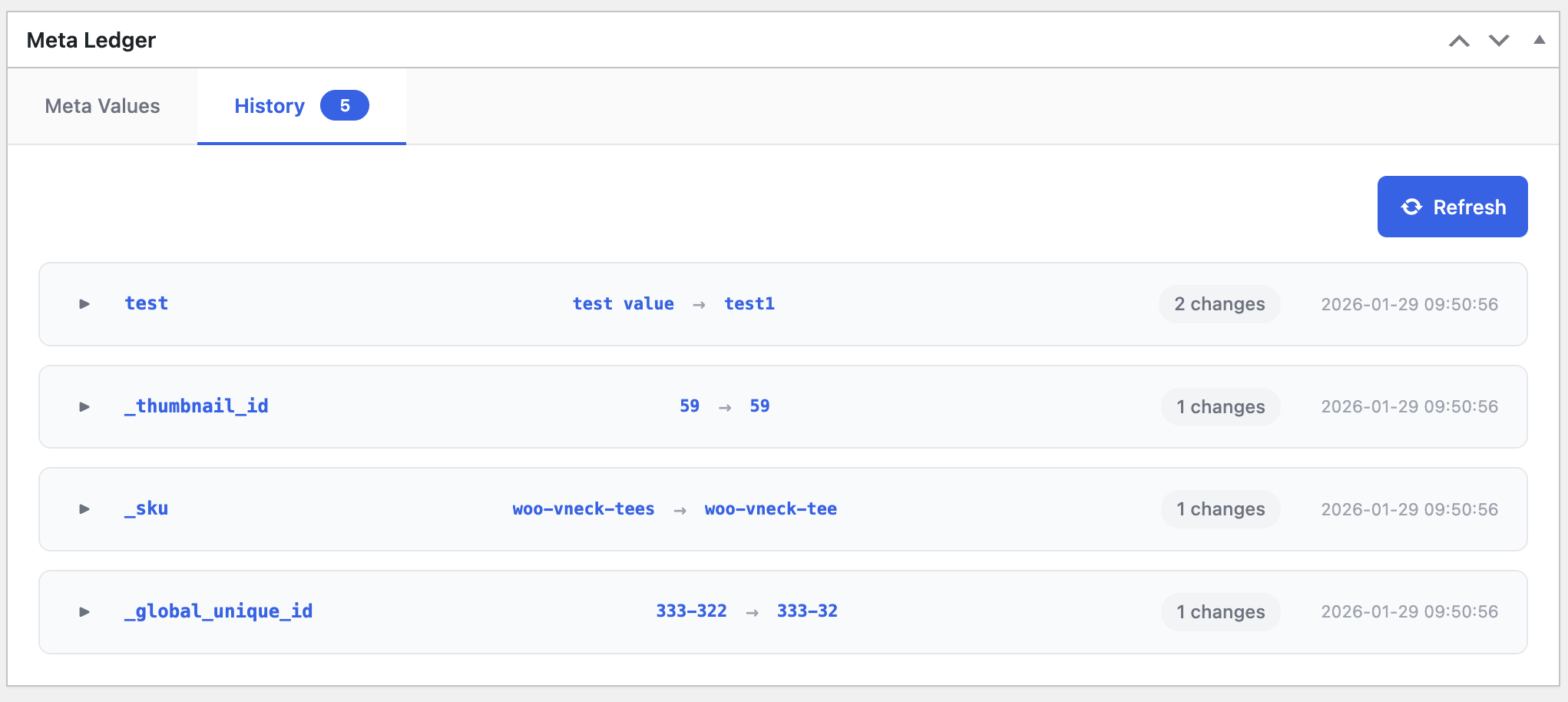
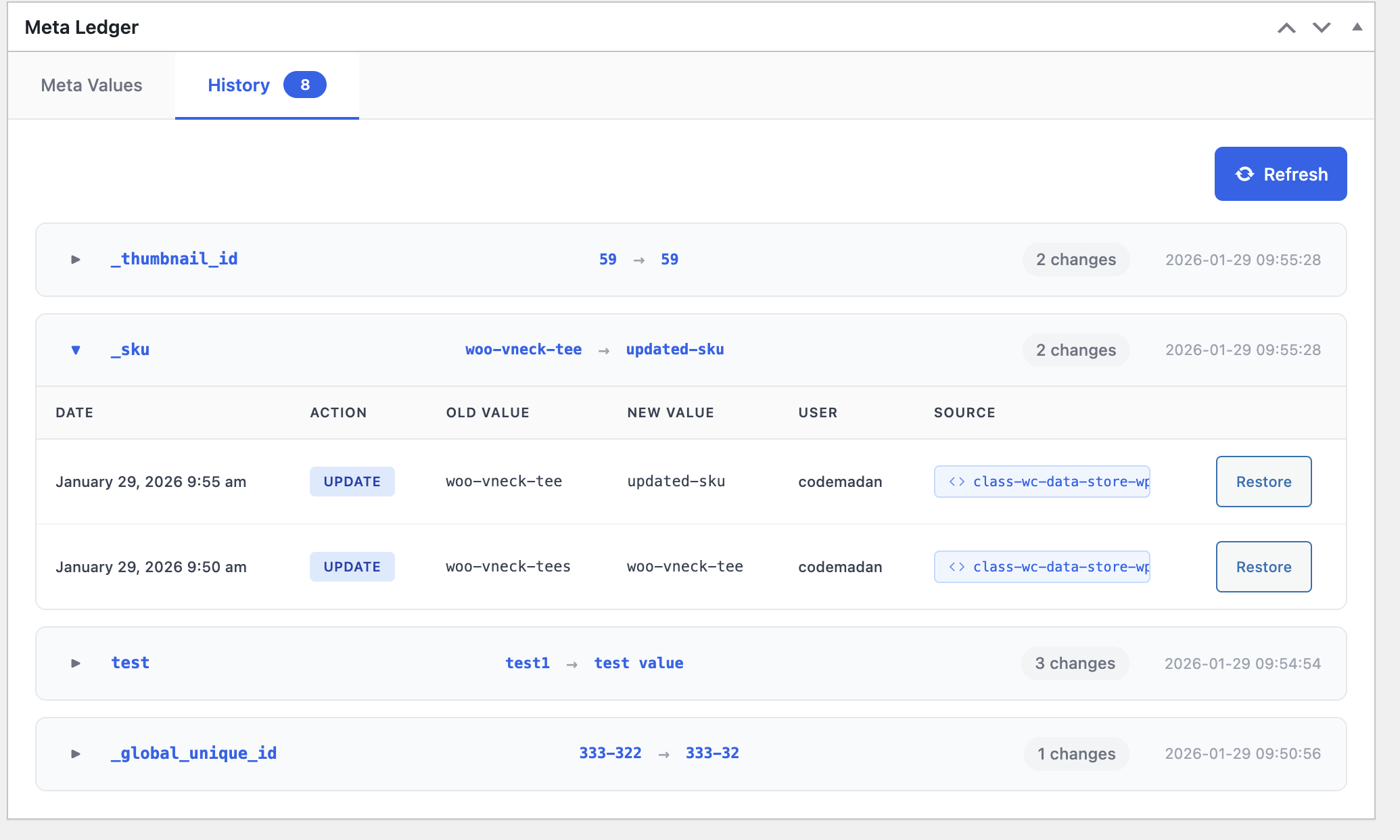
- Version History: Complete history of all meta changes with timestamps, user information, and action types
- Field-Level Diffs: View side-by-side comparisons of old and new values
- Restore Functionality: Restore any meta field to a previous version with one click
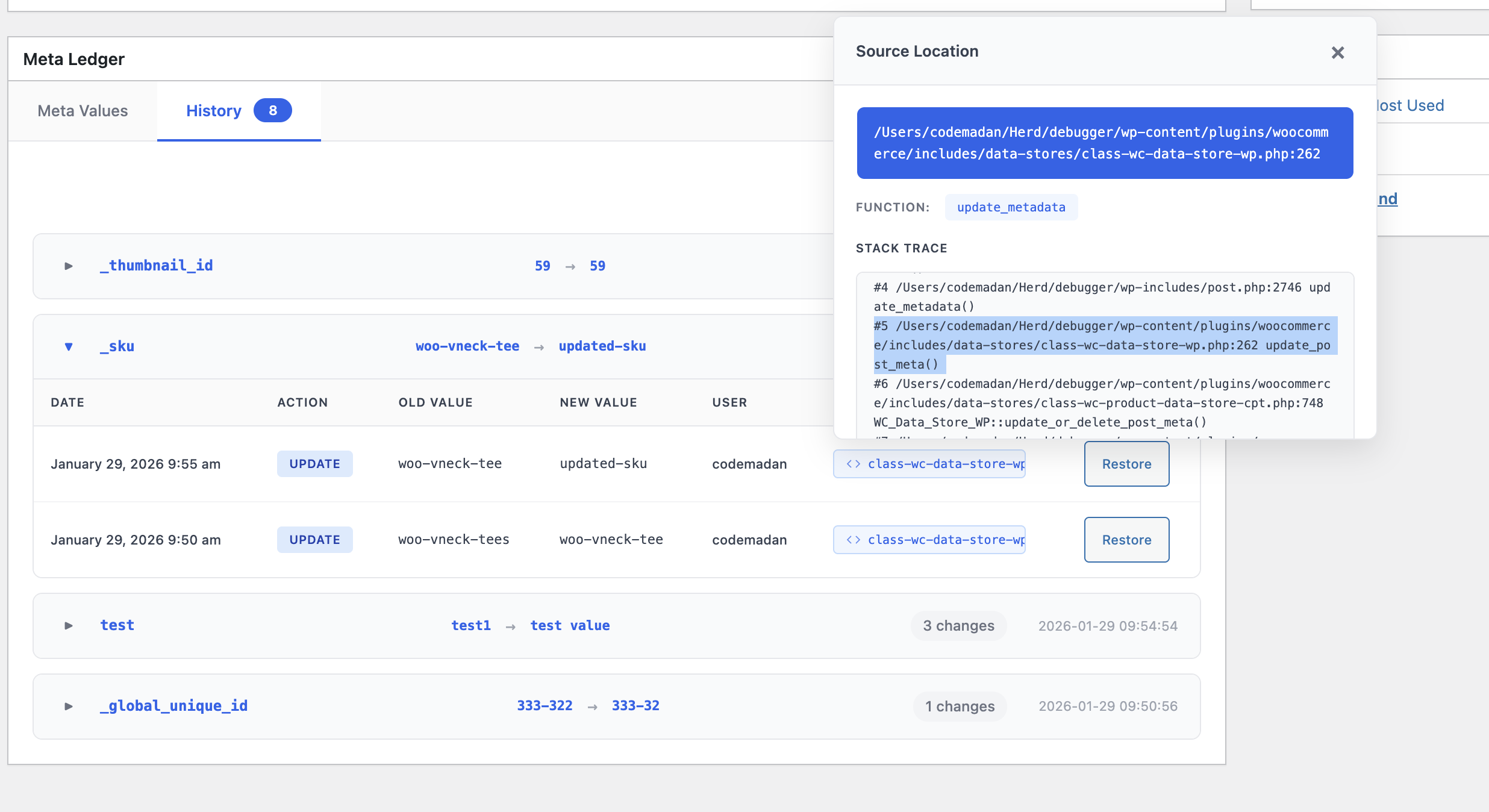
- Source Tracking: See which file and line triggered each meta change, including changes from Meta Ledger UI
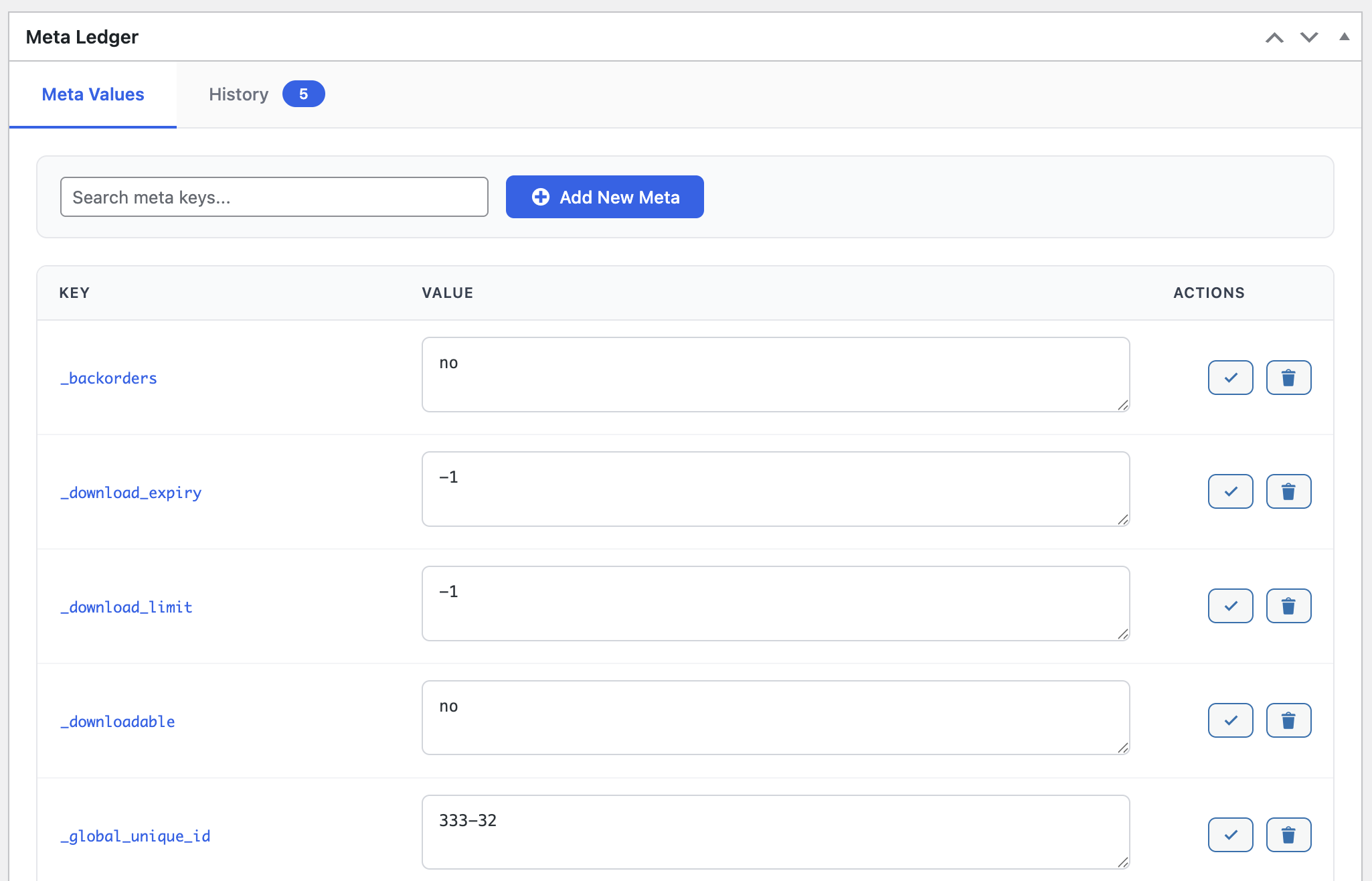
- Inline Editing: Edit meta values directly from the admin interface
- REST API: Developer-friendly REST API endpoints for programmatic access
- WP-CLI Support: Command-line tools for viewing and restoring meta versions
- Performance Optimized: Configurable retention policies, batching, and efficient database storage
- WooCommerce Compatible: Works seamlessly with WooCommerce products
安装:
- Upload the
meta-ledgerfolder to/wp-content/plugins/ - Activate the plugin through the 'Plugins' menu in WordPress
- The database table will be created automatically on activation
- Navigate to any post, page, or product to see the Meta Ledger meta box
屏幕截图:
常见问题:
Which post types are tracked?
By default, Meta Ledger tracks posts, pages, and WooCommerce products. You can add more post types in Settings → Meta Ledger or using the meta_ledger_tracked_post_types filter.
How do I ignore certain meta keys?
Navigate to Settings → Meta Ledger and add meta keys to ignore (one per line). Supports wildcards (e.g., _edit_*). You can also use the meta_ledger_ignored_meta_keys filter.
Will this slow down my site?
Meta Ledger is designed for performance. It uses indexed database queries, batches changes at shutdown, and skips high-frequency meta keys like _edit_lock by default. The performance impact is minimal.
How do I restore a previous value?
Click on the "History" tab in the Meta Ledger meta box on any post, then click the restore button next to any version. The restore action is also tracked in history.
Can I track changes made from code?
Yes! Meta Ledger tracks all changes made through WordPress meta functions (update_post_meta, add_post_meta, delete_post_meta), regardless of whether they come from code, plugins, themes, or the Meta Ledger UI.
How do I see where a change came from?
Each history entry includes a source button. Click it to see the file path, line number, function name, and full stack trace for code changes. Changes made from Meta Ledger UI are marked as "Meta Ledger UI".
Can I use this with WooCommerce?
Yes! Meta Ledger works seamlessly with WooCommerce products and tracks all product meta changes, including prices, stock, and custom fields.
How many versions are kept?
By default, 50 versions per meta key are kept. You can adjust this in Settings → Meta Ledger under "History Entries per Meta Key".
Is there a REST API?
Yes! The plugin provides REST API endpoints at /wp-json/meta-ledger/v1/ for accessing history and restoring versions programmatically.
Are there WP-CLI commands?
Yes! Use wp meta-ledger show, wp meta-ledger restore, and wp meta-ledger cleanup commands for command-line operations.
更新日志:
- Settings link on plugins page (links to Meta Ledger settings)
- Fix restore failing when value unchanged or already deleted (
meta_ledger_restore_failed) - View full value: click long old/new values in history to open a popover
- Side-by-side diff view: old vs new values in a diff-checker style popover
- Improved value popover with colored columns (old = red tint, new = green tint)
- Initial release
- Automatic meta tracking for posts, pages, and custom post types
- Version history UI with tabbed interface (Meta Values & History tabs)
- Inline meta editing with add, edit, and delete functionality
- Restore functionality with one-click restore to any previous version
- Source file and line tracking with detailed popover view
- Source tracking for changes made from Meta Ledger UI
- Refresh button on History tab to reload latest changes
- Search and filter functionality for meta keys
- Collapsible history groups organized by meta key
- REST API endpoints for programmatic access (
/wp-json/meta-ledger/v1/) - WP-CLI commands:
show,restore,cleanup - Settings page with post type selection, retention count, and ignored keys
- Performance optimizations with batching and efficient JSON storage
- WooCommerce product support
- Responsive design for all screen sizes
- WordPress coding standards compliance