
Checkout & Store Toolkit for WooCommerce
| 开发者 | imawais |
|---|---|
| 更新时间 | 2026年7月13日 18:44 |
| 捐献地址: | 去捐款 |
| PHP版本: | 7.4 及以上 |
| WordPress版本: | 7.0 |
| 版权: | GPLv2 or later |
| 版权网址: | 版权信息 |
详情介绍:
[woocommerce_checkout] shortcode. This plugin also supports the modern WooCommerce Checkout Block by using WooCommerce address locale data and Store API-compatible validation.
WooCommerce currently uses a shared address-field schema for billing and shipping inside Checkout Block. The settings screen clearly separates:
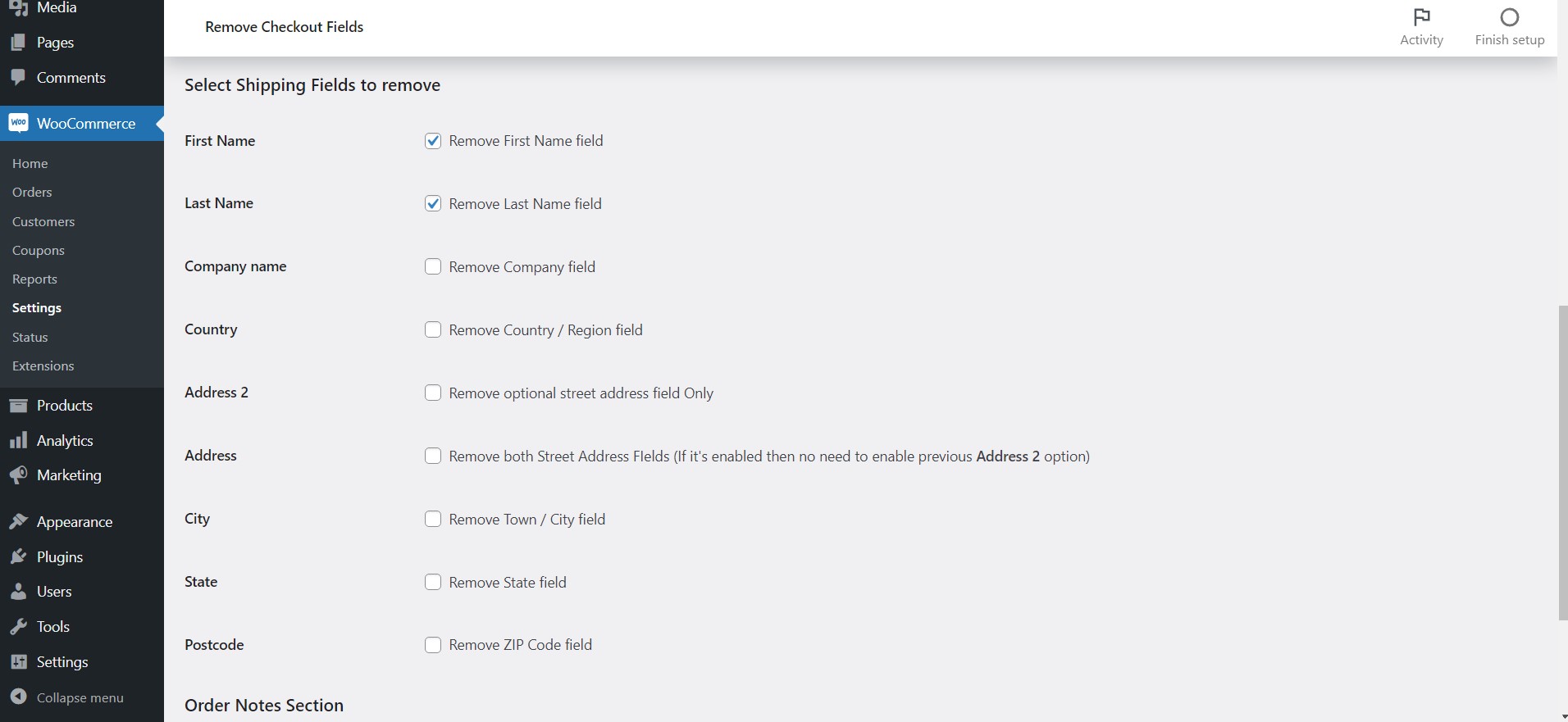
- Classic billing fields
- Classic shipping fields
- Checkout Block fields shared by both addresses
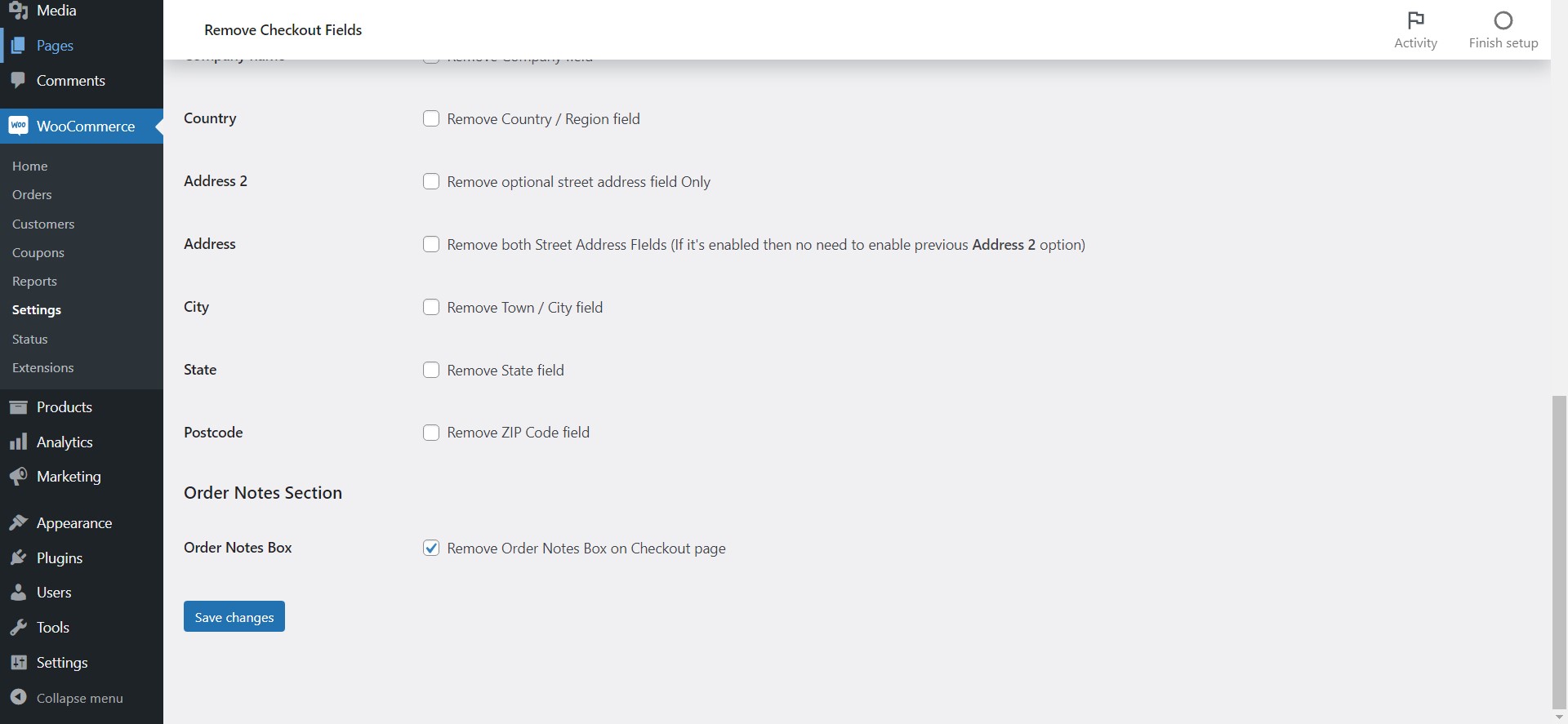
- Remove unnecessary billing or shipping fields from classic checkout
- Hide, require, or make address and phone fields optional in Checkout Block
- Simplify checkout for virtual products, downloads, free orders, or selected products
- Set a minimum order subtotal without blocking normal Block cart updates
- Redirect shoppers after adding a product or when viewing an empty cart
- Show a free-shipping threshold message on classic cart and checkout pages
- Hide SKU, category, tag, or related-product output on standard product templates
- Auto-complete paid orders that contain only virtual or downloadable-and-virtual products
- Replace several small WooCommerce snippet plugins with one settings-driven toolkit
- First name
- Last name
- Company
- Country / Region
- Street address
- Address line 2
- Town / City
- State / County
- Postcode / ZIP
- Phone
- On every checkout
- Only when no shipping is needed
- Only when every product is downloadable
- Only for free orders
- When cart subtotal is above or below an amount
- When the cart contains selected product IDs
- When the cart contains selected product categories
- Hide classic order notes
- Disable coupon entry
- Add a classic checkout notice
- Enforce a minimum order subtotal in classic checkout and Checkout Block
- Redirect customers to cart, checkout, or a custom URL after add to cart
- Redirect an empty cart to the shop or a custom page
- Change the Continue shopping destination
- Show a free-shipping progress message on classic cart and checkout templates
- Customize add-to-cart text on shop and archive pages
- Customize add-to-cart text on single-product pages
- Hide SKU
- Hide product categories
- Hide product tags
- Disable related products
- Automatically complete paid orders when every item is virtual
- Automatically complete paid orders when every item is downloadable and virtual
- Compatible with WooCommerce High-Performance Order Storage (HPOS)
- Modern card-based settings screen under WooCommerce > Store Toolkit
- Automatic legacy setting migration
- Checkout type diagnostics
- Settings JSON export and import
- Safe reset that does not delete original version 1.x option keys
- Optional cleanup of version 2 settings on uninstall while preserving legacy options
安装:
- Install or update the plugin from Plugins > Add New.
- Activate WooCommerce and this plugin.
- Go to WooCommerce > Store Toolkit.
- Review the detected checkout type.
- Configure checkout, cart, product, and order modules.
- Test checkout with every active payment gateway, tax configuration, and shipping method before using aggressive field removal on a live store.
屏幕截图:


常见问题:
Why did the old plugin stop removing fields?
The original plugin used the woocommerce_checkout_fields filter, which applies to classic shortcode checkout. WooCommerce made Cart and Checkout Blocks the default for new stores, and the Checkout Block intentionally does not use that classic field filter. Version 2 adds a separate Checkout Block-compatible field path.
Will my existing field-removal settings be lost?
No. During the upgrade, the plugin reads the original wc_remove-checkout-fields_* options and copies them into the new settings structure. The original options are not deleted.
Can the existing WordPress.org plugin slug be renamed?
The display name can be updated, but an approved WordPress.org plugin normally keeps its existing repository slug. Keeping the slug also preserves updates for current users.
Does it support both classic checkout and Checkout Block?
Yes for checkout-field visibility and requirement rules. Some presentation features, such as the custom checkout notice, order-notes removal, and free-shipping progress notice, are marked as classic-template features in the settings screen.
Why are Checkout Block billing and shipping fields not separate?
WooCommerce currently applies one shared core address-field schema to both billing and shipping in Checkout Block. Classic checkout still supports separate billing and shipping field settings.
Can I remove the email field?
No. Customer email is intentionally protected because WooCommerce uses it for order communication and payment gateways may rely on it.
Is removing address fields always safe?
No. Tax calculation, shipping rates, card verification, fraud detection, invoicing, and payment gateways may require address data. Test production-mode payment gateways and all supported customer countries before removing required address fields.
Does minimum order amount work with Checkout Block?
Yes. The plugin validates classic cart and checkout requests, and uses WooCommerce’s checkout-only Store API validation hook when Checkout Block submits an order. Ordinary Block cart updates are not rejected while the shopper is still building the cart.
Is the plugin HPOS compatible?
Yes. It uses WooCommerce order APIs and declares compatibility with High-Performance Order Storage.
Does the plugin collect analytics or connect to an external service?
No.
更新日志:
- Rebranded the display name to Checkout & Store Toolkit for WooCommerce while retaining the existing repository slug.
- Added Checkout Block-compatible address-field controls.
- Kept classic billing and shipping field controls separate.
- Added default, hidden, optional, and required field states.
- Added conditional rules for virtual, downloadable, free, subtotal, product, and category carts.
- Added automatic migration from all original version 1.x option keys.
- Preserved original options for rollback safety.
- Added minimum order validation for classic cart/checkout and Checkout Block order submission.
- Added coupon controls, checkout notice, redirects, and free-shipping progress messages.
- Added product label and product-meta tools.
- Added automatic completion for paid virtual and downloadable orders.
- Added settings export, import, reset, and checkout diagnostics.
- Declared Checkout Block and HPOS compatibility.
- Added dependency, capability, nonce, sanitization, and escaping improvements.
- Updated text domain, headers, readme, and directory metadata.
- Tested with WordPress 6.7.1.
- Removed an extra tag.
- Updated readme.txt.
- Updated readme.txt.
- Fixed a headers-already-sent issue.
- Moved the order-notes filter outside the checkout-fields callback.
- Tested with WordPress 6.0.3.
- Initial release.