Sequensy
| 开发者 | summix |
|---|---|
| 更新时间 | 2026年2月25日 17:31 |
| PHP版本: | 8.0 及以上 |
| WordPress版本: | 6.9 |
| 版权: | GPLv2 or later |
| 版权网址: | 版权信息 |
详情介绍:
- Post Published — fires when any post type is published
- User Registration — fires when a new user account is created
- User Profile Updated — fires when a user's profile information changes
- Comment Submitted — fires when a new comment is posted
- New Order — fires when a customer places an order
- Order Completed — fires when an order is marked complete
- Create Post — create a new post, page, or custom post type
- Update Post — update the title, content, or status of an existing post
- Create User — register a new WordPress user account
- Update Order Status — change an order to processing, completed, on-hold, etc.
- Add Order Note — append a note to an order (customer-visible or internal)
- Create Coupon — generate a coupon code with a specified discount type and amount
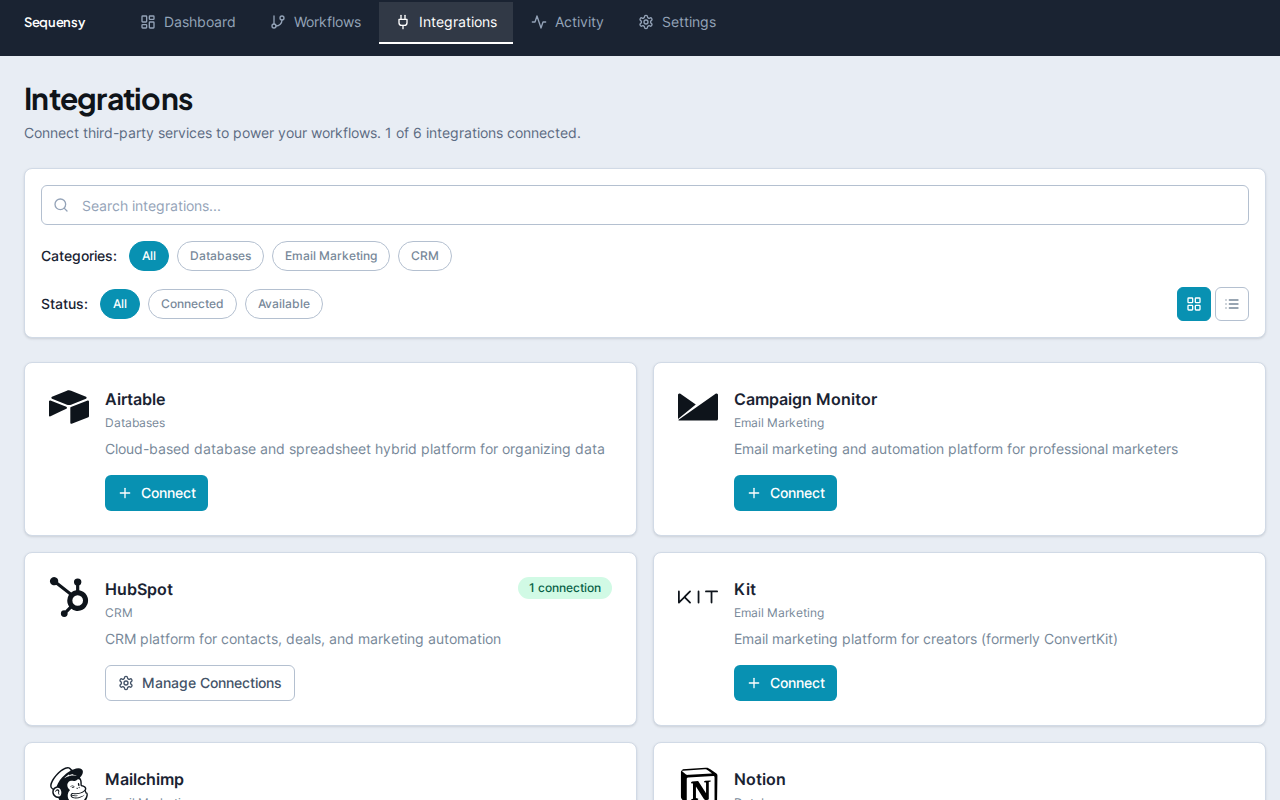
- Kit (ConvertKit) — create subscribers, add tags, and remove tags to manage your email audience
- Notion — create database entries to log data from your WordPress site
- Campaign Monitor — add, update, and remove subscribers from your mailing lists
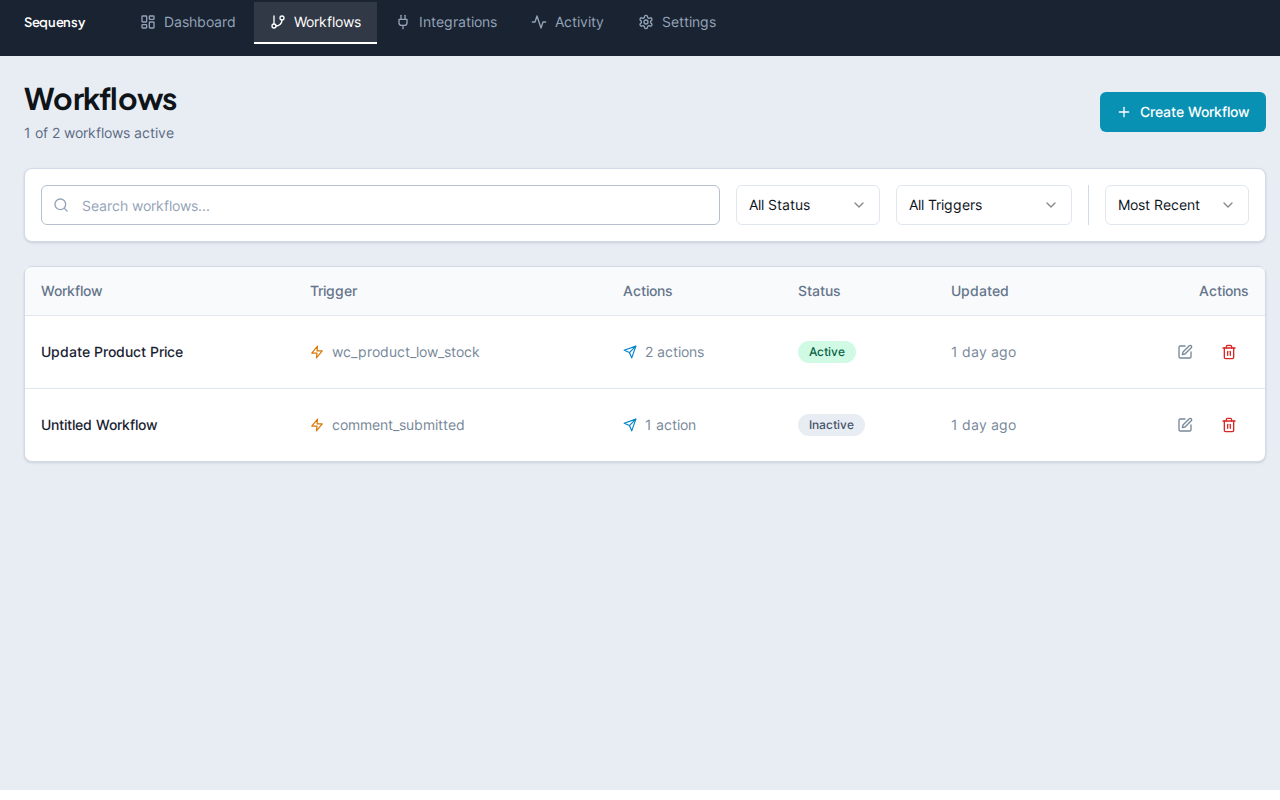
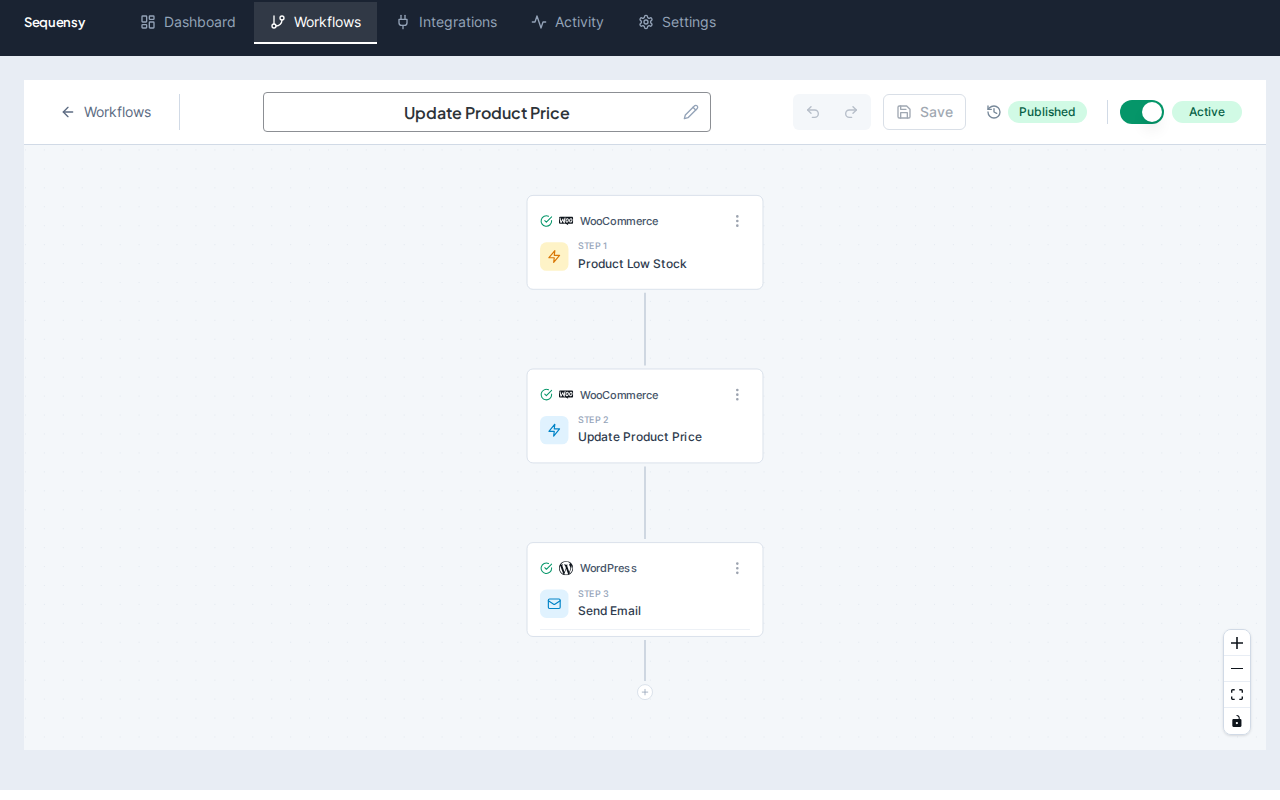
- Visual Workflow Builder — point-and-click canvas with a clear trigger → action flow
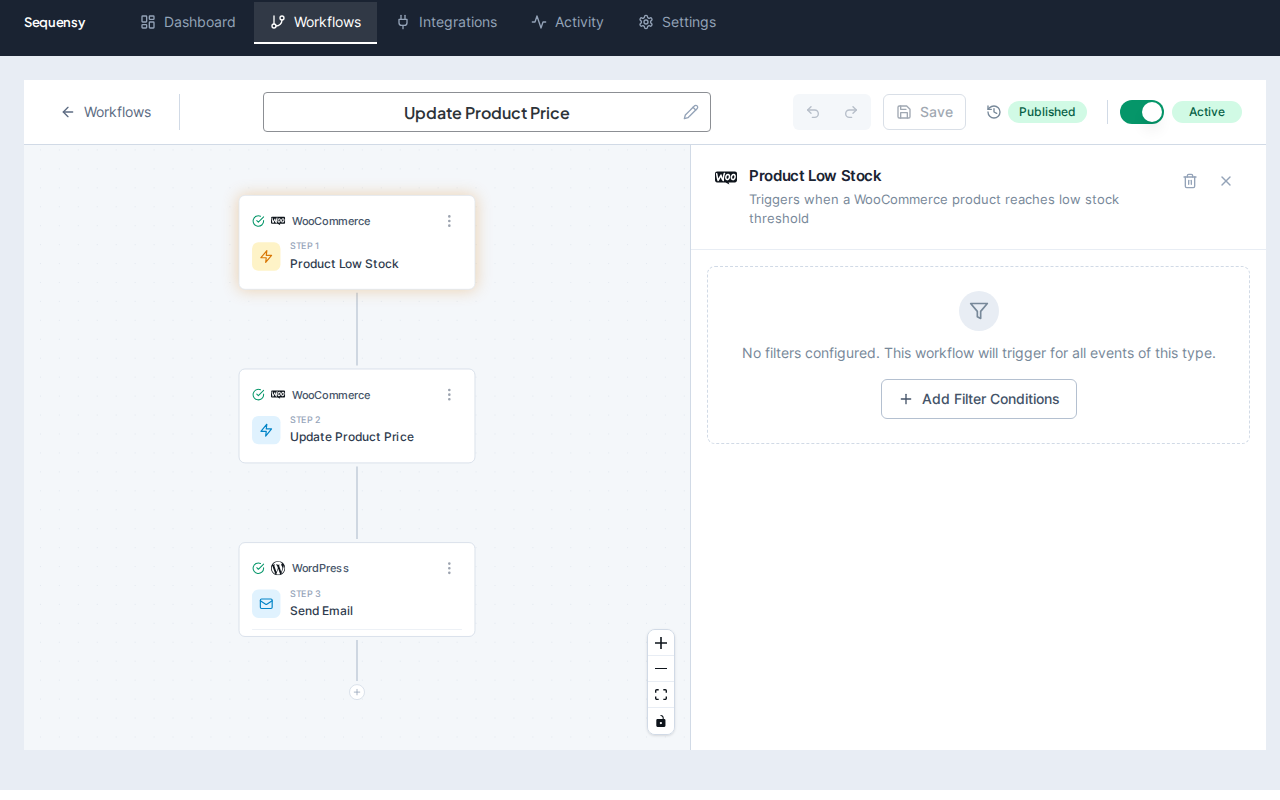
- Conditional Filters — run actions only when specific conditions are met (e.g., post type is "product", user role is "subscriber")
- Variable Substitution — pass data between steps using
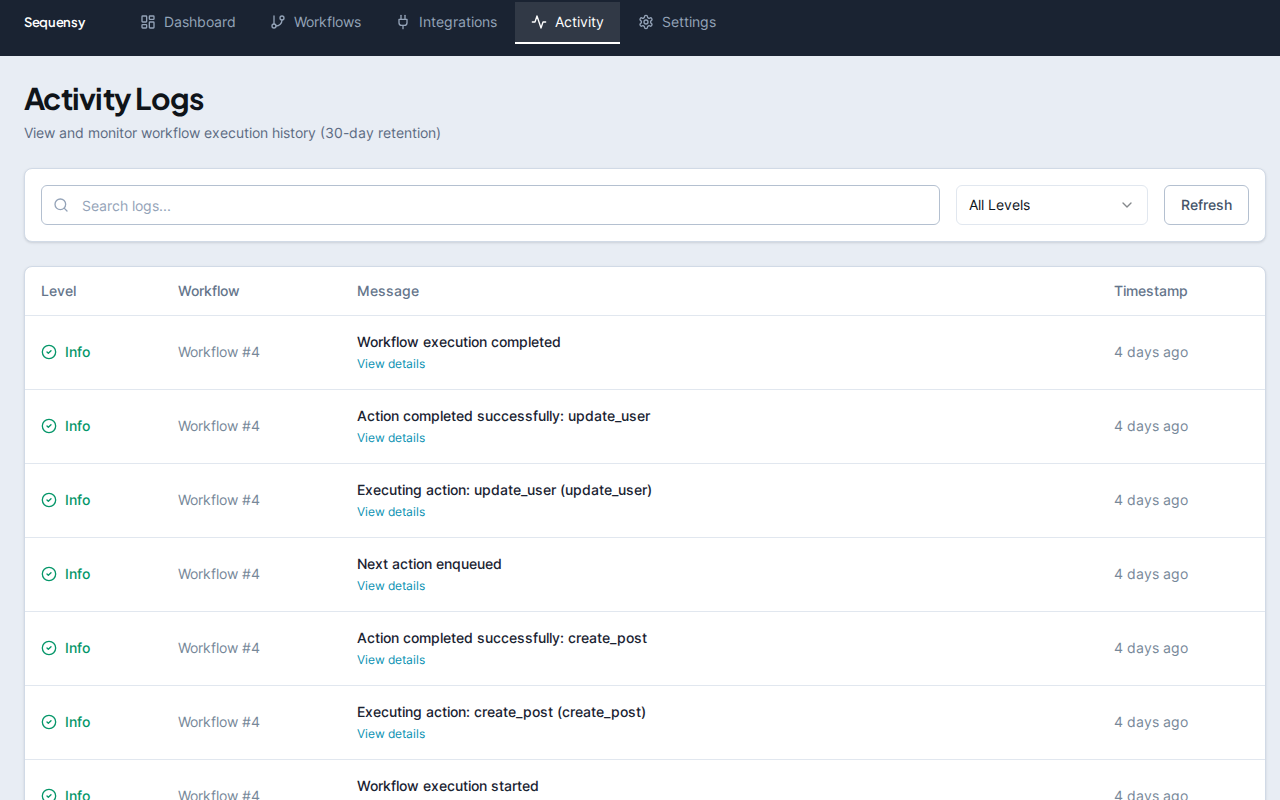
{{Trigger.field}}and{{action_id.field}}syntax - Activity Log — see a timeline of every workflow execution with status, duration, and error details
- Async Execution — workflows run in the background via Action Scheduler so your site stays fast
- Modular Packages — each integration is a self-contained package you can activate or deactivate independently
安装:
- Upload the plugin files to
/wp-content/plugins/sequensy/or install directly through the WordPress plugin installer. - Activate the plugin through the Plugins screen in WordPress.
- Go to Sequensy in the admin sidebar to open the workflow builder and start automating.
屏幕截图:
常见问题:
What PHP version is required?
PHP 8.0 or higher. Sequensy uses modern PHP features like named arguments and match expressions.
Does this work with WooCommerce?
Yes. Sequensy includes a WooCommerce package with triggers for new orders and completed orders, plus actions for updating order status, adding order notes, and creating coupons. WooCommerce 8.0 or higher is recommended.
How do I connect third-party services?
Go to Sequensy > Integrations in the admin sidebar. Click Connect on the service you want to use and enter your API credentials. Once connected, the service's actions become available in the workflow builder.
Are workflows executed immediately?
Workflows run asynchronously in the background using Action Scheduler. When a trigger fires, the workflow is queued and processed within seconds. This keeps your site responsive — visitors and admins won't experience slowdowns from long-running actions.
Can I use data from one action in another?
Yes. Sequensy supports variable substitution across workflow steps. Use {{Trigger.field_name}} to reference trigger data or {{action_id.field_name}} to reference the output of a previous action. For example, {{Trigger.user_email}} inserts the email of the user who triggered the workflow.
What is the difference between Sequensy and Sequensy Pro?
The free plugin includes the visual builder, 6 triggers, 10 actions, conditional filters, variable substitution, and an activity log. Sequensy Pro adds advanced features like nested AND/OR filter groups, workflow version history, unlimited activity logging, and access to the integrations marketplace with additional packages.
Can I extend Sequensy with custom packages?
Yes. Sequensy's package system is extensible. Developers can build custom packages that register their own triggers and actions. Each package is a self-contained directory with a manifest, action definitions, and optional trigger definitions. See the developer documentation for details.
Where is my workflow data stored?
All workflow configurations, execution history, and activity logs are stored in your WordPress database in dedicated wp_sequensy_* tables. No data is sent to external servers unless you explicitly configure a third-party integration and create a workflow that uses it.
How does async execution work?
When a trigger fires, Sequensy evaluates the workflow's filters. If the conditions pass, it schedules the workflow's actions via Action Scheduler — a battle-tested WordPress library used by WooCommerce. Actions are then processed in a background queue, typically within a few seconds.
更新日志:
- Modular package system — integrations are now self-contained packages that can be activated and deactivated independently
- Redesigned visual workflow builder with improved canvas
- Graph-based workflow engine — actions use ID-keyed routing instead of ordered arrays, enabling flexible branching
- New integrations page for managing installed packages and connecting services
- WooCommerce package with order triggers and actions
- Kit (ConvertKit) package with subscriber and tag management
- Notion package with database entry creation
- Campaign Monitor package with subscriber management
- Improved activity log with execution status, duration, and error details
- Async execution powered by Action Scheduler for reliable background processing
- Conditional filters with comparison operators for targeted automation
- Initial release
- Visual workflow builder
- WordPress triggers and actions
- Activity logging
- Async execution with Action Scheduler