
Tabilo - Table Builder Block
| 开发者 | binsaifullah |
|---|---|
| 更新时间 | 2026年8月24日 19:47 |
| PHP版本: | 7.4 及以上 |
| WordPress版本: | 7.1 |
| 版权: | GPL-2.0-or-later |
| 版权网址: | 版权信息 |
详情介绍:
- Any content, any cell – insert any block into table cells for unlimited layouts.
- Made for the block editor – a true native block, not an iframe or shortcode.
- Beginner friendly – build a table visually with columns, rows, header and footer toggles.
- Bring your own data – import a spreadsheet or a Google Sheet, and keep the table in sync with it.
- Designer ready – fine-grained control over colors, borders, radius, padding and spacing.
- Lightweight & fast – no jQuery, no bloat, clean semantic HTML output.
- Translation ready – fully internationalized and RTL friendly.
安装:
- Go to Plugins → Add New.
- Search for “Tabilo”.
- Click Install Now, then Activate.
- Download the plugin ZIP file.
- Upload it via Plugins → Add New → Upload Plugin.
- Activate the plugin.
- Create or edit a post or page.
- Click the “+” inserter and search for “Table Builder” (or open the Tabilo category).
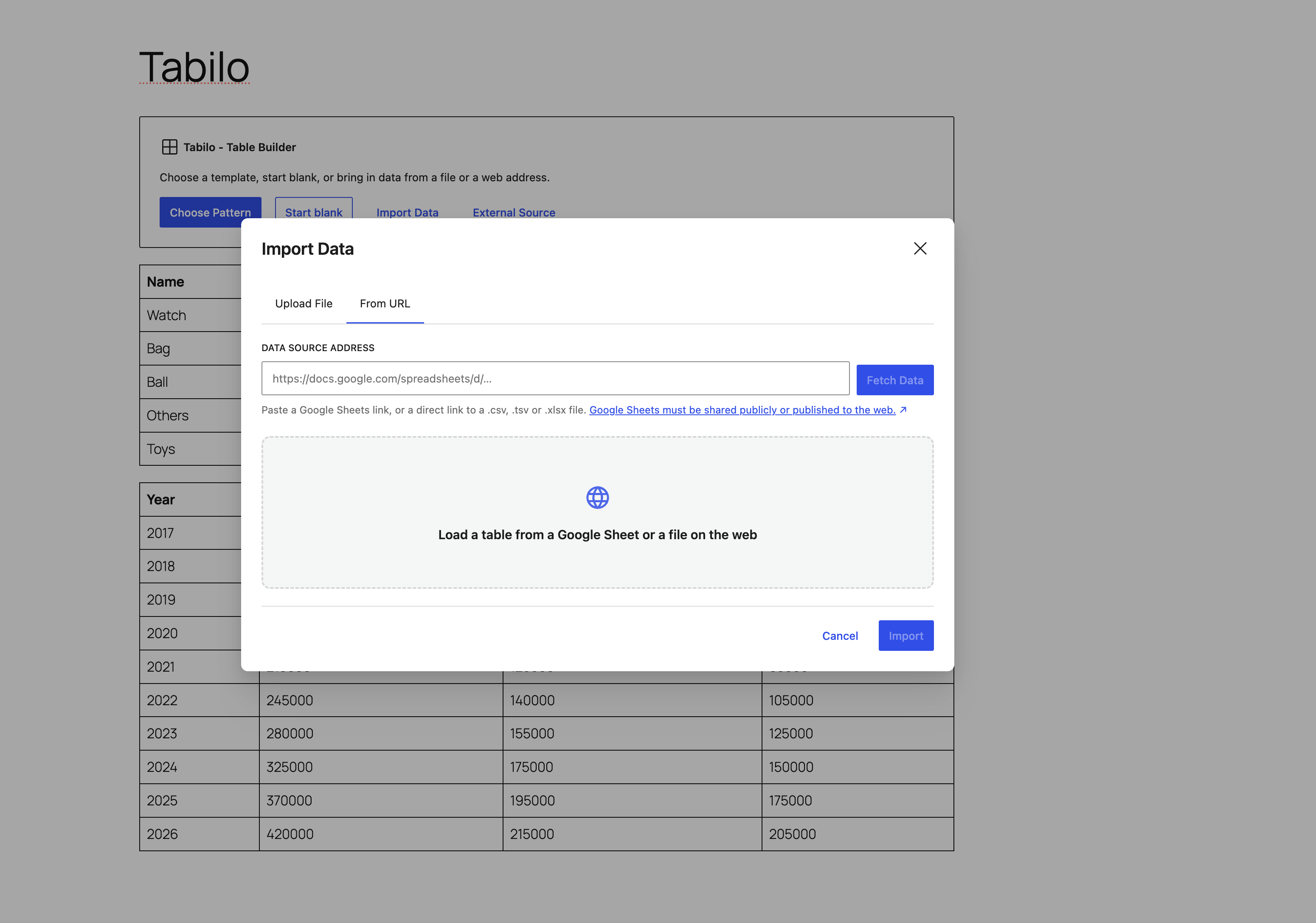
- Choose a pre-designed pattern, select Start blank to build your own, click Import Data to build the table from a CSV or Excel file, or click External Source to build it from a Google Sheet or a file on the web.
- Add columns, rows, a header/footer, then style it from the block sidebar.
屏幕截图:
常见问题:
What is Tabilo?
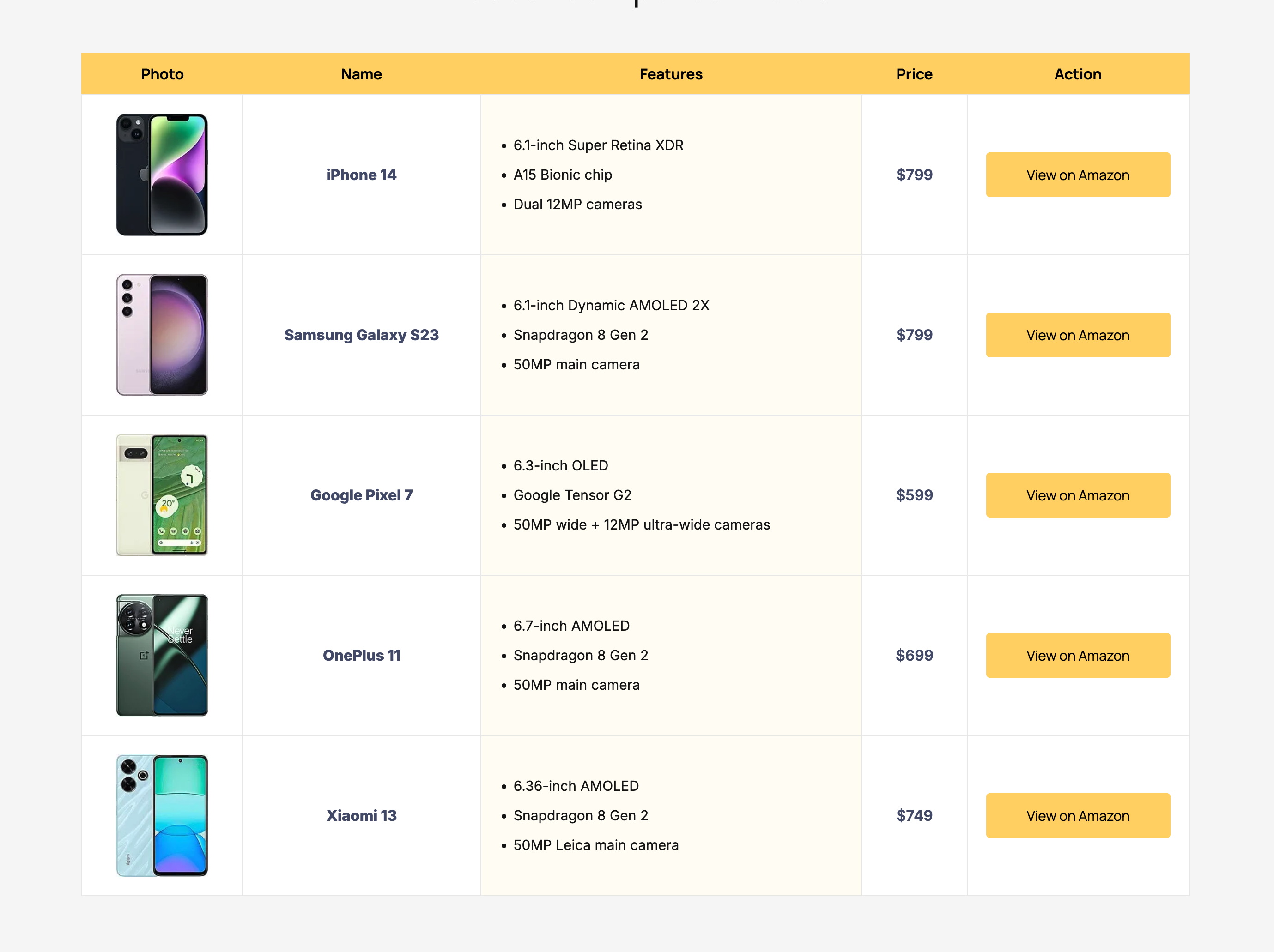
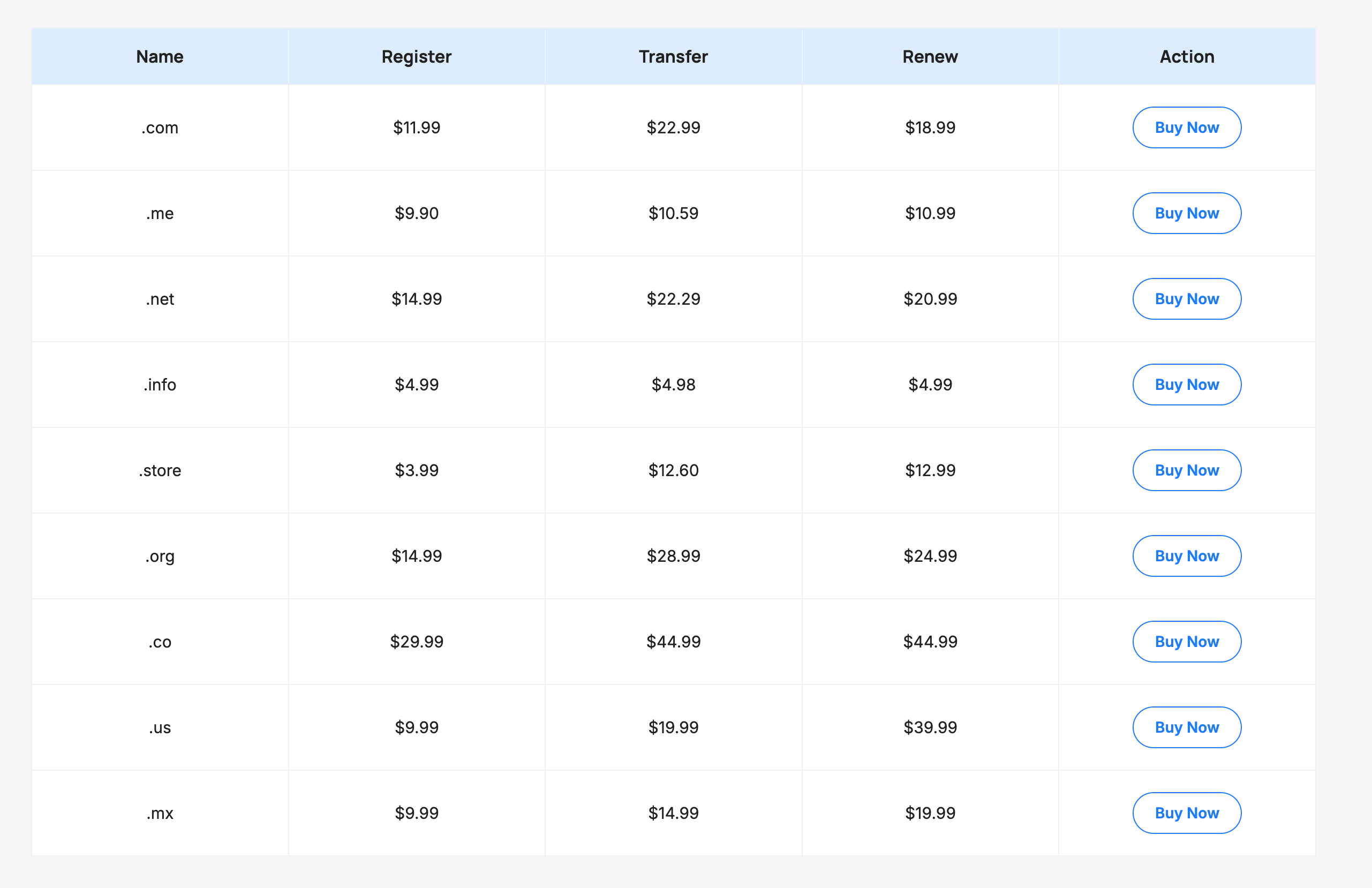
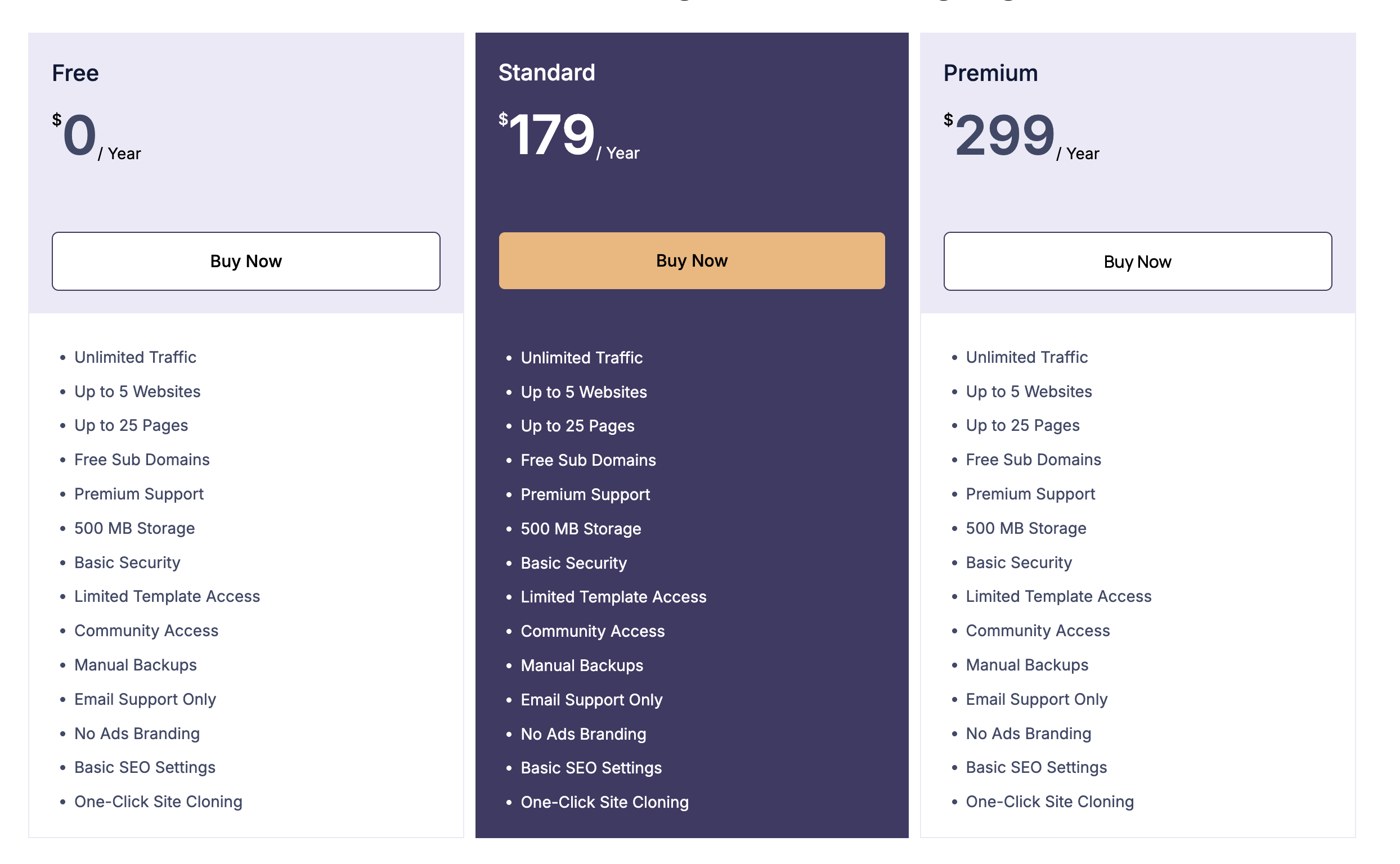
Tabilo is a native table builder block for the WordPress block editor (Gutenberg) that lets you create responsive pricing, comparison and data tables without shortcodes or a page builder.
Can I add any type of content to table cells?
Yes. Tabilo lets you insert any Gutenberg block inside a cell — text, images, buttons, lists, icons, star ratings and even other blocks.
Do I need to know how to code?
No. Everything is built and styled visually from the block editor. No HTML, CSS or shortcodes are required.
Can I import a spreadsheet?
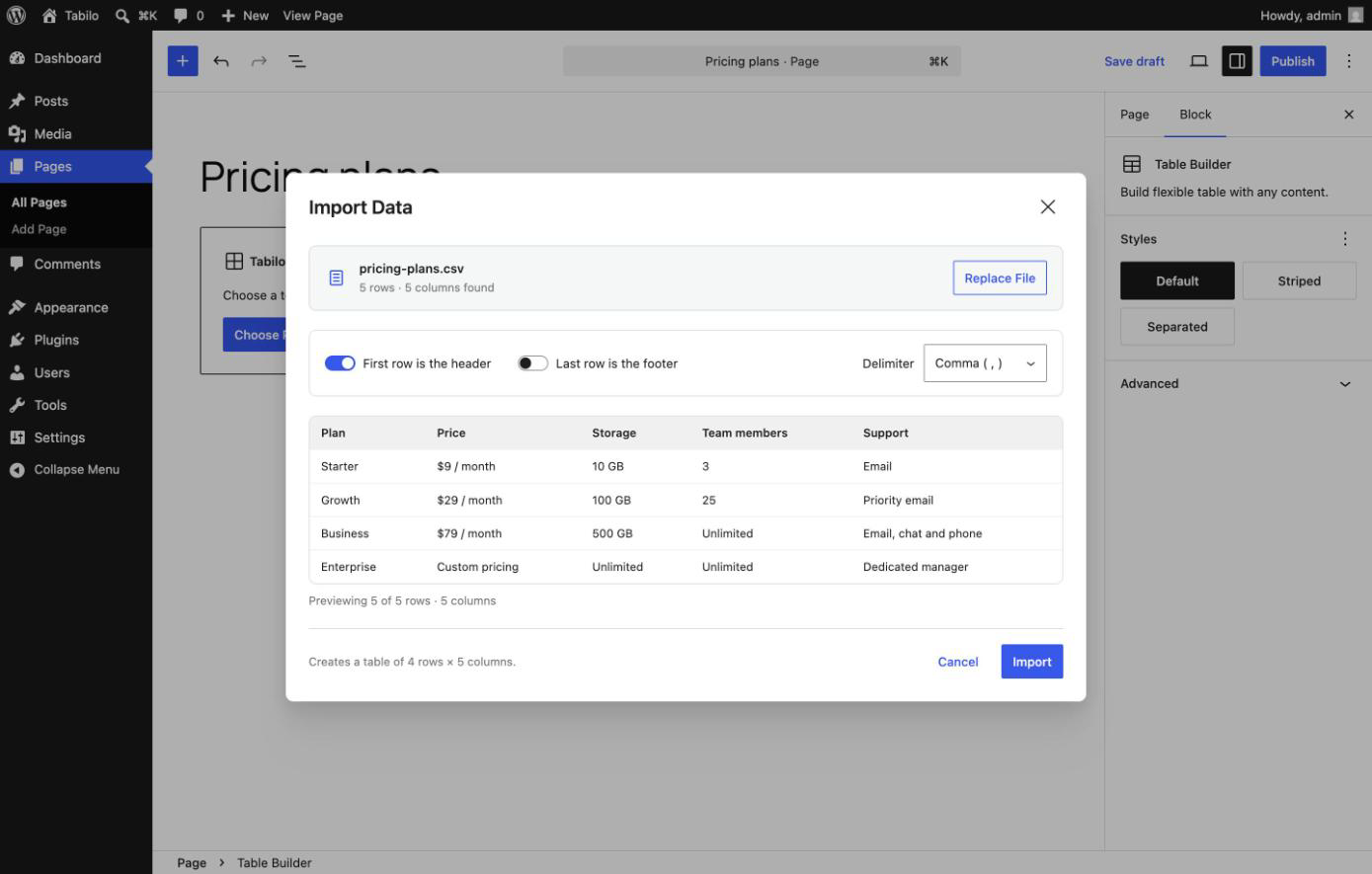
Yes. Click Import Data on the block's start screen and drop in a CSV or Excel file (.csv, .tsv, .xlsx, .xlsm). You will see a preview of the data, choose whether the first row is the header and the last row is the footer, and then the table is built for you. A file you upload is read entirely in your browser — it is never sent to your site or anywhere else.
Can I build a table from a Google Sheet or a file on the web?
Yes. Click External Source on the block's start screen, paste the address, and press Fetch Data. Google Sheets links and direct links to .csv, .tsv and .xlsx files all work, and you get the same preview and header/footer options as an uploaded file. Because browsers cannot read those addresses directly, your own server fetches the data — see the External services section above for exactly what is sent.
Does the Google Sheet have to be public?
Yes. The sheet must be shared with Anyone with the link, or published to the web via File → Share → Publish to web. A private sheet returns a sign-in page rather than data, and Tabilo will tell you so. If you cannot share the sheet, download it as CSV and use Import Data instead.
Can a table update itself when the source changes?
Yes. When you import from an address, set Keep in sync to Live and choose how often it should refresh. WordPress re-reads the source in the background on that schedule, so your visitors never wait for it. If the source is unreachable the table keeps showing the last data that was read successfully — it never goes blank. Cell content is then managed by the source and locked in the editor; your layout, colours and styling stay fully editable. Use Disconnect in the Data Source panel to turn a synced table back into an ordinary one, keeping the rows as they are. Every column type follows the source on every refresh — text, images, links and star ratings alike.
My spreadsheet has a column of image URLs. Will they become real images?
Yes. Tabilo works out what each column holds and turns a column of picture addresses into proper image blocks rather than printing the address as text. It recognises them from the column name, the file extension, and — for the many picture addresses that have no extension at all, such as Unsplash or Cloudinary links — by asking the server what the file actually is. Every column's type is shown above the preview and you can change any of them before importing. By default the pictures load from where they already live, which is instant and means a synced table follows its source. Switch on Copy pictures into the media library if you would rather store copies on your own site.
Can other columns become blocks too?
Yes. A column of web addresses becomes clickable links, and a column of scores from 0 to 5 becomes Star Rating blocks. As with images, the guess is shown before you import and you can override it per column.
Are the tables responsive?
Yes. Choose Horizontal Scroll to keep the table intact with an optional on-screen scroll hint, or Stacked Card to turn each row into a card below 768px — every cell is labelled with its column header, and you control how the cells and their labels are arranged. More responsive modes are on the roadmap.
Can I customize the table design?
Absolutely. You get comprehensive controls for colors, backgrounds, per-side borders, border radius, padding, border spacing and font sizes, plus Default, Striped and Separated block styles. Header and footer columns can also be colored one by one — handy for highlighting a recommended pricing plan.
Does Tabilo include ready-made templates?
Yes. It ships with 40+ pre-designed patterns for pricing, comparison, data and booking tables that you can insert and edit in one click.
Will it work with my theme?
Tabilo follows WordPress block standards and works with any properly coded block or classic theme that supports the block editor.
Does it slow down my site?
No. Tabilo is lightweight, loads no jQuery, and outputs clean semantic HTML, so your tables stay fast.
更新日志:
- New: Redesigned Tabilo dashboard – Settings → Tabilo is now five tabs instead of one page: Overview, Patterns, Blocks, Import data and Settings.
- New: Patterns tab – every bundled pattern, grouped by category. Pick one and it opens the block editor with the pattern picker already filtered to it.
- New: Blocks tab – what each of the five blocks does, whether it registered correctly, and which block styles it ships with.
- New: Import data tab – a Connected sources panel lists every table that's linked to a spreadsheet, with its sync mode (manual or live), when it was last fetched, and whether the last refresh failed.
- New: Settings tab – set the default refresh interval for new live-synced tables, choose whether imported pictures are copied into the media library by default, and opt in to clearing Tabilo's cached data and settings when the plugin is deleted. Includes on-demand buttons to clear the cache or rescan your content for tables.
- New: "New table", "Upload a file" and "Link a Sheet" on the dashboard now open a new page with the Table Builder block already inserted and the right picker open, instead of a blank editor.
- New: External Source – a new button on the block's start screen opens the import window on a From URL tab. Paste a Google Sheets link or a direct link to a
.csv,.tsvor.xlsxfile, press Fetch Data, and review the same preview you get for an uploaded file. - New: Google Sheets support – ordinary share links and published-to-web links both work, and the tab you were looking at is the tab that gets imported. The sheet must be shared publicly or published to the web.
- New: Live sync – keep a table connected to its source and let it refresh itself hourly, every six hours or daily. Refreshes run in the background on WordPress's scheduler, so a page view never waits on the source, and the last good data keeps showing if the source is unreachable.
- New: Data Source panel – see the connected address and when it was last read, change the sync mode or interval, refresh on demand, or disconnect and keep the rows as ordinary editable content.
- New: Smart columns – imported columns are no longer all plain text. A column of picture addresses becomes real image blocks, a column of links becomes clickable links, and a column of scores becomes Star Rating blocks. Every column's type is shown above the import preview and can be changed before you import.
- New: Picture detection that works on modern addresses – many image links carry no file extension (Unsplash, Cloudinary, Gravatar and similar). Tabilo asks the host what the file actually is rather than guessing from the address, so those columns are recognised too.
- New: Copy pictures into the media library – an optional step at import time. Left off, pictures load from where they already live, which keeps a synced table following its source.
- Improvement: Tables in your content now shows each table's real state – Live sync on, Imported data or Static table – and how many tables are on a single page, not just that one is.
- Improvement: every column type now follows the source on a scheduled refresh, star ratings included — the stars are redrawn on the server from the same artwork the editor uses.
- Fix: importing from a URL now defaults Keep in sync to Manual — refresh when I ask instead of Off — import once, so a pasted link is kept and shows up in Connected sources. Previously the address was discarded the moment the table was built unless you changed the dropdown yourself.
- Note: this version makes outgoing requests to addresses you supply. See the External services section of this readme for exactly what is sent and when.
- New: Import Data – a new button on the block's start screen opens an import window. Drag in a CSV or Excel file (or pick one from your computer) and the table is built from it — no copying and pasting cell by cell.
- New: CSV import – quoted fields, commas and line breaks inside values, and files saved by Excel or Numbers all read correctly. The separator (comma, semicolon, tab or pipe) is detected for you and can be changed by hand.
- New: Excel import – reads
.xlsxand.xlsmworkbooks, including dates, shared text and multi-sheet files. Pick which sheet to import from a dropdown. - New: Import preview – see the first rows before anything is created, and choose whether the first row becomes the table header and the last row the footer.
- New: Redesigned Tabilo dashboard – Settings → Tabilo now shows a getting-started tour, quick-start steps, the blocks you can use, the settings worth knowing, and a list of the posts and pages that already contain a table.
- Fix: adding or deleting a column no longer clears the text you typed in the header and footer cells.
- New: Stacked Card responsive mode – below 768px each row becomes a card, with the header text repeated as a label on every cell. Choose a Row Direction (cells stacked vertically or side by side) and a Cell Direction (label beside the value or above it).
- New: Sticky header – keep the header row in view while visitors scroll a long table, with an optional top offset for themes with a fixed admin or site header.
- New: Per-column header and footer colors – the Table Head and Table Footer panels now list one collapsible group per column, each with its own text and background color.
- New: Settings → Tabilo admin page – plugin info, a quick-start guide, recommendations and links to demos, tutorials and support.
- Improvement: clearer labelling in the block sidebar for the responsive and color controls.
- Initial release.