Waymark
| 开发者 | morehawes |
|---|---|
| 更新时间 | 2026年10月7日 08:01 |
| 捐献地址: | 去捐款 |
| PHP版本: | 5.2 及以上 |
| WordPress版本: | 7.1 |
| 版权: | GPLv2 or later |
| 版权网址: | 版权信息 |
标签
下载
1.1.1
1.3.2
1.1.2
1.4.2
0.9
0.9.1
0.9.10
0.9.12
0.9.13
0.9.14
0.9.15
0.9.16-b1
0.9.2
0.9.3
0.9.4
0.9.5
0.9.6
0.9.7
0.9.8
0.9.9
1.3.0
0.9.30
1.1.7
1.1.8
0.9.11
0.9.15.1
0.9.15.2
development
1.6.8
1.6.2
1.6.3
1.6.0
1.6.5
1.1.3
1.0.0
1.4.0
1.0.4
1.2.0
1.3.1
1.1.5
1.1.6
1.4.3
1.0.1
1.0.2
1.0.3
1.1.0
1.1.4
1.4.1
1.5.1
1.5.5
1.5.6
1.5.7
1.5.8
1.5.0
1.5.10
1.5.3
1.5.9
1.5.11
1.5.2
1.5.4
1.6.4
1.5.14
1.5.15
1.5.16
1.6.6
1.6.7
详情介绍:
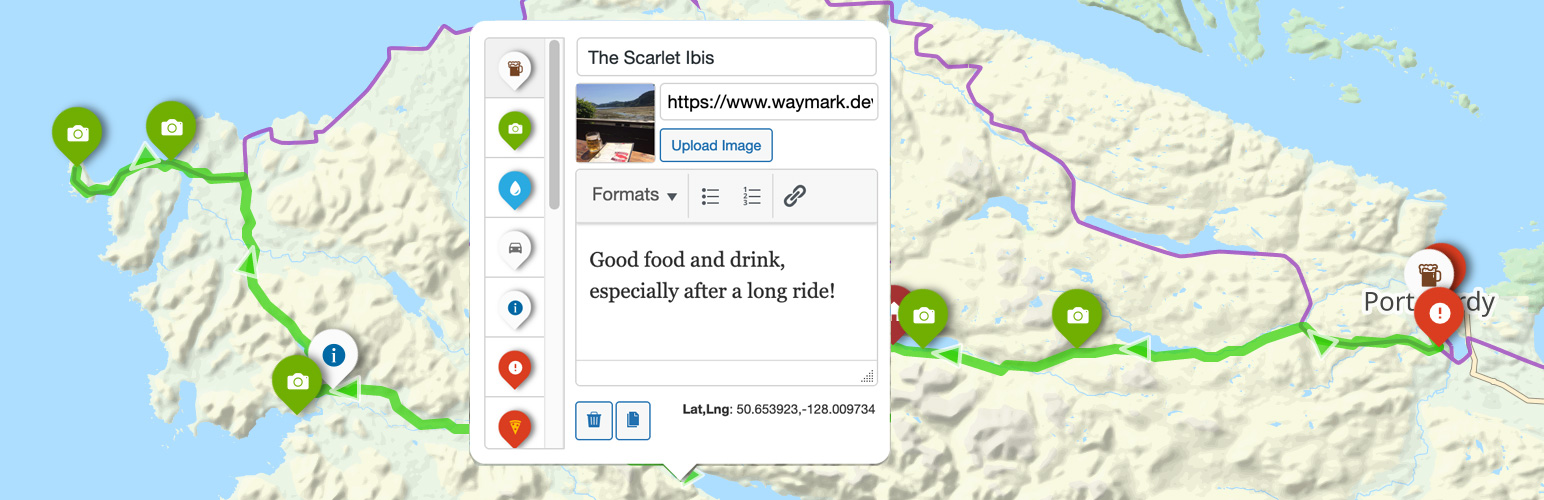
Use the intuitive Editor to create Maps with one, or thousands of interactive Overlays.
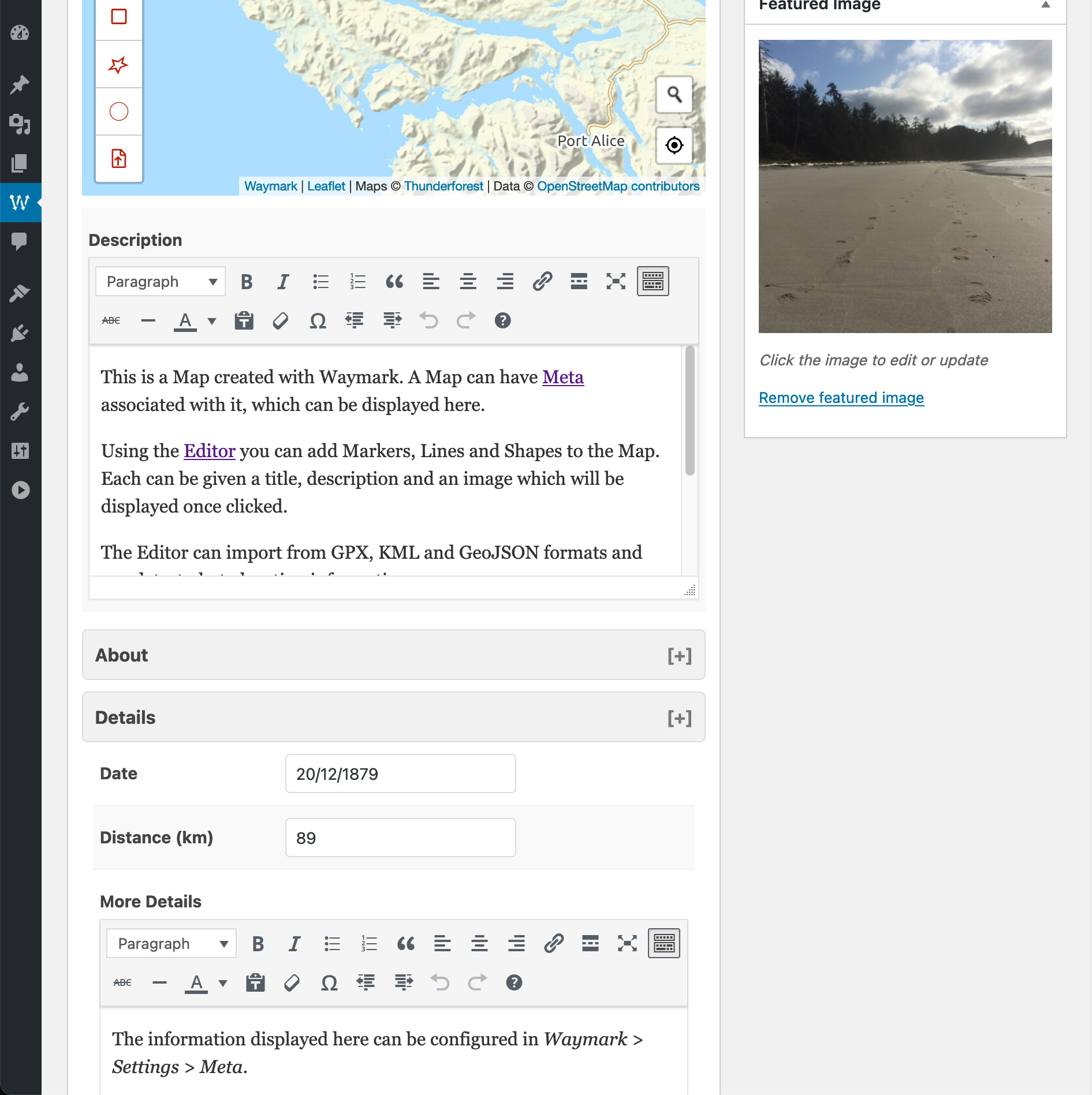
- Overlays - Create Markers, Lines and Shapes with a:
- Title
- Image (Media Library or link to external image)
- Description (Rich text editor, HTML supported)
- Type (defined in Settings)
- Import
- GPX
- KML
- GeoJSON
- EXIF (Image location metadata)
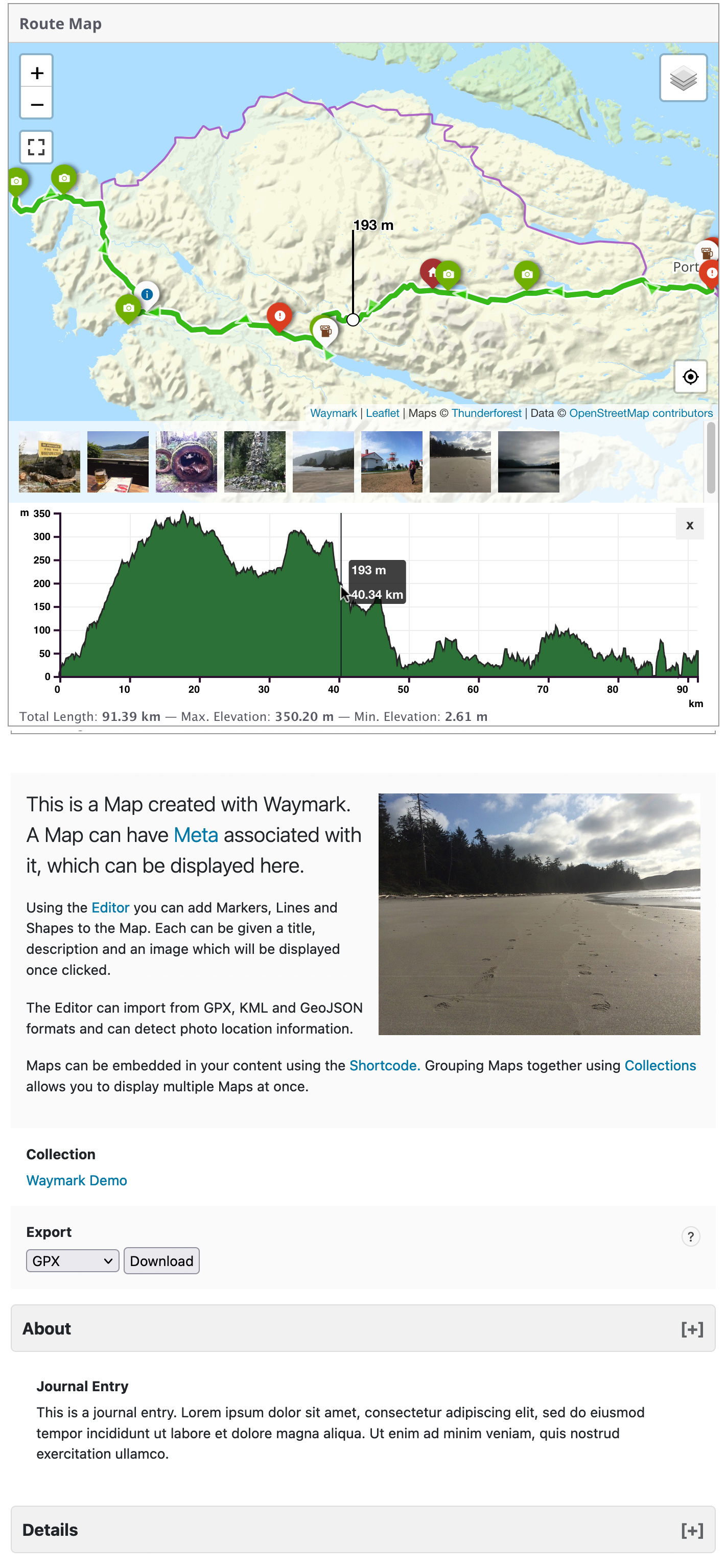
- Elevation data (adds an interactive profile chart for Lines with elevation data)
- Meta - Add extra information to your Maps; these are customisable form inputs that allow you to add additional content to your Maps.
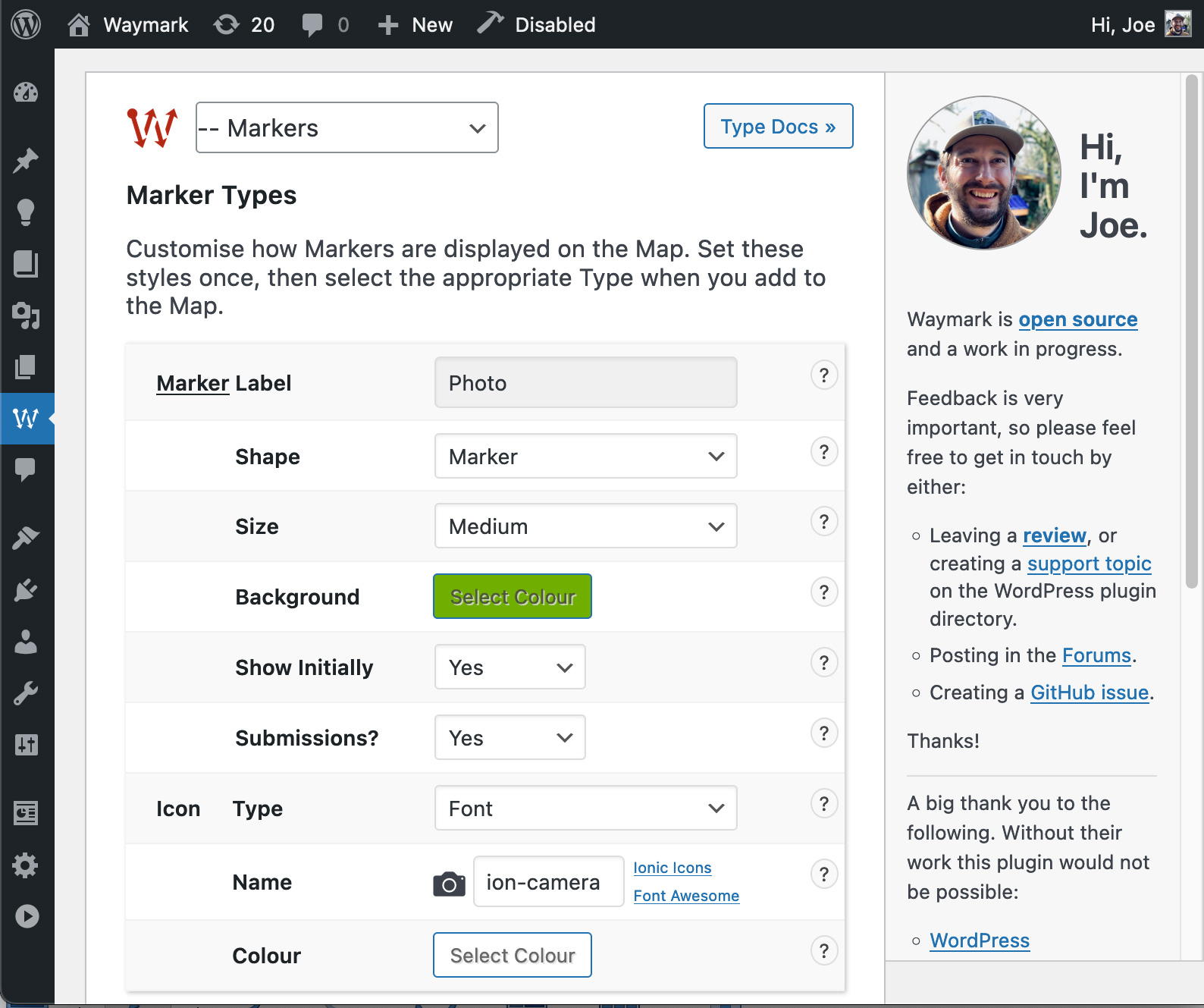
- Types - Set options to visually distinguish between Overlays (colours/icons etc.), then select it when using the Editor.
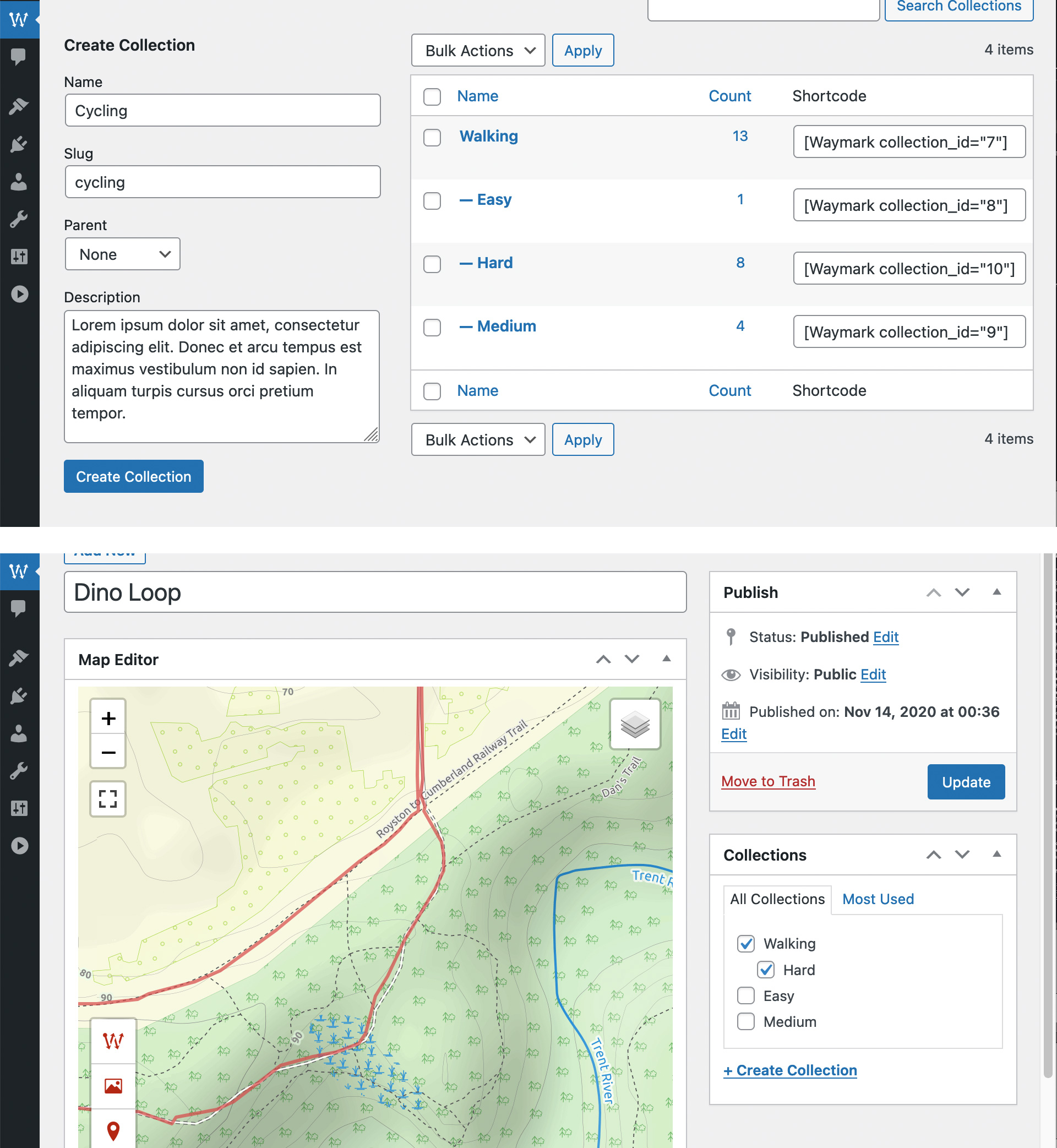
- Collections - Group Maps together and display multiple Maps at once. Create complex Collection hierarchies to suit your needs and associate Maps with multiple Collections.
- Submissions - Allow registered users, or guests to create Maps from the front-end of your site. You can control who can Submit Maps, what editor features are available and whether submissions should be approved before they are published.
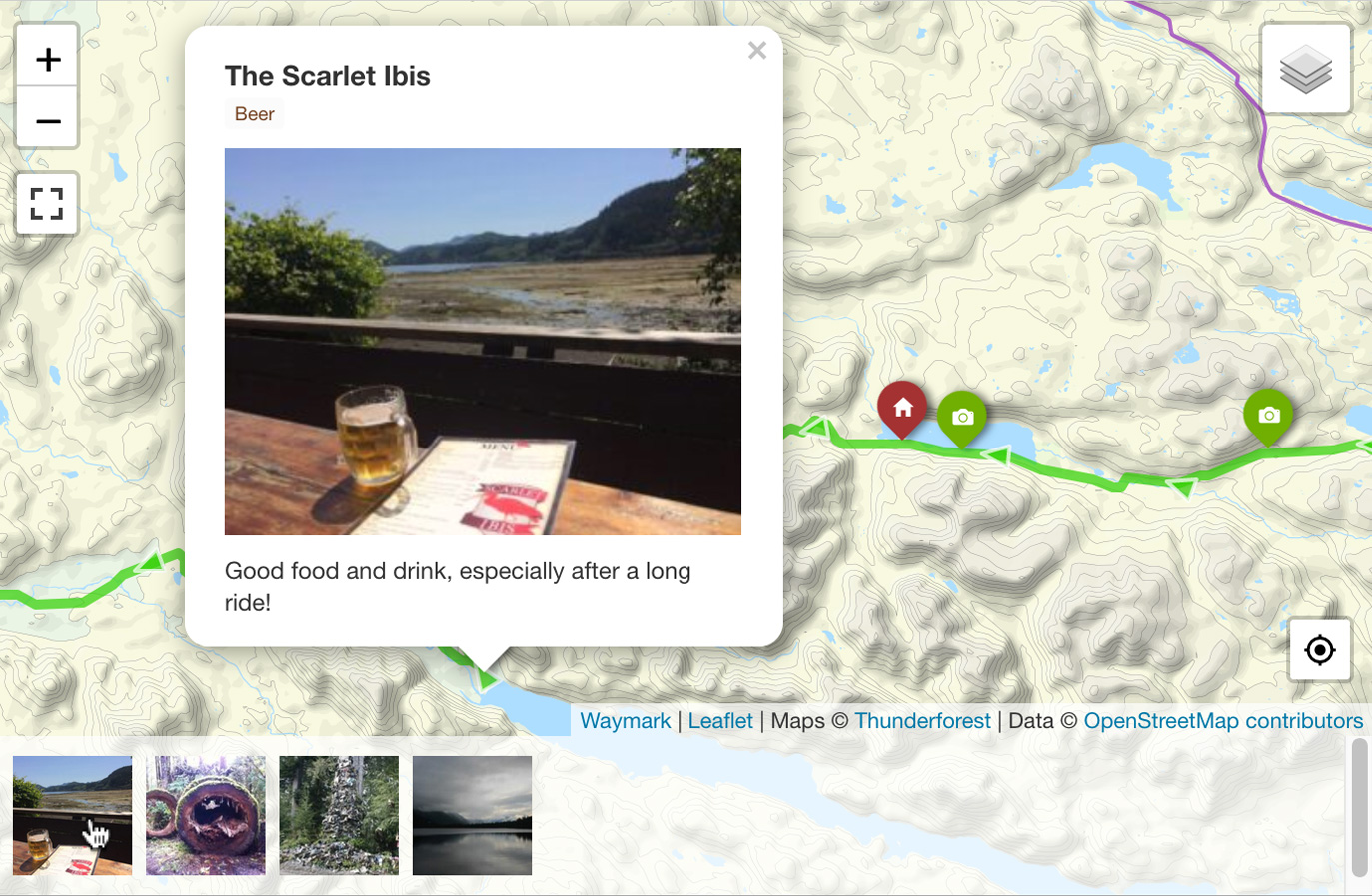
[Waymark] Shortcode, or link to the Map Details page.
- Shortcodes
- Display a single Map, or a Collection of Maps anywhere that Shortcodes are supported.
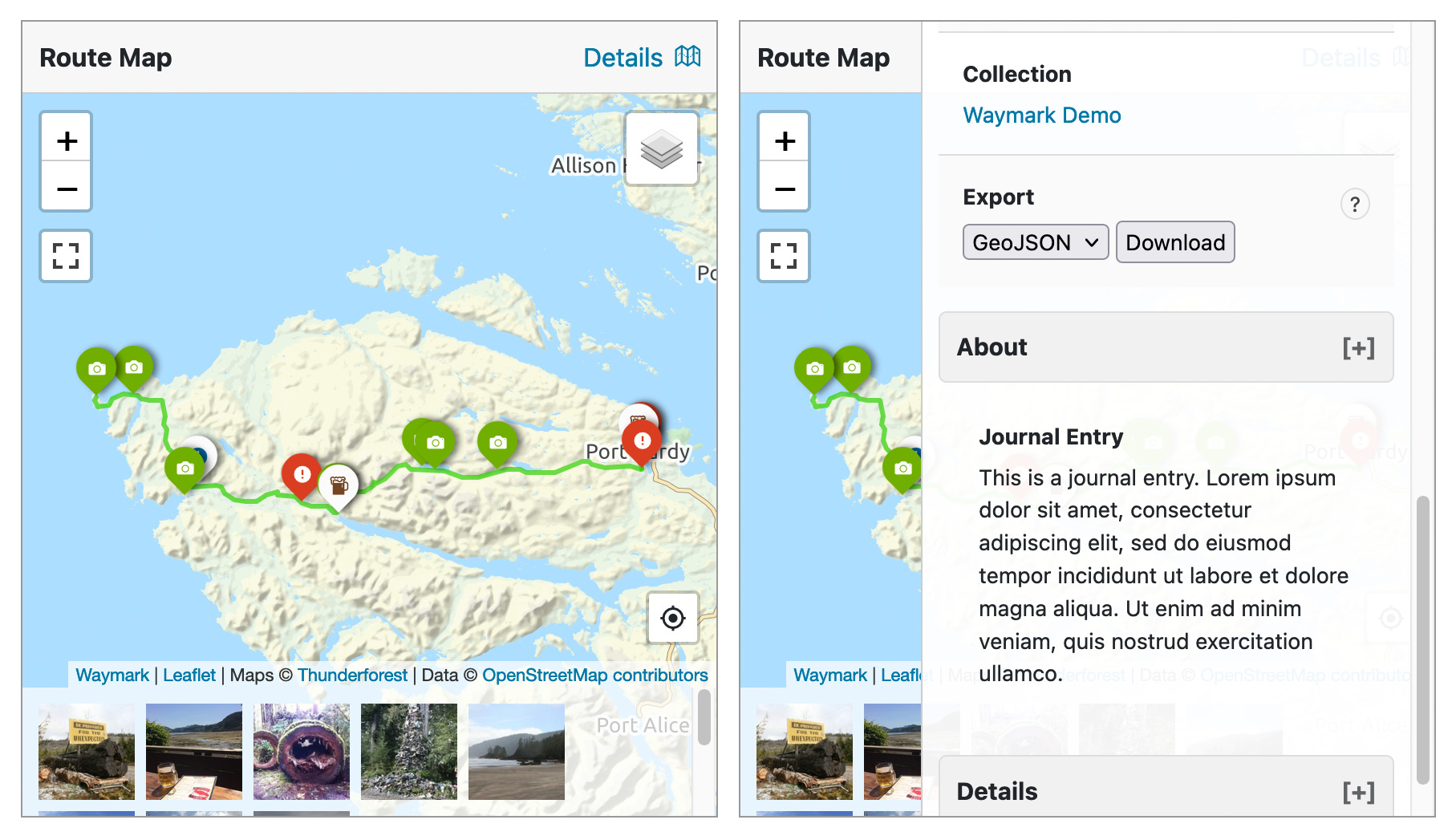
- An optional Shortcode Header displays the Map/Collection title, a link to the Map Details page and any Meta.
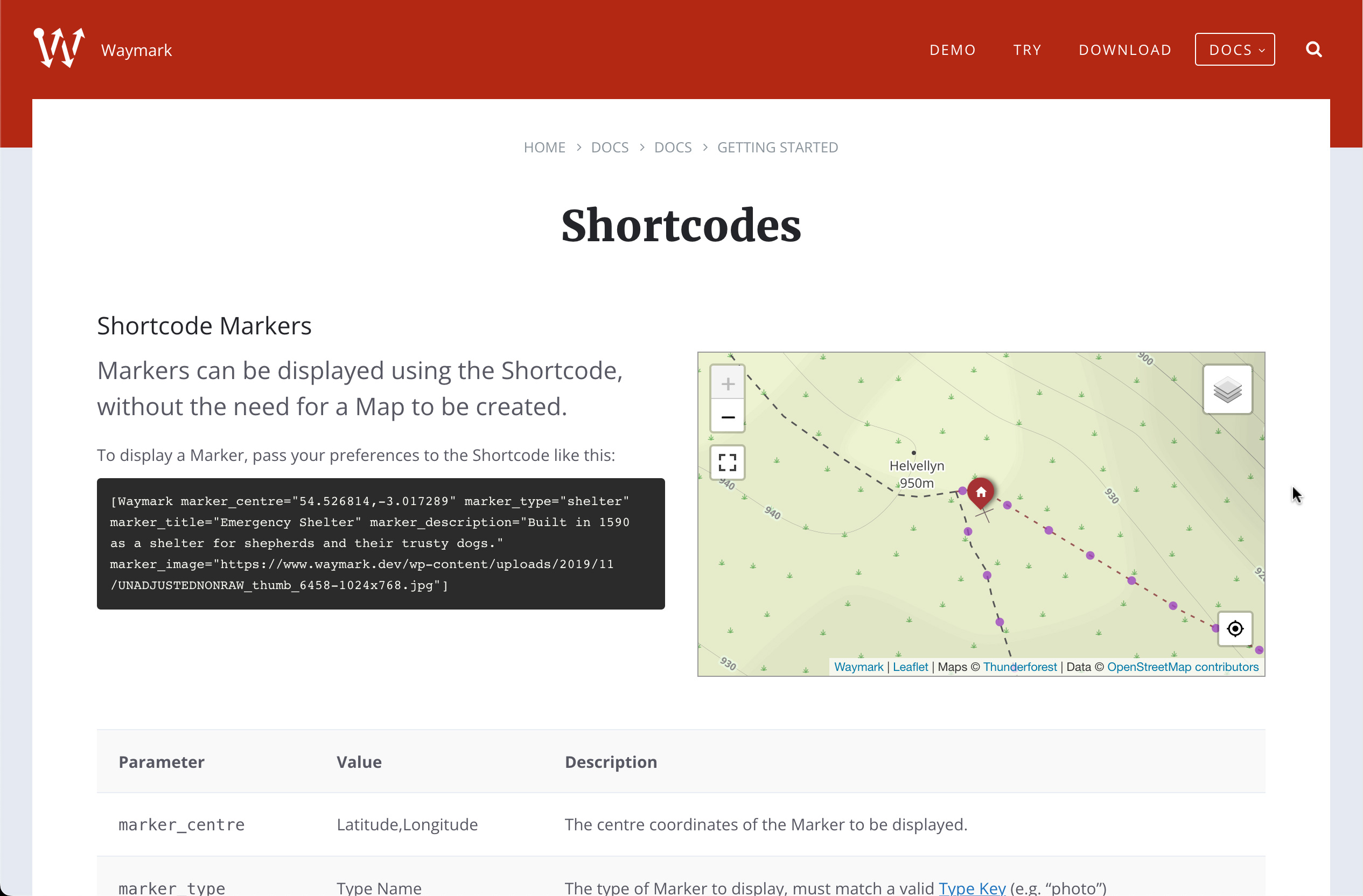
- Display a Marker defined through the Shortcode.
- Display a Basemap only, without any Overlays by providing centre and zoom parameters.
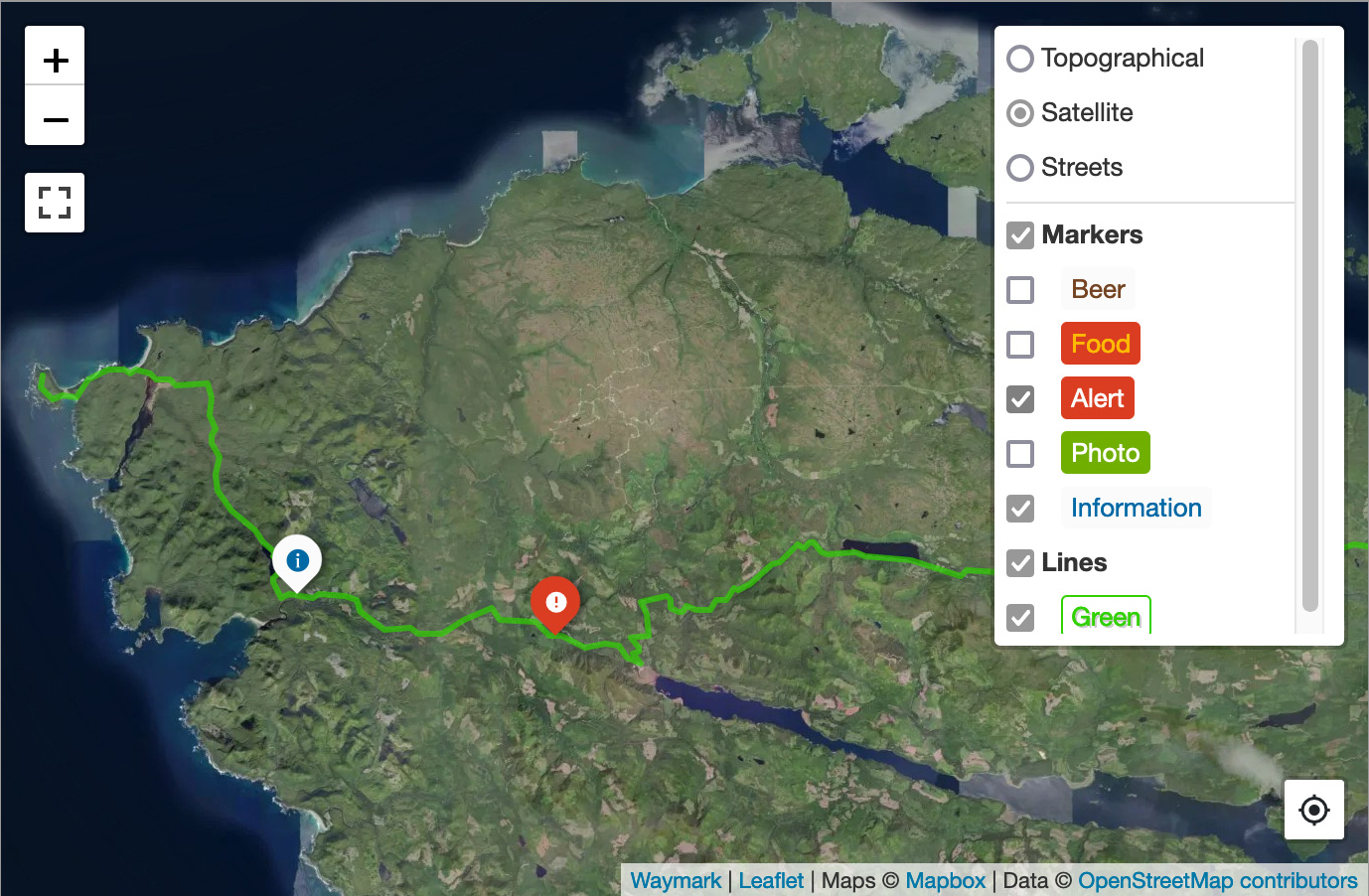
- Basemaps - Uses OpenStreetMap by default, with support for multiple raster tiled/"slippy" Basemaps. You can switch Basemaps using the Overlay Filter.
- Overlay Filter - Allow the user to filter which Overlays are currently visible on the Map.
- Export
- (Optionally) Let anyone Export Maps into GPX, KML and GeoJSON formats through the Shortcode Header or on the Map Details page.
- Works on mobile devices.
- Font Icons (Ionic Icons v2/Font Awesome v4)
- Simple Text, or Emojis (i.e. 🏕️, 🚩, 📸).
-
Custom HTML (good ol'
<img src="https://example.com/icon.svg">, or a more complex structure). So you can pretty much create any kind of Icon you want. For developers: -
Most elements can be styled using CSS and have sensibly named
waymark-classes. - WordPress integration:
- Maps are stored using the custom post type
waymark_map. - Collections use the
waymark_collectionTaxonomy. - Embed Maps using the
[Waymark]Shortcode anywhere they are supported, or dynamically using thedo_shortcode(["Waymark"])function. - Geographical data is stored in GeoJSON format. Types are specified using the
typeProperty, i.e.{feature: { geometry: { type: 'Point', coordinates: [0, 0] } }, properties: { type: 'Alert', title: 'Bridge Removed!' }. - Specify which GeoJSON feature properties to store when importing (Settings > Overlays > Properties). These can be automatically appended to the Overlay Description, or accessed programatically via the
layer.feature.propertiesObject. - Maps are displayed using the Leaflet JavaScript library, which is bundled with Waymark and can be extended using the
waymark_loaded_callback[callback function](https://www.ogis.org/waymark-wp/advanced/using-the-global-callback-function/.
- Association Franc-Comtoise du Chemin de Compostelle – eGuide
- Cres & Lošinj Trail – Lošinj Trail 2025
- hikingTICINO
- Horizontes – PT281
- Iggy's Hikes – Staze na Medvednici
- Il Cammino del Lago Maggiore – Le 11 tappe
- Merritt Mountain Bike Association – Iron Mountain
- The Island Walk – Island Walk Map
- Trekkaholic – Trekking al lago Bianco in Alpe Veglia
- Via Apsyrtides
- Zadar Archipelago – Interactive Map
- Zagorje Outdoor – Konjička staza broj 10
[!NOTE] To develop locally you will need to have both Node.js and NPM installed.Grunt is used to run the build script, which compiles the JavaScript and CSS and performs some other tasks. ` Clone the repository (and the Waymark JS submodule) git clone --recurse-submodules https://github.com/opengis/waymark.git Navigate to the Waymark directory cd waymark Install the dependencies (or pnpm/yarn install) npm install Run the build script grunt ` The build script will watch for changes to the JavaScript and CSS files.
[!IMPORTANT]
Waymark JS is responsible for the Viewer and Editor and is included as a Git submodule (/waymark-js directory). View on GitHub.
Dev Server
A local WordPress environment is provided via wp-env. Docker must be running.
npm run dev
This starts WordPress at http://localhost:8888 and prints the credentials summary:
──────────────────────────────────── MySQL 127.0.0.1 root / password Admin http://localhost:8888/wp-admin admin / password ────────────────────────────────────
安装:
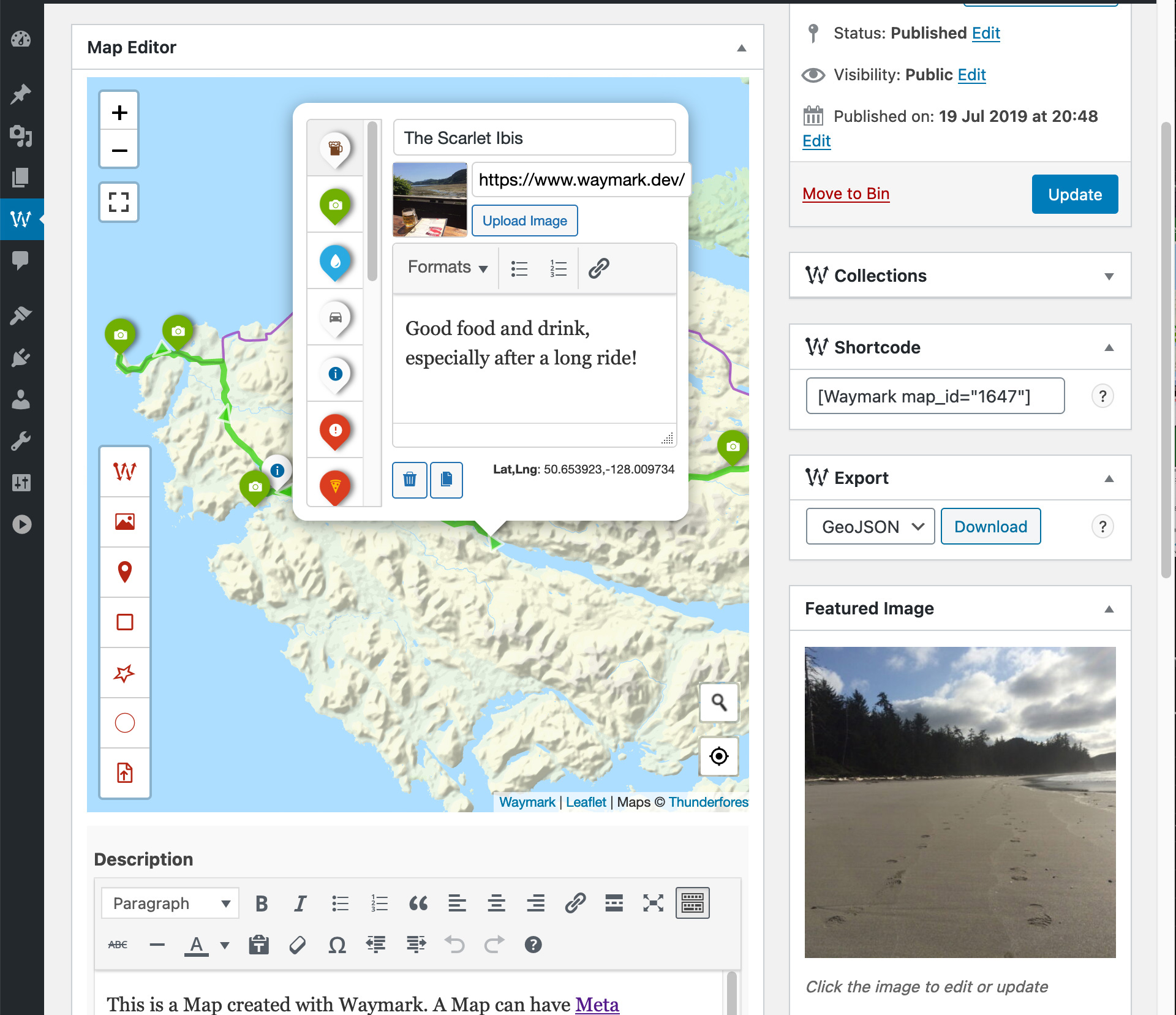
With Waymark enabled, click on the "Maps" link in the sidebar to create and edit Maps. Once you are happy with your Map, copy the Waymark shortcode and add it to your content.
Read the Docs »
屏幕截图:

常见问题:
Is There a Demo?
Yes, here.
Can I Get More Help?
Yes, please view the Documentation.
How Can I Contribute?
Please:
- Translate the plugin If you like the plugin and speak multiple languages, please consider becoming a Translation Editor (PTE) for the plugin.
- Star, create an Issue or Fork the project on GitHub.
- Add a Review.
Does Waymark Support Google Maps?
Yes! While the Google Maps API is not used, Google Basemaps can be added to Waymark as raster tiles.
Can I Translate the Plugin?
Please! Waymark is localization ready, translation contributions are greatly appreciated.
Acknowledgements?
Waymark relies on input from it's users, thank you to everyone for providing feedback :) Built on the shoulders of giants, thank you Open-Source!