Advanced User Avatar | Custom Profile Picture Uploader for WordPress, WooCommerce, and BuddyPress
| 开发者 |
wpmakedev
iamprazol |
|---|---|
| 更新时间 | 2026年9月10日 15:21 |
| PHP版本: | 7.4 及以上 |
| WordPress版本: | 7.1 |
| 版权: | GPLv3 or later |
| 版权网址: | 版权信息 |
详情介绍:
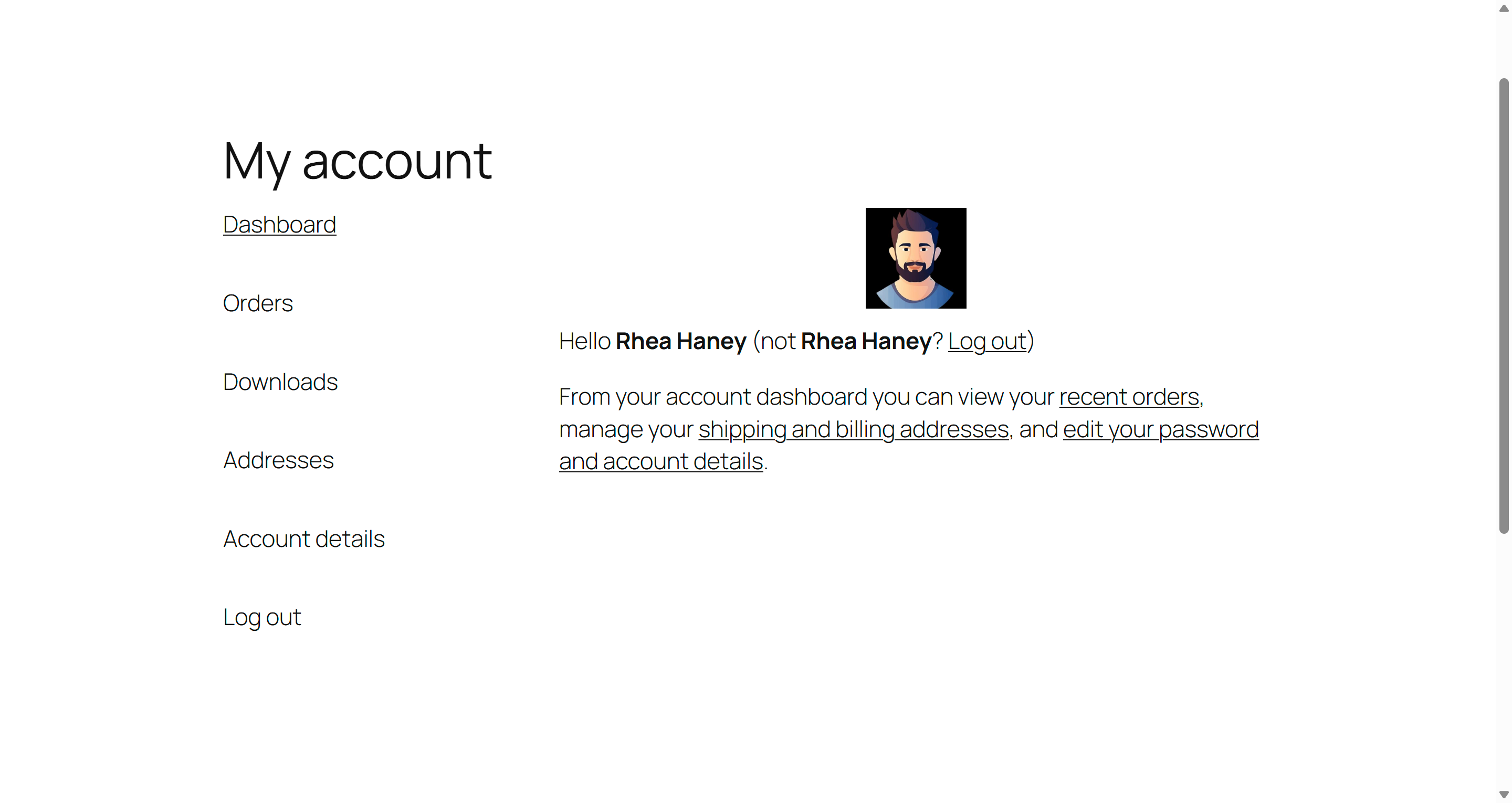
- My Account Dashboard avatar — customer's profile photo displays on the dashboard the moment they log in
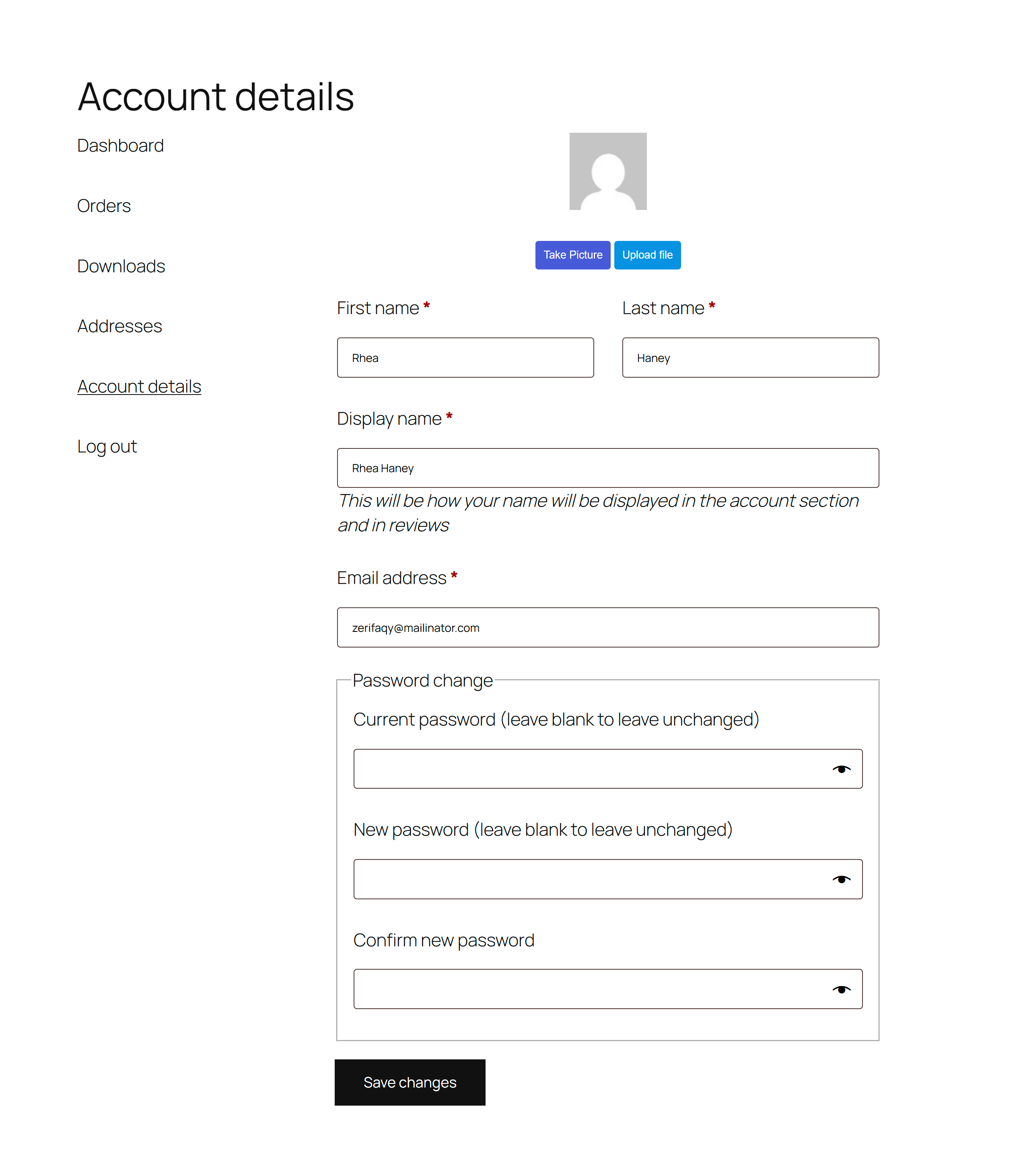
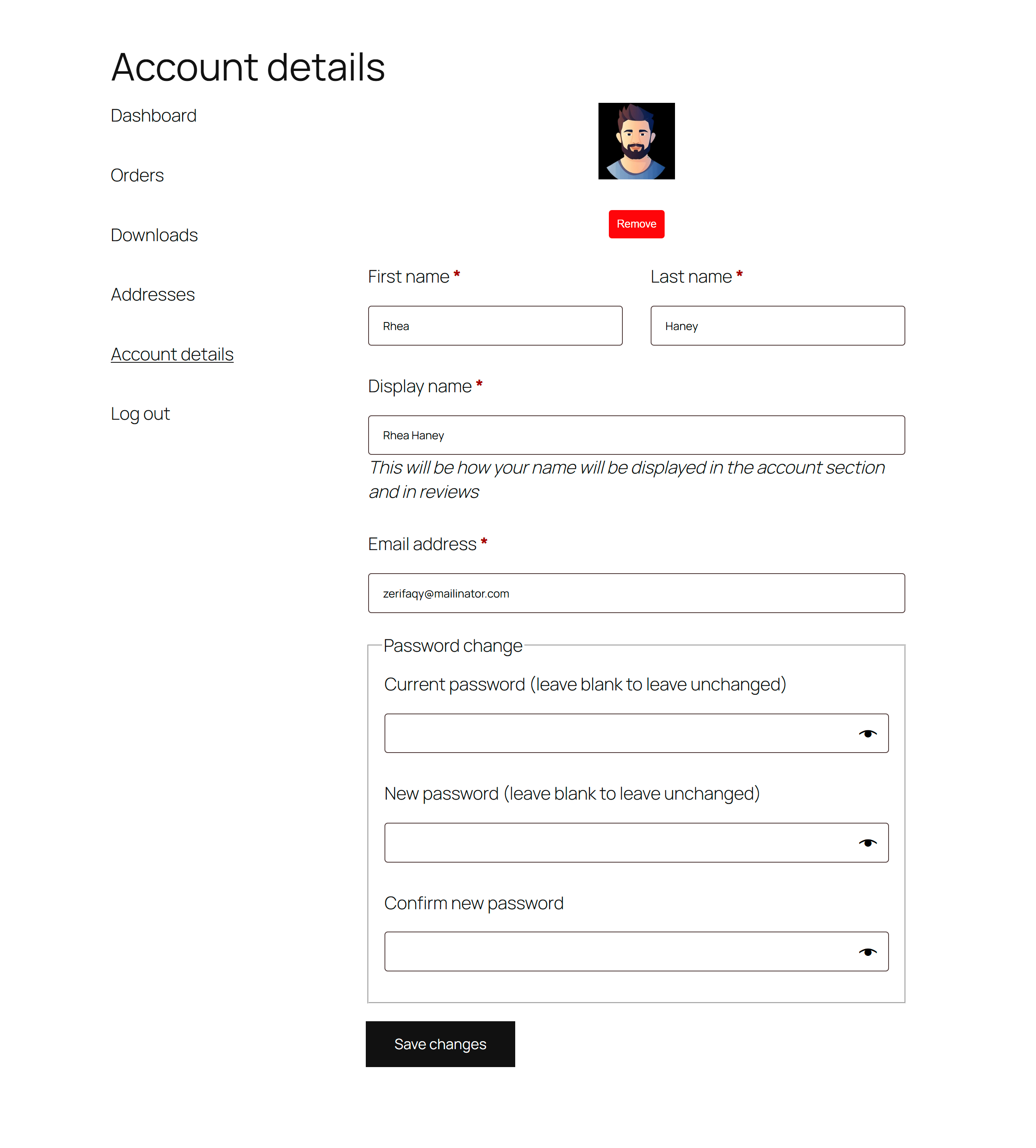
- Account Details upload field — customers update their photo from the same page they manage their account
- Product review avatars — reviewers show as real people on product pages instead of Gravatar silhouettes
- Choose where avatars appear — My Account dashboard, Account details, order history, product reviews, checkout and wishlists, each switched on or off independently
- Secure upload handling — file types are validated from the file's contents rather than its name, uploads require a logged-in customer, and your size and type limits are enforced on the server whatever the request claims
- Page builder compatible — works alongside Bricks Builder and other builders without duplicate template rendering
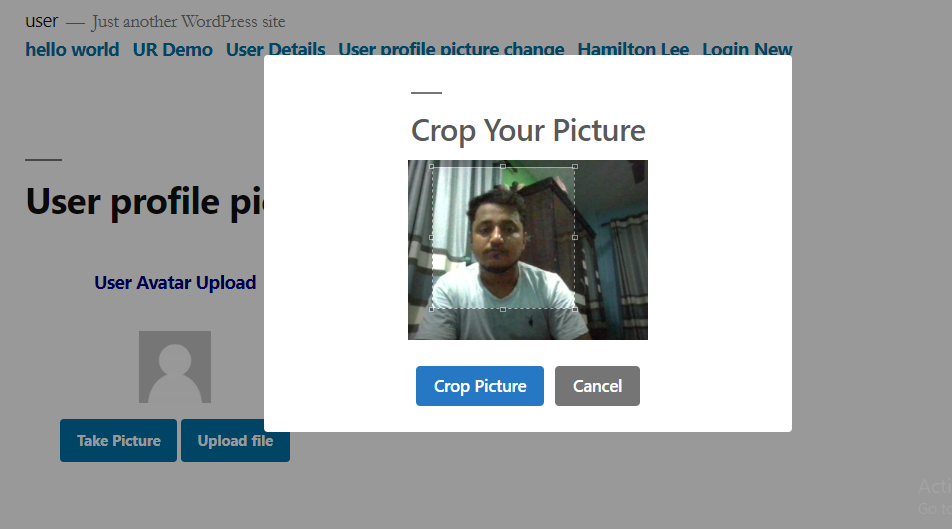
- Crop interface — customers crop profile picture uploads to fit before they save
- Webcam capture — take a webcam profile photo in the browser, no file needed
- EXIF orientation handling — phone photos stay upright after cropping
- File type validation — you choose which of JPG, PNG, GIF and WEBP are allowed
- Max file size control — set the upload ceiling from settings
- Media Library picker — optionally let customers choose an image they already uploaded, off by default
- Auto-generated image sizes — 32, 64 and 96 pixel variants created on upload, so a small avatar downloads a small file
- Shortcode:
[wpmake_advance_user_avatar_upload]renders the full upload form on any page - Shortcode:
[wpmake_advance_user_avatar]outputs the current user's avatar - Gutenberg block for drag-and-drop placement in the block editor
- Profile screen field at Users > Profile, the place most people look first
- Bulk avatar manager — every user with their current picture, searchable and sortable, on the Users > Users Avatar screen
- Theme template overrides, action hooks and CSS custom properties for anything the settings do not cover
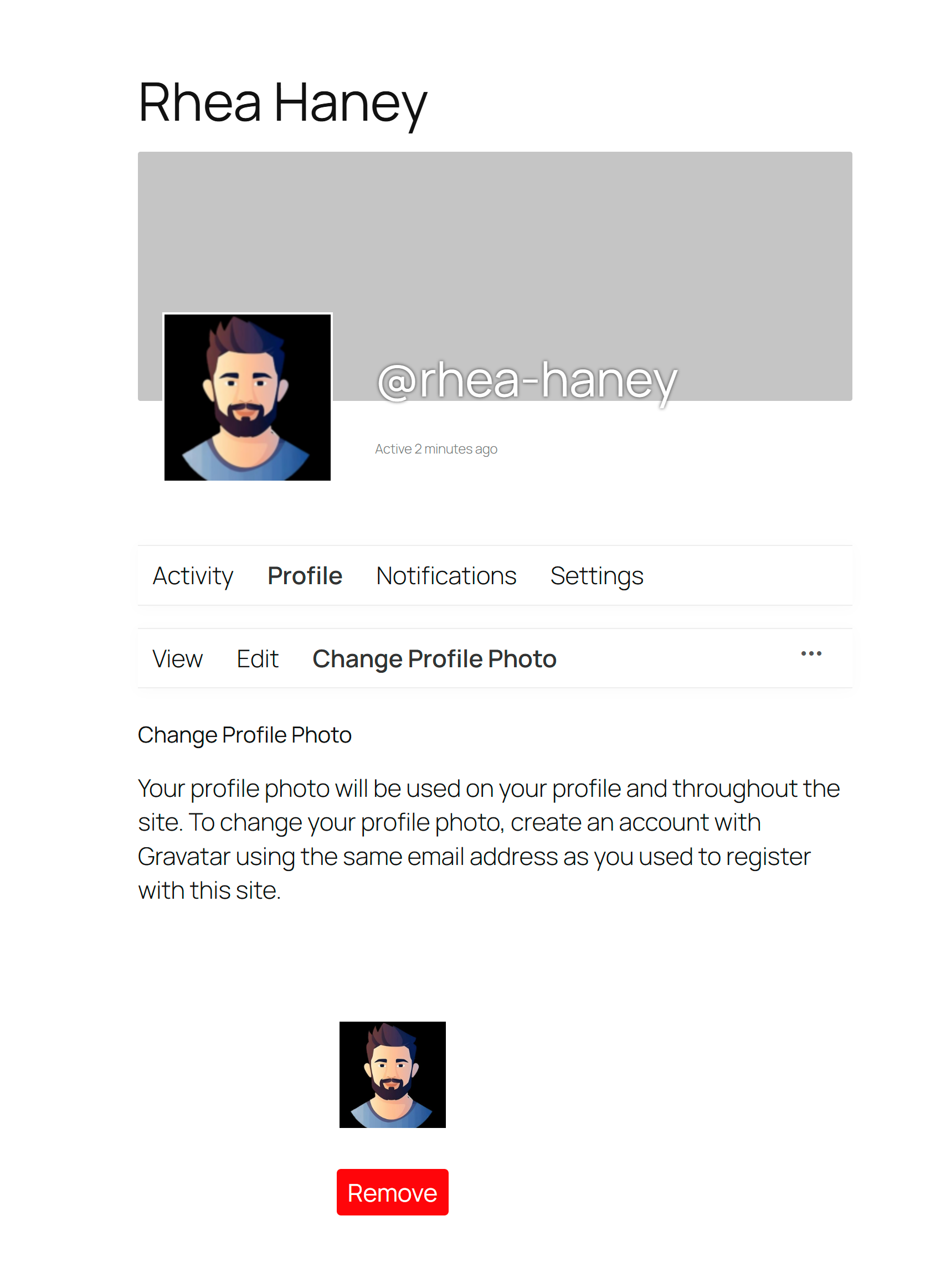
- Replaces the default BuddyPress uploader with the same upload, crop, and webcam flow used across your site
- Displays on member profile pages and the BuddyPress member directory so communities feel populated by people, not placeholders
- Custom avatars appear in the Better Messages chat interface automatically, replacing the default Gravatar with the user's uploaded photo
- Avatar uploader added to the WP-Members profile edit form — members update their photo from the same page they edit their profile fields
- No template editing — the field is inserted into the existing form when the integration is switched on
安装:
- Install the plugin from Plugins > Add New, or upload the zip via Plugins > Add New > Upload Plugin.
- Activate Advanced User Avatar through the Plugins menu in WordPress.
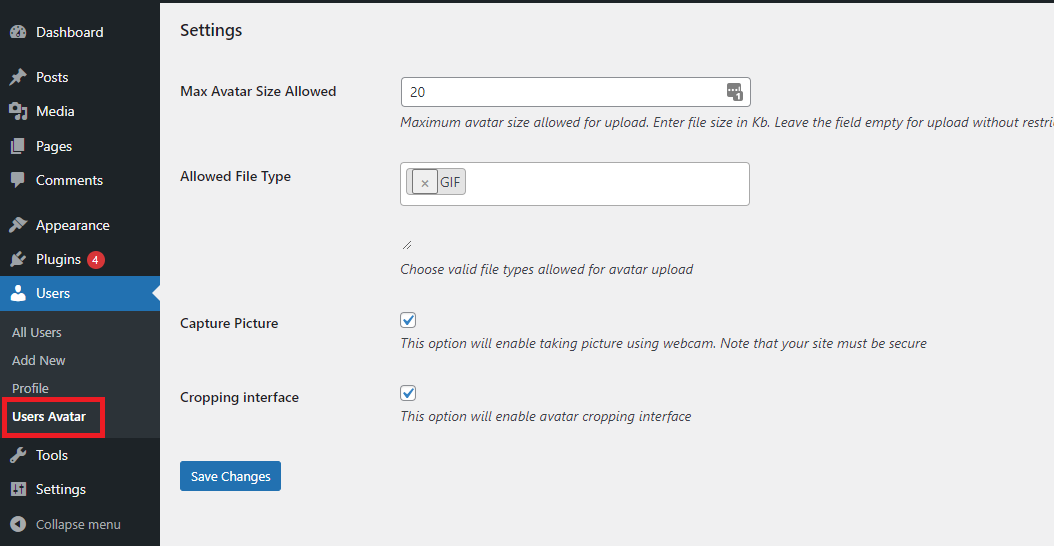
- Go to Users > Users Avatar to set allowed file types, max file size and image dimensions, and to switch on the WooCommerce, BuddyPress, Better Messages and WP-Members integrations.
- Add the shortcode
[wpmake_advance_user_avatar_upload]to any page, or insert the Advanced User Avatar Gutenberg block. Users can also set their picture at Users > Profile without any placement at all. - For WooCommerce, enable the WooCommerce integration in settings — the avatar then appears in the My Account dashboard and Account Details page automatically, and you choose which other store locations show it.
- To manage other people's avatars, use the Manage Avatars tab on the Users > Users Avatar screen.
屏幕截图:
常见问题:
What data does the plugin collect?
Nothing, unless you opt in. On activation you are asked once whether to share usage data. If you skip that screen, or never answer it, the plugin sends nothing at all and every feature works exactly the same — none of it is gated on opting in. If you do opt in, the following is shared with WPMake through Freemius:
- Your WordPress user's first name, last name and email address
- Your site's homepage URL and title, WordPress version, PHP version and site language
- This plugin's version, the Freemius SDK version, and whether it is active or uninstalled
- The names, slugs and versions of your other plugins and themes, and whether each is active
add_filter( 'wpmake_advance_user_avatar_enable_freemius', '__return_false' );
How do I turn off the review request notice?
The notice appears once the plugin has been active for a week, on the Dashboard and the plugin's own screen only, and only for administrators once at least one avatar has been uploaded. "Don't ask again" removes it for good, and each administrator answers for themselves. To switch it off in code for everyone — useful on client sites — drop this in a plugin or your theme's functions.php:
add_filter( 'wpmake_advance_user_avatar_show_review_notice', '__return_false' );
How do I let users upload profile picture images on my site?
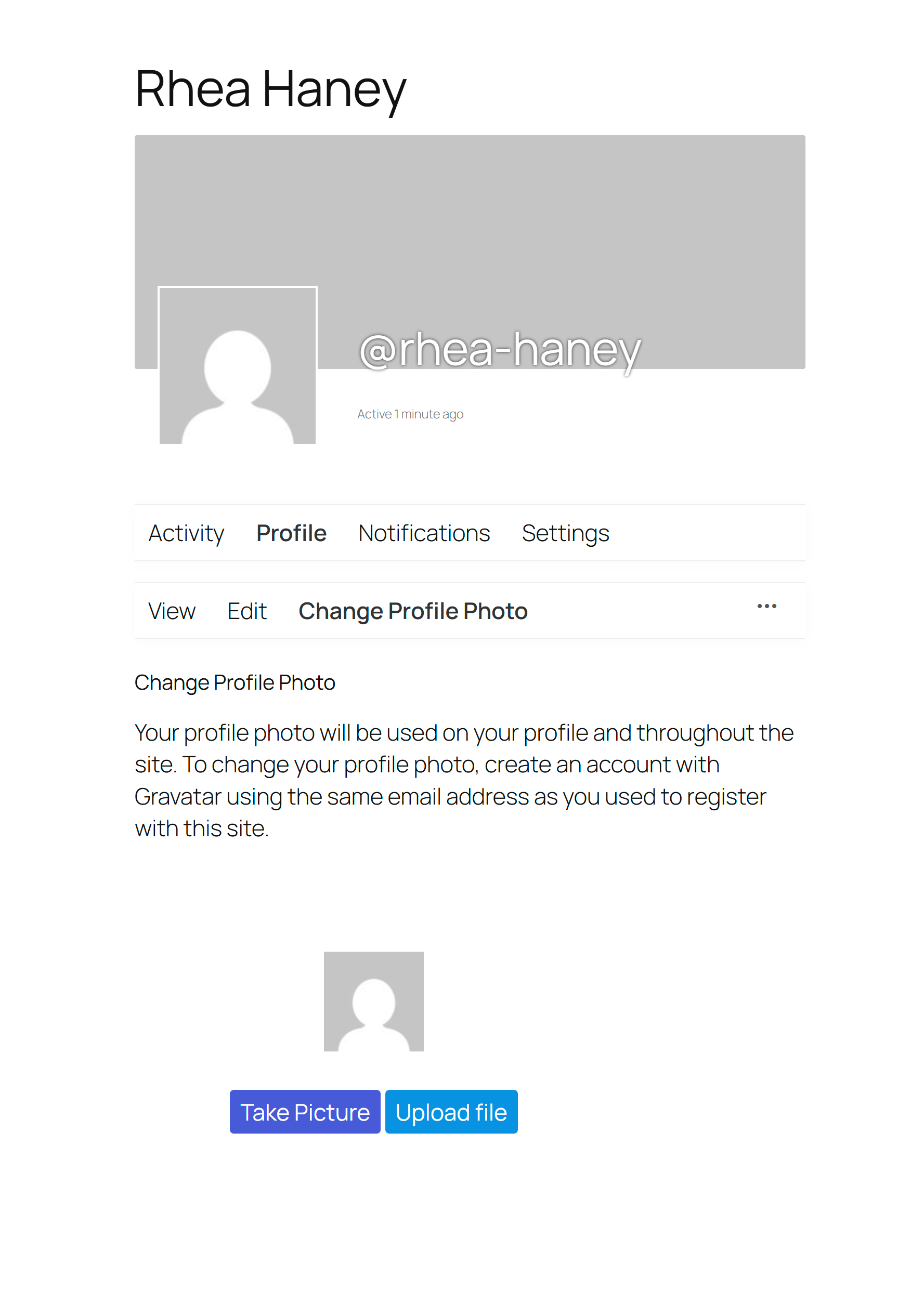
Add the shortcode [wpmake_advance_user_avatar_upload] to any page, or insert the Advanced User Avatar block in the block editor. Both render the full upload form, with cropping and webcam capture built in. Users can also set their picture at Users > Profile without you placing anything at all, and WooCommerce stores get an upload field on the Account Details page automatically.
How do I show a WooCommerce profile picture on the My Account page?
Enable the WooCommerce integration in settings. The customer's avatar then appears on the My Account dashboard and an upload field is added to the Account Details page. No template editing or shortcode placement is required for the standard WooCommerce account pages.
Can my users set a profile picture without Gravatar?
Yes. That is the point of the plugin. Customers upload a photo directly from their device or take one with their webcam. No Gravatar account, no external sign-up, no email hashing.
How do I replace Gravatar across my whole site?
Activate the plugin and let each person upload their own photo. Once someone has one, WordPress serves it everywhere it would otherwise call Gravatar — comments, author boxes, the admin bar, the Users list, the block editor and the REST API — and nothing at all is sent to Gravatar for that user, not even a hashed email address. Anyone who has not uploaded a picture still falls back to your usual default avatar.
Can users take a webcam profile photo instead of uploading a file?
Yes, when "Capture Picture" is switched on in settings. The browser camera opens inside the upload form, the shot is cropped the same way an uploaded file is, and nothing is written until the user saves.
Where are the avatars stored, and does anything leave my server?
Each photo is kept in your own uploads directory and served from your own domain. The plugin makes no external requests to Gravatar or any other third-party service, so no customer data leaves your site to fetch profile images. That is also what makes it straightforward under GDPR.
Does this replace the default BuddyPress avatar upload screen?
Yes, optionally. When the BuddyPress integration is enabled, Advanced User Avatar takes over the avatar upload flow on member profile pages, giving members the same crop and webcam tools used elsewhere on the site. Avatars also display on the member directory.
Does this work with Bricks Builder?
Yes. The WooCommerce integration is compatible with Bricks Builder and inserts the avatar uploader and viewer without conflicting with the builder's template rendering.
Will this work with my theme?
The plugin works with any theme that follows WordPress and WooCommerce template standards. It has been tested with Flatsome, Astra, Storefront, and Hello Elementor. Themes that heavily override the WooCommerce My Account templates may need minor adjustments.
Can I control what file types and sizes users can upload?
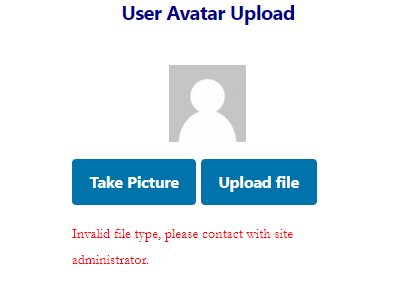
Yes. From Users > Users Avatar, the admin chooses which of JPG, PNG, GIF and WEBP are accepted and sets the maximum upload size. Both limits are enforced on the server, and invalid uploads are rejected with a clear error message so the customer knows what to fix.
How does this work on a multisite network?
An avatar is network-wide: a user uploads once and the same picture appears on every site in the network they belong to. The plugin records which site the image was uploaded to and reads it from there, so the same avatar resolves correctly everywhere. Managing other people's avatars is limited to super administrators. WordPress only lets a user edit another user's account if they have network-level user permissions, and because avatars are network-wide, letting a single site's administrator change one would change how that person appears on sites they have no rights over. The bulk avatar manager is therefore hidden for administrators without network user permissions; every user can still set their own avatar from their profile or the front-end uploader. Uploads stay on the site they were made on, in that site's own uploads directory. If you switch on the Advanced deletion setting, each site answers for itself when the plugin is deleted -- a site that left it off keeps its avatars even if a sibling site opted in.
Can an administrator change someone else's profile picture?
Yes. The Manage Avatars tab on the Users > Users Avatar screen lists every user with their current picture, searchable and sortable, with Change and Remove on each row. Individual users can also be edited from Users > Profile.
Can I change the avatar size, or the size, colour and shape of the upload button?
Yes, and no !important is needed. Every size, shape and colour is read from a CSS custom property on the widget's container, so one rule in Appearance > Customize > Additional CSS is enough:
.wpmake-advance-user-avatar-container { --wpmake-aua-avatar-size: 150px; /* avatar width/height */ --wpmake-aua-avatar-radius: 50%; /* round the avatar */ --wpmake-aua-width: 100%; /* container box */ --wpmake-aua-height: auto; --wpmake-aua-padding: 0; --wpmake-aua-btn-primary-bg: #2f7d32; /* Upload file button */ --wpmake-aua-btn-primary-bg-hover: #27682a; --wpmake-aua-btn-padding: 6px 12px; --wpmake-aua-btn-font-size: 13px; --wpmake-aua-btn-radius: 999px; }
The remaining properties follow the same naming: --wpmake-aua-align, --wpmake-aua-avatar-spacing, --wpmake-aua-btn-border-width, --wpmake-aua-btn-primary-color, --wpmake-aua-btn-capture-color, --wpmake-aua-btn-capture-color-hover, --wpmake-aua-btn-remove-border, --wpmake-aua-btn-remove-border-hover, --wpmake-aua-btn-remove-color and --wpmake-aua-btn-remove-bg-hover.
Can I set the avatar size for one placement only?
Yes. Both shortcodes accept attributes: size (avatar width/height in px), radius (avatar corner radius, e.g. 50%), and class (extra class names on the container, for your own CSS). The uploader also accepts upload_text, remove_text and capture_text for the button labels.
[wpmake_advance_user_avatar size="150" radius="50%"]
[wpmake_advance_user_avatar_upload size="120" class="my-profile-avatar" upload_text="Choose a photo"]
How do I customise the uploader's markup or layout in my theme?
Yes. Copy the template you want to change out of wp-content/plugins/wpmake-advance-user-avatar/templates/ into wp-content/themes/your-theme/wpmake-advance-user-avatar/, keeping the file name, and edit your copy. The theme copy is used instead of the plugin's and survives plugin updates.
There are also action hooks for adding markup without replacing a template: wpmake_advance_user_avatar_before_avatar, wpmake_advance_user_avatar_after_avatar, wpmake_advance_user_avatar_before_uploader, wpmake_advance_user_avatar_after_uploader, wpmake_advance_user_avatar_before_upload_buttons and wpmake_advance_user_avatar_after_upload_buttons. Each receives the resolved shortcode attributes.
Do custom avatars show up in the Better Messages chat?
Yes. Once a user uploads a custom avatar, it appears inside the Better Messages chat interface in place of the default Gravatar. No extra configuration is required.
Can members upload a profile picture from the WP-Members form?
Yes. When the WP-Members integration is enabled, the avatar uploader is added to the WP-Members profile form, so members set their picture on the same form they use for the rest of their details. No template editing is required.
How do I display a user's avatar in an author box or sidebar?
Use the avatar shortcode [wpmake_advance_user_avatar] to output the current user's avatar anywhere shortcodes are supported, including widgets, sidebars and page builders.
Is there a PHP function for setting a user avatar from my own code?
Yes. Three functions do the work, and every avatar change in the plugin goes through them:
wpmake_aua_set_user_avatar( int $user_id, int $attachment_id ) : bool
wpmake_aua_remove_user_avatar( int $user_id ) : bool
wpmake_aua_current_user_can_edit_avatar( int $user_id ) : bool
Setting an avatar checks that the user exists and that the attachment exists and is an image. The same attachment may be used by any number of users, and removing an avatar never deletes the file — so an image you picked from the Media Library stays in the Media Library.
The capability function is the one to call before accepting a change from a request. It returns true when the target is the current user — everybody owns their own avatar, whatever else they can do — or when the current user can edit_user for that person. The two setter functions deliberately do not check capabilities themselves, so code running without a current user, such as an importer or a WP-CLI command, can still set an avatar.
Two actions fire after every change, each passed the user ID and the attachment ID:
do_action( 'wpmake_aua_avatar_set', $user_id, $attachment_id );
do_action( 'wpmake_aua_avatar_removed', $user_id, $attachment_id );
wpmake_aua_get_avatar_url( int $user_id, int $size ) returns the URL of a user's uploaded avatar at the size you ask for, or an empty string if they have not set one.
Which hooks and filters can I use?
wpmake_advance_user_avatar_shortcode_atts— the resolved attributes for either shortcode, with the shortcode tag as the second argumentwpmake_advance_user_avatar_template_directory— the theme sub-directory templates are looked up in,wpmake-advance-user-avatarby defaultwpmake_advance_user_avatar_locate_template— the resolved absolute path of a template, with the file name as the second argumentwpmake_advance_user_avatar_upload_url— the directory avatars are stored inwpmake_aua_avatar_subsizes— the extra image sizes generated for avatar uploadspre_get_avatar_data— WordPress's own filter, which is where this plugin supplies the avatar; use it to override the plugin entirelywpmake_advance_user_avatar_show_review_notice— return false to switch the review request off for everyone on the sitewpmake_advance_user_avatar_enable_freemius— return false to keep the usage-tracking SDK dormant, so no opt-in screen is ever shownwpmake_advance_user_avatar_promoted_products— the plugins advertised in the settings sidebar; return an empty array to remove the cardwpmake_advance_user_avatar_newsletter_endpoint— the email service endpoint the welcome screen's opt-in posts towpmake_aua_fs_loaded— action, fired once the Freemius instance exists, with the instance as its argument
更新日志:
- Feature - Optional usage tracking and a deactivation feedback form. Both stay off until you agree to them, and declining leaves the plugin fully working.
- Feature - A welcome screen after activation, showing where the settings are and where the upload field appears, with an optional email opt-in for update announcements.
- Enhance - The review request now waits for seven days of use and at least one uploaded picture, and each administrator answers it for themselves.
- Enhance - New Help & Resources, More from WPMake and review cards alongside the settings.
- Fix - The Settings link on the Plugins screen pointed at a page that does not exist, so it led to a permissions error instead of the settings.
- Tweak - Added a Docs link next to Settings on the Plugins screen.
- Tweak - Rewrote readme.txt for the WordPress.org plugin search: reworked the tag list, rewrote the short description, covered the phrases people actually search for in the description, and rephrased every FAQ question as a search query.
- Tweak - Raised the minimum WordPress version to 6.3. The block already declared Block API v3, which WordPress only understands from 6.3, so the old 6.0 floor was never accurate.
- Dev - New
wpmake_advance_user_avatar_show_review_noticefilter, to switch the review request off for everyone on a site. - Dev - New
wpmake_advance_user_avatar_enable_freemiusfilter to keep the tracking SDK dormant, and awpmake_aua_fs_loadedaction. - Dev - New
wpmake_advance_user_avatar_promoted_productsfilter for the plugins advertised in the settings sidebar. - Dev - New
wpmake_advance_user_avatar_newsletter_endpointfilter for the welcome screen's opt-in endpoint. - Dev - Uninstalling now also clears the review notice's per-user state and the usage counter, whether or not data deletion was opted into.
- Dev - composer.json declared PHP >=5.6.20 while the code has required 7.4 since the typed properties went in. Corrected to >=7.4.
- Feature - Set your profile picture from Users > Profile, the screen most people look at first.
- Feature - Administrators can now change or remove any user's picture. Until now everyone could only manage their own.
- Feature - New "Manage Avatars" tab lists every user with their current picture. Search it, sort it, and change or remove a picture without leaving the page.
- Feature - Optional setting to let people choose a picture they have already uploaded, instead of uploading a new one. Off by default.
- Feature - Optional setting to delete every picture and all plugin data when you delete the plugin. Off by default, and deactivating never deletes anything.
- Enhance - Pictures now appear everywhere WordPress shows one: comments, the admin bar, the Users list, the block editor and the REST API. Several of these still showed Gravatar before.
- Enhance - Pictures load at the size the page needs, so a small avatar no longer downloads the full-size photo.
- Enhance - Faster pages. Plugin scripts and styles now load only where a picture or upload form is actually shown; a logged-out visitor loads none at all.
- Enhance - The webcam feature only loads its code when "Capture Picture" is switched on.
- Enhance - The download is 944KB smaller, after removing bundled libraries the plugin no longer uses.
- Enhance - Nothing at all is sent to Gravatar for a user who has uploaded their own picture -- not even a scrambled version of their email address.
- Enhance - Sharper pictures on high-resolution screens in BuddyPress.
- Enhance - Replaced the misleading "You can change your profile picture on Gravatar" text on the profile screen. Changing a Gravatar has no effect once this plugin is active.
- Fix - "Uploaded Image Size" did nothing. Every picture was saved at 500x500 whatever you set. It now saves at the size you choose.
- Fix - "Store in thumbnail sizes" never created the small versions it promised, so small avatars used a larger file than needed.
- Fix - Uploads failed on sites that had turned JPEG off under "Allowed File Type".
- Fix - Cropping a see-through PNG no longer turns the transparent areas black.
- Fix - On sites that allow only GIF, the picture is now saved as it is instead of being rejected.
- Fix - Deleting a picture from the Media Library now clears it from anyone using it, instead of leaving them with a missing image.
- Fix - A picture an administrator sets for someone now belongs to that person. Deleting the administrator's account no longer offers to delete other people's pictures with it.
- Fix - Security: someone without permission to use the Media Library can no longer take an image from it as their own picture.
- Fix - Multisite: a user's picture showed a completely different image on other sites in the network. It now shows correctly everywhere.
- Fix - Multisite: deleting the plugin now tidies up every site in the network, not just the one you deleted it from, and each site keeps its own choice about whether to delete.
- Fix - Multisite: the upload folder is created for every site, including sites added later.
- Fix - Multisite: deleting an image on one site no longer clears people's pictures on another.
- Fix - "Product reviews" in the WooCommerce display settings did nothing; unticking it now hides review avatars.
- Fix - The upload widget no longer overflows its box when its buttons need more room.
- Tweak - Redesigned the plugin's screens: a proper navigation bar across the top, and a cleaner user table that is easier to read.
- Tweak - The Media Library window now opens on the Media Library tab, not on whichever tab you used last somewhere else.
- Tweak - Multisite: the "Manage Avatars" tab is hidden from administrators who cannot edit users, because it could not change anything for them.
- Tweak - The review notice is lighter and no longer loads the admin scripts just to show three buttons.
- Tweak - WooCommerce settings now say where the order history avatar appears: above the orders table.
- Tweak - The thumbnail preview now shows the sizes actually generated: 32, 64 and 96 pixels.
- Dev - New functions for setting avatars from your own code:
wpmake_aua_set_user_avatar(),wpmake_aua_remove_user_avatar()andwpmake_aua_current_user_can_edit_avatar(). See the FAQ. - Dev - New actions
wpmake_aua_avatar_setandwpmake_aua_avatar_removed, each passed the user ID and the attachment ID. - Dev - Avatars are now supplied through the
pre_get_avatar_datafilter, at priority 99, instead ofget_avatar. - Dev - New
wpmake_aua_avatar_subsizesfilter for the extra image sizes generated on upload. - Dev - New AJAX action
wpmake_advance_user_avatar_upload_set_avatarassigns an existing attachment as an avatar. - Dev - Uninstall honours the
wpmake_advance_user_avatar_upload_urlfilter, so a relocated upload folder is cleaned up too. - Dev -
review_notice_content()was unprefixed in the global namespace. Renamed towpmake_aua_review_notice_content(). - Dev - Added
phpcs.xml, socomposer phpcsandcomposer phpcbfrun with no arguments. PHPCS also runs in CI now. - Dev -
grunt cssno longer rewrites the bundled third-party stylesheets. Developer note -- why this is 2.0.0: two public functions have been removed, so the version is a major one.wpmake_advance_user_avatar_replace_gravatar_image()andwpmake_advance_user_avatar_build_avatar_html()are gone. WordPress now builds the avatar markup itself, including class merging andsrcset. If you replaced either function, that override no longer runs -- filterpre_get_avatar_data(this plugin hooks it at priority 99, so use a later one to override it), or the newwpmake_aua_avatar_subsizesfilter for the generated sizes.
@version 2.0.0. If you copied either into your theme, compare your copy against the new one -- the uploader template gained the optional Media Library button.
1.3.0 - 29-08-2026
- Feature - WP-Members integration: adds the avatar uploader to the WP-Members profile edit form.
- Enhance - Templates can be overridden from the theme. Each one now resolves through
yourtheme/wpmake-advance-user-avatar/, thenyourtheme/, then the shipped copy, so customised markup survives an update. The theme sub-directory and the resolved path are both filterable. - Enhance - Six new action hooks around the markup -- before and after the avatar, before and after the uploader, and before and after the uploader's buttons -- for changes that do not need a whole template override.
- Enhance - Both shortcodes now accept attributes.
size,radiusandclasson either, plusupload_text,remove_textandcapture_texton the uploader, so a single placement can differ from the site-wide styling. The attributes were previously parsed and discarded. - Enhance - Frontend styles are driven by CSS custom properties on the widget container, so one low-specificity rule in Additional CSS is enough to restyle the avatar size and shape and the button colour, padding, font size and radius -- no
!importantneeded. - Fix - The
get_avatarfilter calledremove_all_filters( 'get_avatar' )and re-added only itself, discarding every other callback on the hook for the rest of the request -- other plugins' filters, and the site owner's own snippets, silently stopped working. Replaced with a re-entrancy guard that gives the same protection without touching anyone else's filters. - Fix - Removed
!importantfrom.avatar-50,.avatar-100and.avatar-150.get_avatar()already emits matching width and height attributes, so it only served to stop the theme, and the site owner, from resizing those avatars. - Fix - Review notice buttons not behaving correctly.
- Fix - Security: the accepted file types and the maximum upload size were read from the AJAX request rather than from the saved settings, so a tampered request could ignore the site owner's limits. Both are now enforced server side.
- Fix - Security: the upload and remove handlers were registered for logged-out visitors. A file was written and a media attachment created before the handler checked who was asking. Both now require a logged-in user.
- Fix - Uploaded file types are validated from the file's real contents with
wp_check_filetype_and_ext()instead of trusting the extension on the supplied filename. - Fix - Cropping a PNG or GIF wrote JPEG data back under the original extension, losing transparency and flattening animation. Cropping now goes through
WP_Image_Editorand preserves the source format. - Fix - Cropping a WEBP upload failed outright -- the crop had no WEBP branch and fell through to the JPEG decoder.
- Fix - Thumbnail sizes were generated from the uncropped upload. Cropping now happens before the attachment is created, so every generated size is cut from the final image.
- Fix - A failed upload no longer leaves an orphaned file behind in the uploads directory.
- Fix - The BuddyPress
bp-disable-avatar-uploadsoption is only written when BuddyPress is actually installed. - Tweak - The avatar directory is created on activation with
wp_mkdir_p()instead of amkdir( 0777 )attempted on every request.
- Fix - Design issue in Gutenberg block.
- Enhance - WordPress 7.0 Compatibility.
- Tweak - Avatar uploaded success message design.
- Fix - Avatar Uploader interface not appearing.
- Feature - Better Messages integration: custom avatars now appear in the Better Messages chat interface.
- Fix - WooCommerce integration conflicting with Bricks Builder and other page builders due to duplicate dashboard template rendering.
- Fix - Review notice not dismissing after clicking "Sure, I'd love to!" — the notice kept reappearing on every admin page.
- Fix -
wp_get_attachment_thumb_url()replaced withwp_get_attachment_image_url()(deprecated since WordPress 6.0). - Fix -
date_i18n()replaced withwp_date()(deprecated since WordPress 5.3). - Fix -
upload_dirfilter was never properly removed after file upload due to an anonymous closure reference mismatch. - Fix -
size_format()was called on an already-formatted string, producing incorrect upload limit messages. - Fix -
remove_avatar()no longer runs when no user is logged in. - Fix - Removed redundant double nonce verification in AJAX upload and remove handlers.
- Fix -
maybe_laterdismiss action now uses a transient;dismiss_notice()now includes a capability check. - Fix - Leading space typo in
WPMAKE_ADVANCE_USER_AVATAR_TEMPLATE_PATHconstant definition. - Dev - Updated minimum WordPress version requirement to 6.0.
- Fix -
join()replaced withimplode()throughout (PHPCS standard). - Fix -
$args['class']now guarded withempty()to prevent PHP notices on non-standard calls.
- Enhance - EXIF orientation metadata support.
- Dev - Brand Assets Updated.
- Fix - Images rotated when cropping from mobile phones.
- Dev - WordPress 6.8 Compatibility.
- Tweak - Plugin Name Typo.
- Feature - WooCommerce Integration.
- Feature - BuddyPress Integration.
- Feature - Store avatar in different thumbnail sizes.
- Feature - Allow users to use camera or webcam to capture picture.
- Feature - Ability for site owner to change uploaded image's width and height.
- Tweak - Updated Readme.
- Tweak - Added a review prompt.
- Tweak - Updated admin footer text.
- Enhance - Improved design for selecting file types in settings.
- Enhance - Better styling for upload success and error messages.
- Dev - Added compatibility with WordPress v6.7.
- Dev - Updated minimum WordPress version requirement to 5.5 for better block support.
- Initial Release