
Cache Autopilot
| 开发者 | ekesto |
|---|---|
| 更新时间 | 2026年10月2日 06:14 |
| PHP版本: | 8.0 及以上 |
| WordPress版本: | 7.1 |
| 版权: | GPLv2 or later |
| 版权网址: | 版权信息 |
详情介绍:
- Stale pages after updates — shared content refreshes where it actually appears.
- Manual cache clearing — no chasing individual URLs or clearing the whole cache just to be safe.
- Cold-cache traffic — unaffected pages can stay cached while purged pages are preloaded in the background.
- Gutenberg & block theme support — Site Editor templates, template parts, synced patterns, Navigation and global styles. Learn more
- WooCommerce support — products, variations, Shop, product categories and tags, grouped products, upsells and related storefront targets. Learn more
- Posts and custom post types — refresh changed singular content and configured target pages.
- Archive targeting & pagination — independently refresh post type, taxonomy and native Post date archives, with optional paginated archive pages. Archive settings · Pagination behavior
- Form plugin support — automatically find pages using changed Contact Form 7, WPForms, Gravity Forms and Ninja Forms. Learn more
- Site-wide WordPress changes — menus, widgets, Customizer changes, theme changes and relevant WordPress settings.
- Classic themes and custom layouts — standard content works automatically; targeting and developer filters cover custom setups.
- Manual targeting — explicitly choose pages or post types that should refresh when content changes.
- Developer filters — map post, option, widget/sidebar, meta and custom changes to affected frontend pages. Developer reference
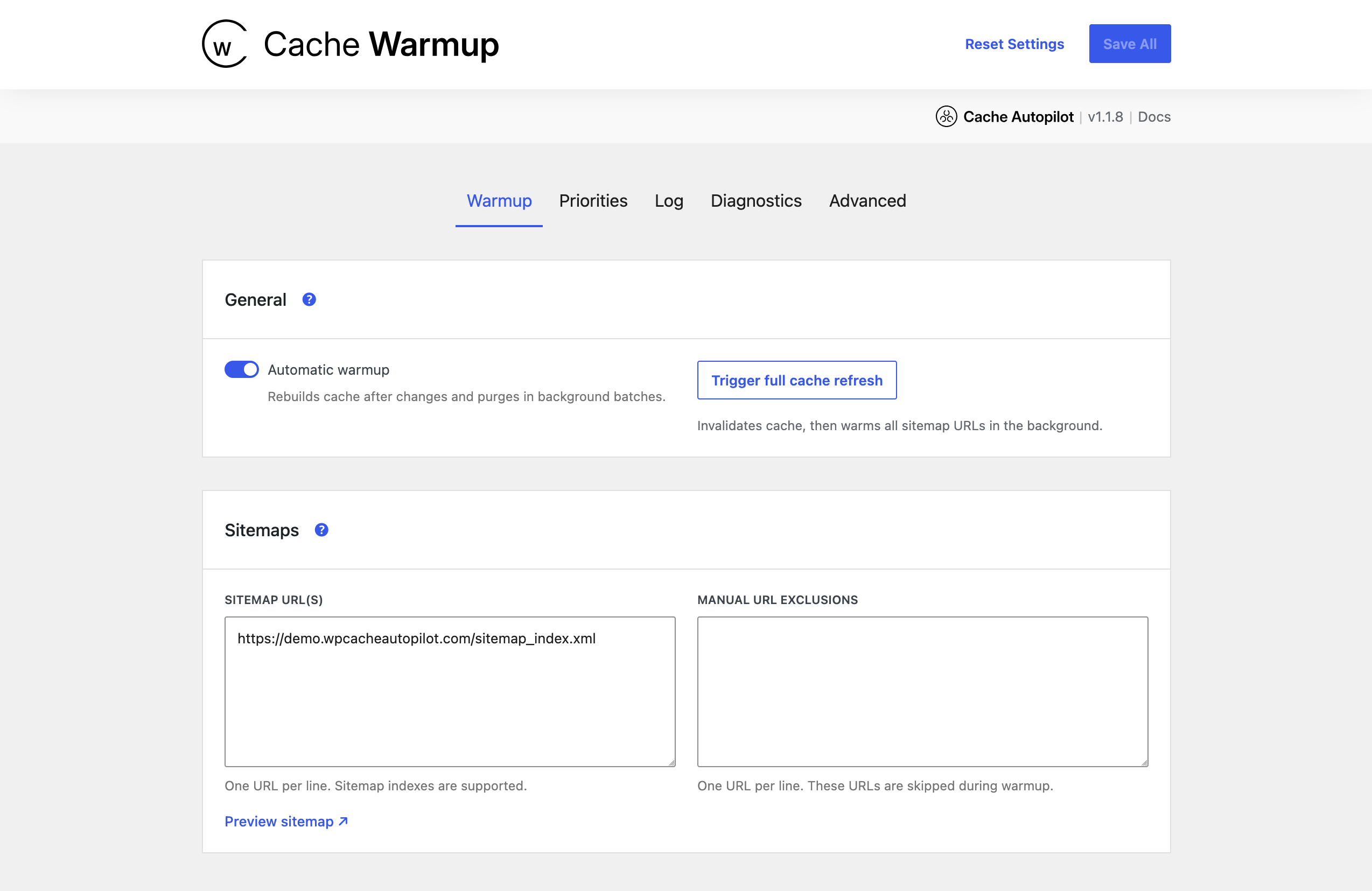
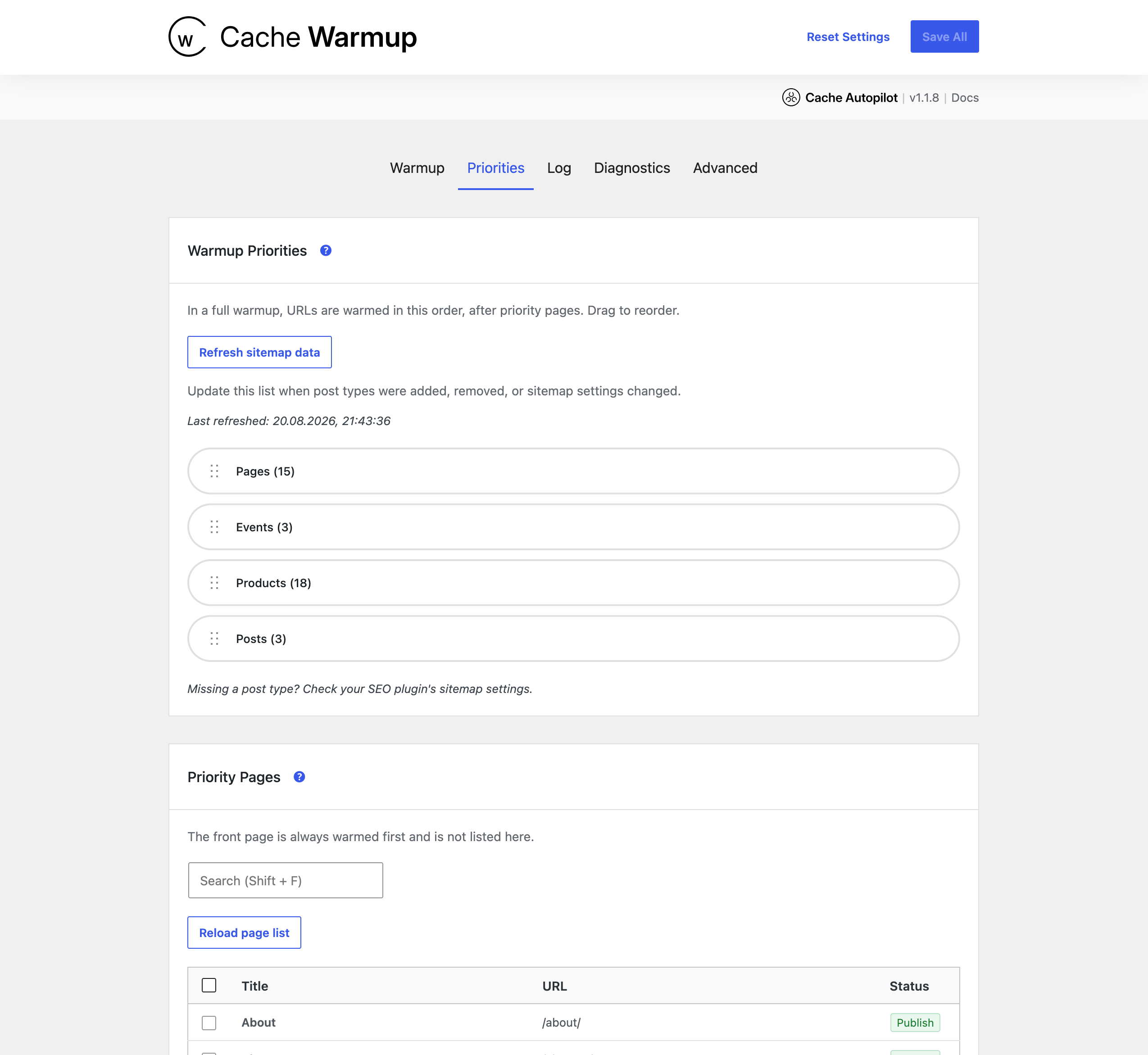
- Background cache preload — purged pages are rebuilt through paced HTTP requests instead of being left cold. Warmup and pacing
- LiteSpeed Cache (Free)
- WP Rocket
- WP Fastest Cache (Free) – requires 1.5.2+
- WP Optimize (Free)
- Speed Optimizer (Free)
- FlyingPress
- SpeedyCache (Free)
- Breeze (Free)
- Cache Enabler (Free)
- Something changes in WordPress.
- Cache Autopilot determines which frontend URLs are affected.
- Your supported cache plugin purges those URLs.
- Cache Autopilot preloads the purged pages safely in the background.
- Elementor — Elementor 4.3 ready. Supports reusable Components, Global Widgets, Saved Templates, Theme Builder templates, Loop Items, Popups, nested references, Display Conditions, Atomic Default Styles and Elementor MCP workflows.
- Watch targeted cache refresh for Elementor in action
- ACF relationships — follow ACF relationship and post object fields to refresh connected content.
- Advanced content relationships — extend refresh propagation to custom relationship models and data structures.
- Multilingual — WPML, Polylang and TranslatePress support, including translated target URLs and localized post type, taxonomy, date and paginated archives.
- Timed cache refresh — refresh selected content on a schedule.
- Access control — grant Cache Autopilot access by role or individual user.
- PRO developer extensions — additional relationship, multilingual and resolver filters.
安装:
- Install and activate a supported cache plugin.
- Install and activate Cache Autopilot.
- Open Cache Warmup and add your sitemap XML.
- Configure the post types and targets relevant to your site.
- Make a test edit and check the Cache Warmup log.
屏幕截图:



常见问题:
Is Cache Autopilot a WordPress caching plugin?
No. You still need a supported cache plugin. Cache Autopilot determines which cached URLs need to refresh, asks the cache plugin to purge them, and preloads those pages again.
Why does my WordPress cache still show old content after an update?
The changed URL may not be the only cached page displaying that content. Query Loops, archives, shared blocks, templates, forms, widgets, WooCommerce data and builder components can all make one change visible on multiple URLs. Cache Autopilot resolves those affected pages and refreshes them through your existing cache plugin.
Does Cache Autopilot clear the entire WordPress cache after every update?
Usually not. It targets affected URLs whenever they can be determined safely. A broader purge is used only when configured or when targeted resolution cannot safely cover the change.
Which WordPress cache plugins are supported?
LiteSpeed Cache, WP Rocket, WP Fastest Cache, WP Optimize, Speed Optimizer, FlyingPress, SpeedyCache, Breeze and Cache Enabler. See cache adapter compatibility.
Does Cache Autopilot work with Gutenberg and block themes?
Yes. Cache Autopilot Free understands Site Editor templates, template parts, synced patterns, Navigation, global styles and standard WordPress content. See Gutenberg and block theme support.
Does Cache Autopilot support WooCommerce?
Yes. WooCommerce support is included in Cache Autopilot Free. It covers products, variations, the Shop page, product categories and tags, grouped products, upsells and other connected storefront targets. See WooCommerce support.
Does Cache Autopilot support Elementor?
Yes, in Cache Autopilot PRO. The Elementor integration understands reusable content, templates, nested references and Display Conditions so affected frontend pages can refresh when shared Elementor content changes. See Elementor support.
Does Cache Autopilot support multilingual WordPress sites?
Yes, in Cache Autopilot PRO. WPML, Polylang and TranslatePress are supported, including translated target URLs and localized archive pagination. See multilingual compatibility.
Does Cache Autopilot preload pages after purging them?
Yes. Purged pages are queued for paced background preload so visitors are less likely to encounter a cold cache. See Cache Warmup.
What happens if Cache Autopilot cannot determine every affected page?
Where precise targeting cannot be resolved safely, Cache Autopilot can fall back to a broader refresh rather than risk leaving affected pages stale.
Can developers extend Cache Autopilot for custom WordPress setups?
Yes. Free includes filters for post changes, options, widgets/sidebars, metadata, archives and custom workflows. PRO adds relationship and multilingual extension points. See the Developer Reference.
更新日志:
- Fix: Improved LiteSpeed cache warmup so preloaded pages are more reliably available as cache hits for visitors.